


Cloud Gaming Platform Development: Technologies, Services, Cost Factors & Future Trends
Introduction:
The gaming industry is rapidly moving toward cloud-based experiences, changing how players access and enjoy video games. Traditional gaming requires users to purchase expensive consoles, upgrade hardware, or download large game files before playing. Cloud gaming removes these limitations by allowing users to stream high-quality games directly from remote cloud servers through an internet connection.
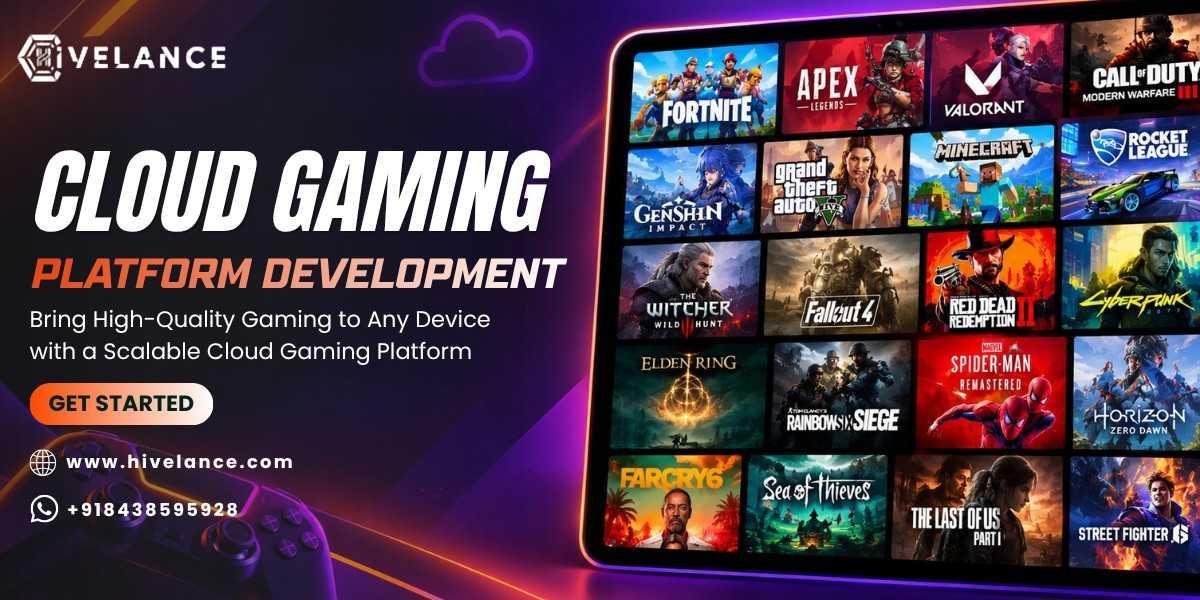
Cloud Gaming Platform Development enables businesses to create powerful gaming ecosystems where games are processed on high-performance cloud infrastructure and delivered instantly to players across multiple devices, including smartphones, desktops, tablets, smart TVs, and browsers.
Unlike conventional gaming platforms that depend heavily on local hardware capabilities, cloud gaming platforms use advanced cloud computing, GPU-powered servers, edge computing, and real-time streaming technologies to provide smooth and interactive gaming experiences.
Businesses, gaming studios, and technology companies are investing in cloud gaming solutions to reach wider audiences, reduce hardware dependency, and deliver subscription-based gaming services similar to modern streaming platforms.
What is Cloud Gaming Platform Development?
Cloud Gaming Platform Development is the process of designing, developing, and deploying a gaming platform that allows users to play video games through cloud servers instead of installing games directly on their devices.
In a cloud gaming environment, the game runs on powerful remote servers equipped with advanced GPUs and computing resources. The player's actions are transmitted to the server, where the game processes the input. The resulting gameplay video is then streamed back to the user's device in real time.
This approach allows users to enjoy high-end games even on low-powered devices because the majority of processing happens in the cloud.
A professionally developed cloud gaming platform includes:
- Cloud-based game hosting infrastructure
- Real-time video streaming system
- User account management
- Subscription and payment integration
- Multiplayer matchmaking
- Cross-device accessibility
- Cloud save functionality
- Performance monitoring
- Security management
A scalable cloud gaming platform helps businesses launch their own gaming services while providing users with instant access to a large library of games.
Cloud Gaming Platform Development Services We Provide:
Cloud gaming platform development requires a combination of gaming expertise, cloud infrastructure knowledge, streaming technology, and user-focused design. Businesses looking to enter the gaming industry need more than just a game streaming system; they require a complete ecosystem that can support users, manage content, handle payments, and scale as the audience grows.
A professional cloud gaming platform development company helps businesses transform their gaming concepts into fully functional platforms by designing secure, scalable, and high-performance solutions. These platforms are built to support different gaming models, including subscription-based services, game marketplaces, enterprise gaming solutions, and branded gaming ecosystems.
Custom Cloud Gaming Platform Development
Custom cloud gaming platform development focuses on creating solutions based on specific business requirements. Every gaming business has different goals, target audiences, and monetization strategies, which is why a customized approach is essential.
Developers create cloud gaming systems that include powerful backend infrastructure, real-time streaming capabilities, user management systems, and cross-platform accessibility. The platform architecture is designed to handle future growth while maintaining consistent performance.
A custom cloud gaming solution allows businesses to control their gaming ecosystem, introduce unique features, and provide personalized experiences to their users.
Cloud Gaming App Development
With the increasing use of smartphones and tablets, mobile accessibility has become a critical part of cloud gaming success. Cloud gaming app development enables businesses to deliver seamless gaming experiences across Android and iOS devices.
A well-developed cloud gaming application connects users with remote gaming servers while providing an intuitive interface for browsing games, managing accounts, purchasing subscriptions, and accessing saved progress.
Mobile cloud gaming applications are designed with optimized performance, responsive controls, secure authentication, and smooth streaming capabilities to ensure users can enjoy games anytime and anywhere.
White Label Cloud Gaming Solutions
White label cloud gaming solutions allow businesses to launch their own branded gaming platforms without developing every component from the beginning.
These solutions provide a ready-made cloud gaming framework that can be customized according to business requirements. Companies can add their own branding, modify user interfaces, integrate preferred payment methods, and create unique gaming experiences.
White label platforms are beneficial for businesses that want faster market entry while reducing development time and initial investment. They provide the flexibility to create a branded gaming service while using a proven cloud gaming infrastructure.
Cloud Gaming UI/UX Development
User experience plays a major role in the success of any gaming platform. A technically powerful platform can still fail if users find it difficult to navigate or access games.
During cloud gaming platform development, UI/UX design focuses on creating simple navigation, attractive game libraries, smooth onboarding processes, and engaging interfaces.
A well-designed gaming interface helps users discover games easily, manage their profiles, track achievements, and interact with the platform effortlessly.
Cloud Gaming Migration Services
Many existing gaming businesses are moving from traditional infrastructure to cloud-based environments to improve scalability and performance.
Cloud gaming migration services help companies transition their existing gaming applications, databases, and systems into modern cloud infrastructure.
The migration process involves analyzing existing systems, selecting suitable cloud architecture, transferring data securely, and optimizing the platform for improved performance.
A successful migration enables businesses to reduce infrastructure limitations and prepare their gaming services for future growth.
Technologies Used in Cloud Gaming Platform Development
Cloud gaming platforms depend on a combination of advanced technologies that work together to deliver smooth, responsive, and high-quality gaming experiences. Unlike traditional gaming systems, where most operations happen on the user's device, cloud gaming shifts the workload to powerful remote servers and delivers the gameplay through real-time streaming.
Cloud computing acts as the foundation of modern cloud gaming platforms. It provides the required computing power, storage capacity, and flexibility needed to run multiple games simultaneously for thousands of users. Leading cloud infrastructure providers such as Amazon Web Services (AWS), Microsoft Azure, and Google Cloud provide scalable environments where gaming businesses can deploy and manage their platforms efficiently.
A well-designed cloud gaming architecture uses GPU-powered servers to handle complex graphics rendering and game processing. These servers ensure that high-end games can run smoothly while users access them through lightweight devices. This approach allows players to experience premium gaming without investing in expensive hardware upgrades.
Role of Edge Computing in Cloud Gaming
Latency is one of the most important factors that determines the success of a cloud gaming platform. Even a small delay between player input and game response can affect the overall gaming experience, especially in competitive multiplayer games.
Edge computing helps solve this challenge by processing data closer to the user's physical location. Instead of sending every request to a centralized data center, edge servers handle certain operations from locations closer to players. This reduces data travel distance and improves response time.
During cloud gaming platform development, implementing edge computing strategies helps businesses provide faster gameplay, reduced latency, and a more stable streaming experience for users across different regions.
Streaming and Video Compression Technology
Real-time streaming is the core component of every cloud gaming platform. Since games generate high-quality graphics and large amounts of visual data, advanced compression techniques are required to transmit gameplay efficiently over the internet.
Video encoding technology converts rendered gameplay into a compressed video stream that can be delivered quickly to users. On the user's device, decoding technology converts the stream back into playable visuals.
Modern cloud gaming solutions use advanced codecs and adaptive streaming techniques to maintain visual quality while adjusting automatically according to network conditions. This ensures users experience uninterrupted gameplay even when internet speeds fluctuate.
Artificial Intelligence and Machine Learning Integration
Artificial Intelligence and Machine Learning are becoming important technologies in modern cloud gaming ecosystems. AI can analyze player behavior, optimize resource allocation, improve matchmaking systems, and enhance personalization.
Cloud gaming platforms can use AI-based systems to predict server requirements based on user activity and automatically allocate resources when demand increases. This improves platform performance while helping businesses manage infrastructure costs.
Machine learning algorithms can also improve game recommendations by understanding player preferences and suggesting relevant gaming content. These intelligent features create a more engaging experience and increase user retention.
Game Engine Integration for Cloud Gaming Platforms
Game engines play an essential role in creating immersive gaming experiences. During cloud gaming platform development, businesses often integrate powerful engines such as Unity, Unreal Engine, CryEngine, and Godot to support advanced graphics and gameplay mechanics.
With cloud-based rendering capabilities, these engines allow games to run on remote servers while users receive the final output through streaming. Technologies such as WebAssembly also help developers deliver browser-based gaming experiences without requiring traditional installations.
The combination of advanced game engines and cloud infrastructure enables businesses to create scalable gaming platforms capable of supporting high-performance games across multiple devices.
Cloud Gaming Platform Development Process: Step-by-Step Approach
Developing a successful cloud gaming platform requires a well-planned development strategy that combines cloud infrastructure, gaming technology, software engineering, and user experience design. A structured approach ensures that the platform can deliver smooth gameplay, handle growing users, and provide a reliable gaming experience.
The complete cloud gaming platform development process can be divided into several important stages.
Stage 1: Requirement Analysis and Business Planning
The first stage of cloud gaming platform development focuses on understanding the business vision, target audience, and technical requirements.
Before starting development, businesses need to define the purpose of their gaming platform and identify the type of users they want to serve. Developers analyze important factors such as supported devices, gaming categories, monetization strategies, expected user traffic, and required features.
During this stage, the development team also evaluates whether the platform will follow a subscription model, marketplace approach, free-to-play structure, or enterprise gaming solution.
A detailed requirement analysis helps create a clear roadmap and ensures that the final platform aligns with business objectives.
Stage 2: Cloud Architecture and Platform Design
After understanding the requirements, the next stage involves designing the technical architecture of the cloud gaming platform.
Developers select suitable cloud infrastructure providers and plan the server environment required to support game streaming. The architecture is designed considering factors such as performance, scalability, security, and future expansion.
This stage includes planning:
- Cloud server infrastructure
- GPU-powered gaming environments
- Data storage systems
- Streaming architecture
- Network optimization
- Security framework
A strong cloud architecture forms the foundation of a reliable gaming platform and helps deliver low-latency gameplay experiences.
Stage 3: UI/UX Design and User Experience Planning
A cloud gaming platform should not only perform well technically but also provide an engaging and simple user experience.
During this stage, designers create the interface structure, user journey, and visual experience of the platform. The goal is to make it easy for users to discover games, manage accounts, access subscriptions, and start playing quickly.
The design process includes creating:
- User dashboards
- Game libraries
- Profile management screens
- Subscription pages
- Search and filtering systems
- In-game interaction elements
An intuitive UI/UX design improves user engagement and encourages players to spend more time on the platform.
Stage 4: Backend and Platform Development
Once the architecture and design are finalized, developers begin building the core systems of the cloud gaming platform.
The backend development process focuses on creating the systems responsible for managing users, games, servers, and platform operations.
Developers integrate essential components such as:
- User authentication systems
- Game management systems
- Cloud storage solutions
- Payment gateways
- Subscription management
- Multiplayer functionality
- Server communication systems
The backend acts as the central engine of the platform, ensuring smooth communication between users, games, and cloud servers.
Stage 5: Game Streaming and Technology Integration
The next stage focuses on implementing real-time game streaming capabilities.
Developers integrate streaming technologies that allow games to run on cloud servers while delivering gameplay output directly to users' devices.
This stage involves optimizing:
- Video encoding and decoding
- Network performance
- Input response time
- Streaming quality
- Server performance
Advanced technologies such as edge computing, AI optimization, and GPU acceleration may be integrated to improve speed and reliability.
Stage 6: Testing and Performance Optimization
Before launching the platform, extensive testing is required to ensure stability and performance.
The testing phase evaluates how the platform performs under different conditions, including high user traffic, different network speeds, and multiple device environments.
Developers test areas such as:
- Gameplay responsiveness
- Streaming quality
- Security performance
- Server stability
- User experience
- Scalability
Performance optimization helps reduce latency, improve loading speed, and ensure smooth gaming sessions.
Stage 7: Deployment and Launch
After successful testing, the cloud gaming platform is prepared for deployment.
The deployment stage involves configuring production servers, publishing applications, integrating monitoring systems, and making the platform available to users.
A proper launch strategy helps businesses introduce the platform effectively while ensuring technical stability from the beginning.
Stage 8: Maintenance and Continuous Improvement
Cloud gaming platform development does not end after launch. Continuous monitoring and improvements are essential to maintain performance and user satisfaction.
After deployment, development teams monitor platform activity, analyze user behavior, fix technical issues, and introduce new features based on market trends.
Regular updates may include:
- Performance improvements
- Security enhancements
- New gaming features
- Additional device support
- Infrastructure upgrades
Continuous maintenance ensures that the cloud gaming platform remains competitive and capable of supporting future growth.
Future of Cloud Gaming in 2027
The future of cloud gaming is expected to be driven by advancements in cloud computing, artificial intelligence, faster networks, and immersive technologies. As internet infrastructure continues to improve, cloud gaming is becoming more accessible to users around the world.
The expansion of 5G networks will play an important role in reducing latency and improving real-time gaming experiences. Faster connectivity will allow players to enjoy high-quality games with minimal delays, even on mobile devices.
Artificial Intelligence will further enhance cloud gaming platforms by improving personalization, automated content recommendations, player analytics, and server optimization. AI-powered systems can help platforms understand user behavior and deliver more engaging experiences.
Virtual Reality (VR) and Augmented Reality (AR) are also expected to influence the future of cloud gaming. Instead of requiring expensive local hardware, cloud-powered VR and AR experiences can allow users to access immersive gaming environments through streaming technology.
Another important trend is the growth of subscription-based gaming services. Similar to video streaming platforms, cloud gaming services are moving toward flexible subscription models where users can access large collections of games through monthly plans.
As cloud infrastructure continues to evolve, businesses will have more opportunities to create innovative gaming platforms that reach global audiences without traditional hardware limitations.
Why Choose Hivelance for Cloud Gaming Platform Development?
Choosing the right technology partner is essential for building a successful cloud gaming platform. Developing a reliable cloud gaming ecosystem requires experience in cloud architecture, game technologies, streaming solutions, and scalable infrastructure.
Hivelance provides cloud gaming platform development services designed to help businesses create advanced gaming solutions with modern technologies and user-focused experiences.
The team focuses on developing platforms that deliver smooth gameplay, reliable performance, and scalability for growing audiences. By combining cloud expertise with gaming knowledge, Hivelance helps businesses build solutions that meet current market demands.
The company works on different aspects of cloud gaming development, including platform architecture, server configuration, application development, UI/UX design, and performance optimization.
Key advantages of working with Hivelance include:
- Cloud Technology Expertise: Experience in designing cloud-based architectures that support high-performance gaming environments.
- Scalable Solutions: Development approaches that allow platforms to expand as user requirements increase.
- Advanced Gaming Integration: Ability to integrate modern game engines, streaming technologies, and emerging solutions.
- Cross-Platform Development: Building gaming experiences accessible across multiple devices and operating systems.
- Continuous Support: Providing maintenance, optimization, upgrades, and technical support after platform deployment.
Hivelance focuses on creating future-ready cloud gaming platforms that help businesses deliver engaging gaming experiences while adapting to the rapidly changing digital entertainment industry.

 English
 Arabic
 French
 Spanish
 Portuguese
 Deutsch
 Turkish
 Dutch
Dutch
 Italiano
 Russian
 Romaian
 Portuguese (Brazil)
 Bengali