


10 Beautiful Bezel Engagement Rings to Consider
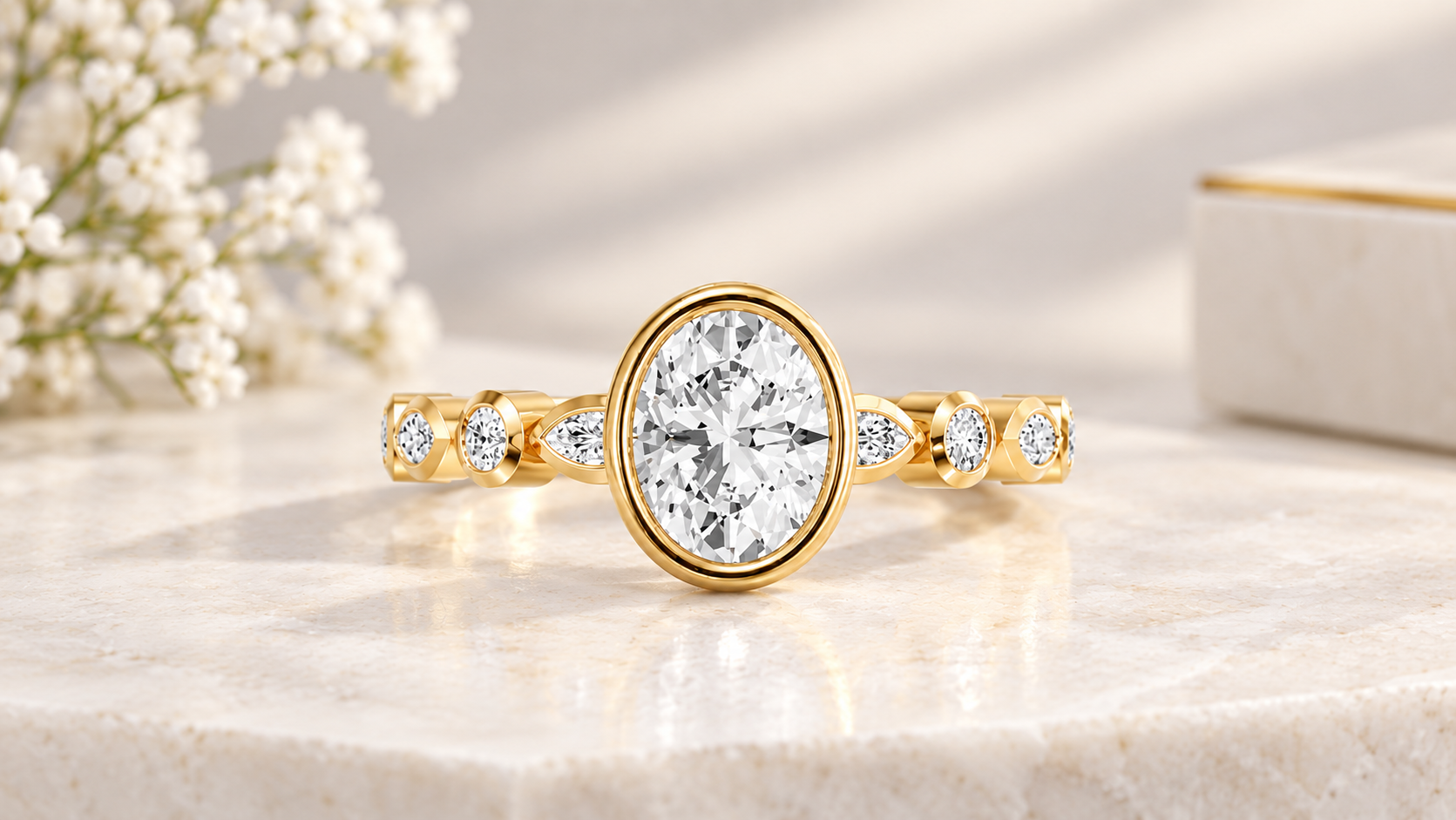
Choosing an engagement ring often comes down to finding a design that feels right for the person who will wear it every day. The setting can make a major difference in both appearance and practicality. Bezel engagement rings are known for surrounding the diamond with a slim rim of metal, creating a secure setting with a clean outline. From simple solitaires to detailed designs with side stones, there are many ways to wear this style.
If you are considering a ring that combines a defined metal border with a practical setting, there are several designs worth looking at. Here are ten bezel ring styles that can help narrow down your choices.
1. Classic Bezel Solitaire
A classic bezel solitaire keeps the attention on one center diamond. The metal surrounds the stone along its edge, giving the ring a neat and structured appearance.
This style works well for someone who prefers a ring without extra stones along the band. A round, oval, pear, or emerald-cut diamond can all work with a solitaire bezel setting.
One of the benefits of this design is its simplicity. The center stone remains the main feature while the surrounding metal provides a defined border. It can also be paired with a plain wedding band for a coordinated bridal set.
2. Bezel Set Ring With a Round Diamond
Round diamonds are a popular choice for engagement rings, and a bezel setting gives the traditional shape a different appearance. Instead of prongs appearing around the diamond, a continuous metal rim frames the stone.
A bezel set engagement ring with a round diamond can suit someone who likes familiar diamond shapes but wants a less traditional setting.
The rounded outline of the diamond works naturally with the circular metal border. Depending on the design, the band can be plain, textured, or decorated with smaller stones.
3. Oval Bezel Engagement Ring
Oval diamonds can create a longer visual line across the finger. When placed in a bezel setting, the shape becomes even more defined because the metal follows the outline of the stone.
An oval bezel ring can be a good choice for someone who likes a noticeable center stone without adding several additional diamonds. The setting can be made in yellow gold, white gold, rose gold, or platinum, depending on the preferred look.
For everyday wear, the smooth edges of the bezel can also provide a practical alternative to exposed prongs.
4. Bezel Diamond Engagement Ring With Side Stones
A bezel setting does not have to mean a completely plain ring. Side stones can be added along the band to create more detail around the center diamond.
A bezel diamond engagement ring with side stones may feature small round diamonds placed beside a bezel-set center stone. This creates a balance between a defined center and additional detail along the band.
Side stones can be arranged in different patterns. Some designs use a short row near the center, while others continue farther down the band. The amount of detail can therefore be adjusted to suit different preferences.
5. Unique Bezel Engagement Rings With an Unusual Diamond Shape
A bezel setting can be especially interesting when paired with a less conventional diamond shape. Pear, marquise, emerald, radiant, and elongated cushion diamonds can all create distinctive outlines.
Those looking for unique bezel engagement rings may want to start with the diamond shape rather than the metal. Once the preferred shape has been selected, the bezel can be designed to follow its natural proportions.
For example, an east-west setting can position an elongated diamond horizontally across the finger rather than vertically. This simple change can give the ring a different character without requiring a complicated design.
6. Bezel Solitaire Engagement Ring in Yellow Gold
Metal color can change the overall appearance of a ring considerably. Yellow gold creates a warm contrast around a white diamond, making the outline of the bezel particularly noticeable.
A bezel solitaire engagement ring in yellow gold can be paired with a round, oval, emerald, or cushion-cut center stone. A plain gold band keeps the design focused, while a slightly wider band can give the ring a stronger presence.
This combination can work particularly well for someone who appreciates traditional gold jewelry but wants a setting with a cleaner structure.
7. Lab-Grown Bezel Engagement Ring
Lab-grown diamonds give shoppers another option when choosing a center stone. They have the same crystal structure and chemical composition as mined diamonds, while being produced through controlled laboratory processes.
A lab grown bezel engagement ring combines this diamond option with the protective structure of a bezel setting. It can be designed around different diamond shapes, sizes, and metal choices.
This is also an area where shoppers can personalize the ring. The center stone can be selected according to the desired shape and proportions, while the bezel and band can be customized to create the preferred overall design.
8. Emerald-Cut Bezel Ring
The long lines of an emerald-cut diamond can work beautifully with a bezel setting. The metal border follows the rectangular outline of the stone, emphasizing its straight edges.
Unlike brilliant-style diamonds, emerald-cut stones are known for their broad, open facets. Because of this, shoppers often pay close attention to clarity when selecting one.
A bezel can give the emerald-cut diamond a strong frame without adding unnecessary decoration. A simple band can keep the focus on the geometric center stone.
9. Pear-Shaped Bezel Ring
Pear-shaped diamonds combine a rounded end with a pointed tip, creating a distinctive silhouette. A bezel setting can follow the full outline of the stone, including its pointed end.
This design can be worn with the point facing toward or away from the hand, depending on the desired look. Some ring designs also use a small accent stone or a halo around the center.
For someone who wants a shape that feels different from the standard round diamond, a pear-shaped bezel ring offers plenty of design possibilities.
10. Bezel Ring With a Custom Band
The band is an important part of an engagement ring and can completely change the way the center stone looks. A bezel-set diamond can be paired with a plain band, knife-edge band, pavé details, split shank, or other custom shapes.
A custom band can also be designed to sit comfortably beside a wedding ring. This is particularly useful when the engagement ring has a raised or unusual center setting.
When exploring options, explore lab grown bezel engagement ring designs alongside different band styles to see how the center stone and band work together. Looking at the complete ring rather than the diamond alone can make the selection process easier.
How to Choose the Right Bezel Engagement Ring
There are several details worth considering before choosing a bezel ring.
Consider the Diamond Shape
Start by deciding which diamond shape you prefer. Round diamonds have a familiar appearance, while oval, pear, emerald, marquise, and cushion shapes can create different proportions on the finger.
The bezel should follow the shape of the center stone closely. A well-proportioned setting helps the diamond and band look like one complete design.
Think About Daily Wear
If the ring will be worn every day, consider how the setting fits into your routine. The bezel surrounds the diamond with metal, which can help protect the stone's edges.
This can make the setting appealing to people who work with their hands or simply prefer a ring with fewer exposed edges.
Select the Metal
Gold and platinum are common choices for engagement rings. Yellow gold creates a warmer appearance, while white metals provide a closer visual match to a white diamond.
Rose gold offers another option for shoppers who want a warmer pink-toned metal.
Check the Band Width
The width of the band affects how large or delicate the ring appears on the hand. A narrow band can place more attention on the center diamond, while a wider band can create a stronger overall profile.
Try to consider the wedding band at the same time. Some engagement ring designs sit naturally beside a wedding band, while others may require a contoured or custom-fit band.
Decide Between Simple and Detailed Designs
Some shoppers prefer a single center diamond with a plain band. Others may want side stones, pavé details, a split shank, or an unusual band shape.
Neither approach is required for a bezel ring. The setting can be adapted to different personal tastes, which makes it worth comparing several designs before making a decision.
Why Bezel Settings Continue to Attract Attention
A bezel setting has a distinct construction that separates it from traditional prong settings. Instead of holding the diamond at several points, metal surrounds the outer edge of the stone.
This gives the ring a defined outline and can provide additional protection around the diamond's edges. It also creates a smooth profile that some wearers may find comfortable for everyday use.
The design has been adapted into many different styles, from understated solitaire rings to detailed designs featuring multiple stones. That range makes it possible to find a bezel ring that suits both simple and more elaborate preferences.
Finding a Ring That Fits Your Style
The right engagement ring does not have to follow one particular formula. Diamond shape, metal, band design, setting height, and additional stones can all be adjusted to create a ring that feels personal.
Whether you prefer a round solitaire, an oval center stone, an emerald-cut design, or a lab-grown diamond, a bezel setting offers several ways to bring those choices together. For shoppers comparing different designs, Antiquecut provides another place to explore a range of ring styles and setting options.
Before buying, take time to compare the diamond proportions, setting construction, metal type, band width, and how the ring will sit with a future wedding band. These details can help you choose a design that feels comfortable and suitable for everyday wear.
Final Thoughts
Bezel rings offer plenty of variety despite their recognizable setting style. A simple solitaire can create a clean look, while side stones or a custom band can add more detail. Different diamond shapes can also change the character of the ring considerably.
From classic round diamonds to pear, oval, emerald, and lab-grown options, there are many designs to consider. The best place to start is by identifying the diamond shape, metal, and level of detail that suit your preferences. From there, comparing different bezel designs can make it easier to find a ring that feels right for the occasion and for everyday wear.

 English
 Arabic
 French
 Spanish
 Portuguese
 Deutsch
 Turkish
 Italiano
 Russian
 Romaian
 Portuguese (Brazil)
 Greek
Greek
 Bengali