


What Is Tool Runout in CNC Machining and Why Does It Matter?
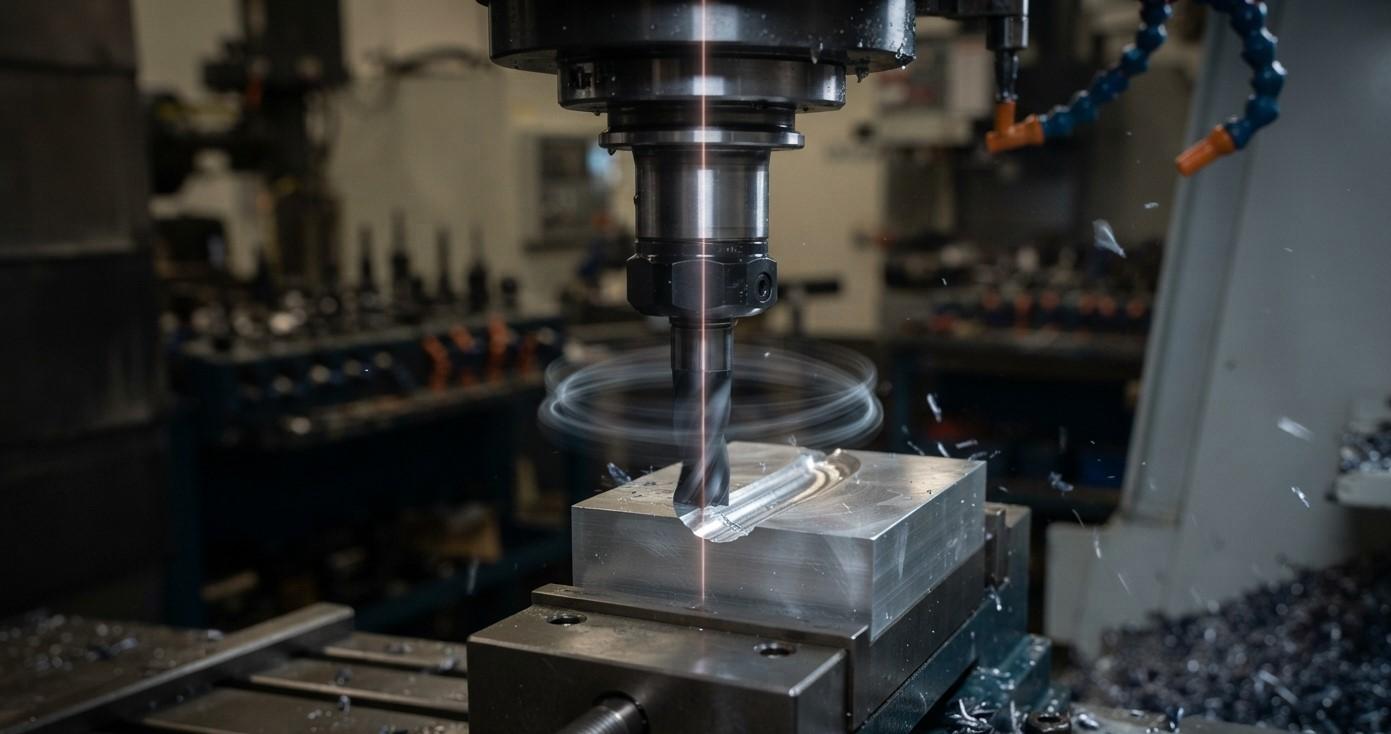
Precision is critical in CNC machining, especially when producing components that require tight tolerances, consistent surface finish, and reliable dimensional accuracy. One factor that can significantly influence machining performance is tool runout. Even a small deviation in the rotational position of a cutting tool can affect how individual cutting edges engage with the workpiece.
Khokhawala Trading LLC, an experienced Industrial Tools Supplier in Dubai, understands the importance of reliable cutting tools, tool holders, measuring equipment, and machining accessories in precision manufacturing. Proper tooling selection and setup can help workshops maintain consistent machining performance and reduce avoidable tooling problems.
Tool runout can contribute to uneven cutting forces, premature tool wear, poor surface finish, vibration, and dimensional variation. However, runout does not necessarily originate from the cutting tool itself. The spindle, tool holder, collet, tool shank, cleanliness of mating surfaces, and assembly method can all contribute to the final result.
This guide explains what tool runout means, what causes it, why it matters, how to measure it, and practical ways to reduce it in CNC machining.
Table of Contents
- What Is Tool Runout?
- What Is TIR in CNC Machining?
- What Causes Tool Runout?
- Types of Tool Runout
- Why Does Tool Runout Matter?
- How Runout Affects Tool Life
- How Runout Affects Surface Finish
- How Runout Affects Machining Accuracy
- How to Measure Tool Runout
- How to Reduce Tool Runout
- Tool Runout Prevention Tips
- Frequently Asked Questions
- Conclusion and CTA
What Is Tool Runout?
Tool runout is the deviation of a rotating cutting tool from its intended axis of rotation.
Ideally, the spindle, tool holder, clamping system, tool shank, and cutting edges should rotate concentrically around the same centerline. In reality, small manufacturing and assembly variations can cause the cutting edge to move slightly away from the intended rotational axis.
When the deviation becomes excessive, different cutting edges can experience different amounts of engagement with the workpiece. For example, one flute of a multi-flute end mill may remove more material than another. This uneven loading can influence tool wear, vibration, surface finish, and dimensional consistency.
Runout is particularly important in precision milling, drilling, reaming, and high-speed machining applications where small geometric errors can have a noticeable effect on the finished component.
What Is TIR in CNC Machining?
TIR stands for Total Indicator Reading.
When runout is measured using a dial indicator, TIR represents the difference between the highest and lowest indicator readings during one complete rotation.
For example, if an indicator shows a minimum reading of 0.002 mm and a maximum reading of 0.010 mm, the TIR would be:
0.010 mm − 0.002 mm = 0.008 mm TIR
The actual acceptable runout depends on the tool diameter, tooling system, machining operation, required tolerance, and manufacturer's specifications. A small amount of runout that is acceptable for a general machining operation may be significant when using a small-diameter cutter for precision finishing.
For this reason, runout should always be evaluated in relation to the particular machining application rather than using one universal number.
What Causes Tool Runout?
Tool runout can originate from several points in the machining system.
1. Contamination
Small chips, dirt, coolant residue, oil, or other particles between mating surfaces can prevent a tool holder or tool from seating correctly.
This is one of the simplest causes to address. Cleaning the spindle taper, holder, collet, and tool shank before assembly can help prevent unnecessary runout.
2. Worn or Damaged Tool Holders
Tool holders can develop wear or damage through regular use, improper handling, or accidental drops.
A holder may appear visually acceptable while still introducing measurable concentricity problems.
3. Worn or Incorrect Collets
A worn collet may not grip the tool shank uniformly. Using the wrong collet size or installing it incorrectly can also contribute to runout.
4. Damaged Cutting Tools
A bent tool shank, damaged cutter, chipped tool, or tool with poor shank concentricity can produce runout even when the spindle and holder are functioning properly.
5. Improper Tool Installation
Incorrect tool insertion or uneven clamping can cause the tool to sit at a slight angle inside the holder.
Following the tool holder manufacturer's assembly and tightening recommendations is important for achieving consistent results.
6. Spindle Runout
The spindle itself can contribute to runout. If the spindle or spindle interface has excessive deviation, changing the cutting tool may not solve the underlying problem.
When multiple tools show similar runout behavior, checking the spindle and holder system can help identify the source.
7. Excessive Tool Overhang
Long tool projection can magnify the effect of angular misalignment and can also increase tool deflection and vibration.
Where practical, using the shortest tool projection that provides adequate access to the workpiece can improve machining stability.
Types of Tool Runout
Runout can occur in different directions or at different points within a machining system.
Radial Runout
Radial runout refers to lateral deviation from the intended rotational centerline.
It is particularly relevant to milling cutters, drills, reamers, and other rotating cutting tools.
Axial Runout
Axial runout involves variation along the spindle axis. It can be important during facing, counterboring, spot-facing, and other operations where axial positioning influences the finished surface.
Tool Holder Runout
This occurs when the holder or clamping system introduces deviation before the cutting tool itself is considered.
Spindle Runout
Spindle runout originates at the machine spindle or its interface. Since the spindle drives the entire tooling assembly, excessive spindle runout can affect multiple tools and operations.
Why Does Tool Runout Matter?
Tool runout matters because CNC machining depends on controlled and repeatable cutting-edge engagement.
Excessive runout can cause:
- Unequal flute loading
- Accelerated tool wear
- Poor surface finish
- Dimensional variation
- Increased vibration
- Chatter
- Oversized holes
- Increased cutting forces
- Premature tool failure
The effect can be especially noticeable with small-diameter tools because the same absolute runout represents a larger percentage of the tool diameter.
How Runout Affects Tool Life
One of the main consequences of excessive runout is uneven cutting-edge loading.
Consider a four-flute end mill. Ideally, each flute contributes relatively evenly to the cutting process. If the cutter is running off-center, one flute can take a larger portion of the cutting load.
The overloaded flute may experience:
- Higher cutting forces
- Greater friction
- Increased heat
- Faster wear
- Edge chipping
The result can be shorter and less predictable tool life.
Therefore, reducing runout can help distribute cutting loads more consistently and improve the reliability of the machining process.
How Runout Affects Surface Finish
Surface finish can also deteriorate when tool runout is excessive.
Unequal flute engagement can produce inconsistent cutting marks. In combination with vibration or chatter, this can result in:
- Visible tool marks
- Uneven surface texture
- Increased surface roughness
- Inconsistent finishing
- Poor-quality edges
If a machining process previously produced a consistent finish and suddenly begins producing rough or uneven surfaces, checking tool runout can be part of the troubleshooting process.
How Runout Affects Machining Accuracy
CNC machines operate according to programmed tool paths, but the actual cutting result depends on the physical position and condition of the tooling.
Excessive runout can influence feature size and repeatability. In drilling, for example, a rotating drill that does not run true can produce holes that are larger or less consistent than expected. In milling, unequal flute engagement can affect dimensional control and surface quality.
This is particularly important when machining components with tight tolerances.
How to Measure Tool Runout
Tool runout is commonly checked using a dial indicator or dial test indicator.
A basic measurement process involves:
- Clean the spindle, holder, collet, and tool shank.
- Install the tool correctly.
- Secure the tool holder in the spindle.
- Position the indicator against the tool shank or another suitable reference surface.
- Rotate the spindle carefully through one complete revolution.
- Record the highest and lowest readings.
- Calculate the difference between them to determine TIR.
It is useful to measure at more than one location when diagnosing a problem. A reading close to the holder and another reading farther toward the cutting end can provide additional information about angular misalignment or tool-related issues.
For high-precision applications, specialized tool presetters and electronic measurement systems may also be used.
How to Reduce Tool Runout
Reducing runout starts with identifying its source.
Keep Tooling Interfaces Clean
Clean the spindle taper, tool holder, collet, and tool shank before assembly.
Use Suitable Precision Tool Holders
When machining requires tight tolerances or high repeatability, use a holder and clamping system appropriate for the required level of precision.
Inspect Collets Regularly
Check collets for wear, damage, contamination, and proper function. Replace damaged or worn components.
Check the Tool Shank
Inspect cutting tools for bending, damage, burrs, and contamination before installation.
Minimize Tool Overhang
Keep tool projection as short as practical while still providing adequate access to the workpiece.
Use Correct Clamping Procedures
Install and tighten the tooling according to the manufacturer's recommendations.
Check the Spindle
If runout remains high after checking the cutting tool and holder, inspect the spindle and spindle interface.
Measure Before Making Major Changes
A measurement-based troubleshooting process is generally more effective than immediately replacing multiple tooling components.
Tool Runout Prevention Tips
Workshops can reduce runout-related problems by incorporating a few consistent practices into their CNC setup procedures:
- Clean all tooling interfaces before installation.
- Store precision holders carefully.
- Avoid dropping tool holders or collets.
- Inspect cutting tools before use.
- Use the correct collet for the tool shank.
- Follow recommended tightening procedures.
- Keep tool overhang as short as practical.
- Monitor spindle condition.
- Check runout when unexpected machining problems occur.
- Replace damaged or worn tooling components.
- Use suitable precision tooling for high-accuracy operations.
These practices can help improve repeatability and reduce avoidable tooling-related problems.
Frequently Asked Questions
What is tool runout in CNC machining?
Tool runout is the deviation of a rotating cutting tool from its intended rotational axis. Excessive runout can cause uneven cutting, tool wear, vibration, dimensional variation, and poor surface finish.
What causes CNC tool runout?
Common causes include contaminated mating surfaces, worn tool holders, damaged collets, incorrect tool installation, damaged cutting tools, excessive overhang, and spindle-related problems.
How do you measure tool runout?
A dial indicator or dial test indicator can be used. The indicator is positioned against an appropriate tool surface while the tool rotates, and the difference between the highest and lowest readings gives the TIR.
Does tool runout affect tool life?
Yes. Excessive runout can cause uneven loading between cutting edges, meaning one flute may experience greater cutting forces and wear faster than the others.
Can tool runout cause poor surface finish?
Yes. Uneven cutting-edge engagement can contribute to inconsistent cutting, vibration, chatter, and visible machining marks.
Does runout affect drilling?
Yes. Excessive runout can contribute to oversized or inconsistent holes and can reduce drilling accuracy.
Is tool runout the same as tool imbalance?
No. Runout describes geometric deviation from the intended rotational axis, while imbalance concerns uneven mass distribution and the resulting centrifugal forces during rotation. They can both contribute to vibration but are different conditions.
How can I reduce tool runout?
Start by cleaning the tooling interfaces and checking the tool holder, collet, tool shank, and spindle. Use appropriate precision tooling, correct clamping procedures, and minimal practical tool overhang. If the problem persists, measure each part of the tooling system to identify the source.
Conclusion
Tool runout may appear to be a small mechanical deviation, but it can have a significant effect on CNC machining performance. Excessive runout can lead to uneven cutting forces, reduced tool life, poor surface finish, dimensional variation, vibration, and premature tool failure.
The important point is that runout can originate from more than just the cutting tool. The spindle, tool holder, collet, tool shank, assembly method, cleanliness, and tool overhang can all contribute to the final measurement.
A consistent maintenance and measurement routine can help workshops identify runout problems before they lead to significant machining defects. Keeping tooling interfaces clean, using suitable holders, inspecting cutting tools, and measuring runout when problems occur can support more reliable CNC operations.
Khokhawala Trading LLC supplies industrial tools, machining equipment, and related tooling solutions for professional applications. As an Industrial Tools Supplier in Dubai, the company can help businesses source suitable industrial tools and equipment for their machining and workshop requirements.
Looking for Reliable Industrial Tools in Dubai?
Whether you need cutting tools, precision measuring equipment, machining accessories, tool holders, or other industrial tooling solutions, choosing the right equipment is an important part of achieving consistent machining results.
Contact Khokhawala Trading LLC today to discuss your industrial tooling requirements and find suitable solutions for your application.

 English
 Arabic
 French
 Spanish
 Portuguese
 Deutsch
 Turkish
 Dutch
Dutch
 Italiano
 Russian
 Portuguese (Brazil)
 Greek
Greek
 Bengali