


What Does R.A.C.E. Stand for in Fire Safety? A Complete Guide to Emergency Response
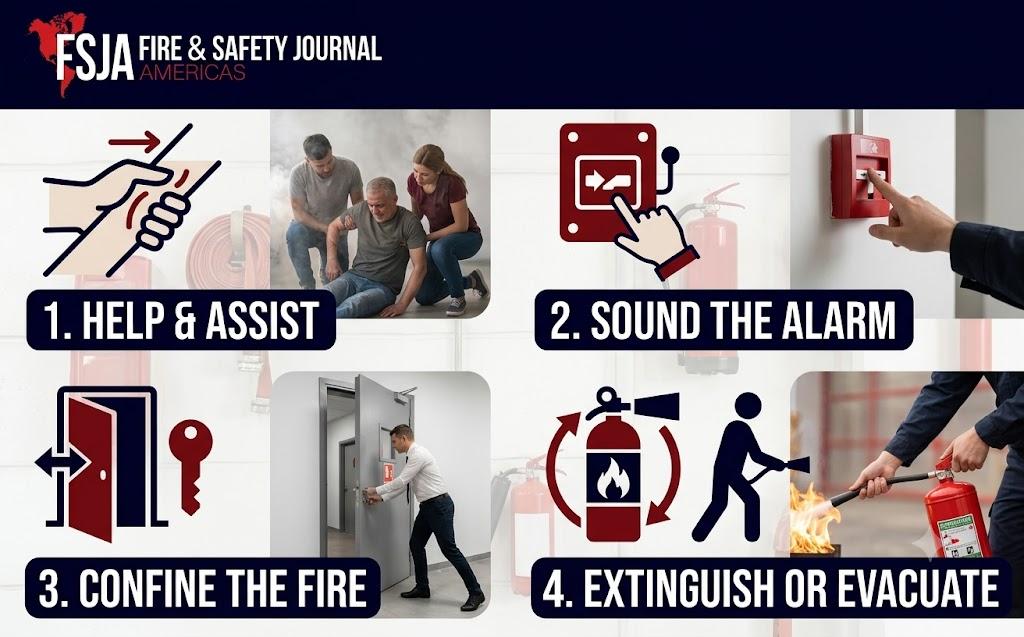
Fire emergencies can develop rapidly, leaving people with very little time to decide what to do. A clear response procedure helps occupants react quickly instead of becoming confused or delaying evacuation. One of the most widely recognised approaches used in fire emergency training is the R.A.C.E. procedure.
For anyone beginning fire-safety training, an important question is what does R.A.C.E. stand for in fire safety? The acronym generally represents four key actions: Rescue, Alarm, Confine and Extinguish or Evacuate. These steps provide a simple framework for responding to a fire while prioritising human life and emergency communication.
Understanding the sequence is useful for employees, building managers, security teams, healthcare workers, educators and other people who may have responsibilities during an emergency.
Understanding the R.A.C.E. Acronym
The R.A.C.E. procedure is designed to make fire response easier to remember. Although specific wording can vary between organisations and industries, the underlying principles remain focused on protecting people, raising the alarm, limiting the spread of fire and taking appropriate action.
R – Rescue
The first priority is to rescue people who are in immediate danger, where doing so can be achieved safely.
Rescue does not mean putting yourself at unnecessary risk. If smoke, flames or structural hazards make entry dangerous, trained emergency personnel should handle the situation.
In workplaces, employees should understand designated escape routes and know how to assist individuals who may require additional support. Fire drills can help identify difficulties involving stairs, doors, mobility equipment or crowded corridors.
A – Alarm
Once immediate rescue needs have been addressed, the fire alarm should be activated.
Early notification gives occupants the opportunity to leave the building before conditions deteriorate. Depending on the building, an alarm may involve manual call points, automatic detection systems, voice announcements or other emergency notification methods.
Employees should know where alarm activation points are located and understand the organisation's reporting procedure.
C – Confine
Confine means taking reasonable steps to limit the spread of fire and smoke.
Closing doors can help slow the movement of smoke and flames between areas. Fire doors, compartmentation systems and properly maintained barriers all contribute to this objective.
People should never delay evacuation simply to close doors if doing so places them in danger. The action should be performed only when it can be completed safely.
E – Extinguish or Evacuate
The final letter is commonly described as Extinguish or Evacuate.
Only a person who has received appropriate training should attempt to use a fire extinguisher. The fire should also be small, contained and suitable for the extinguisher being used. There must always be a clear escape route behind the person attempting firefighting.
If those conditions are not present, evacuation is the safer response.
Why R.A.C.E. Matters During an Emergency
One reason people ask what does R.A.C.E. stand for in fire safety is because the acronym offers a memorable structure during a stressful event.
Fire emergencies can cause panic and uncertainty. People may forget information they know during normal circumstances. A short sequence can provide a mental framework that supports faster decision-making.
However, R.A.C.E. should not replace a building's formal emergency plan. Every workplace should have procedures covering evacuation routes, assembly areas, alarm systems, emergency contacts, responsibilities and assistance for vulnerable occupants.
Applying R.A.C.E. in Different Buildings
The practical application of R.A.C.E. depends on the environment.
In an office, employees may primarily need to raise the alarm, leave through designated routes and report to an assembly point.
In a healthcare environment, staff may have additional responsibilities for moving patients away from immediate danger.
In schools, teachers may need to account for students and follow predetermined evacuation procedures.
In industrial facilities, workers may also need to consider hazardous materials, machinery and specialised emergency systems.
These differences demonstrate why fire-safety training should reflect the actual risks and layout of a facility.
The Importance of Fire Drills
Knowing what does R.A.C.E. stand for in fire safety is only useful if people can apply the principles under pressure.
Regular drills provide an opportunity to test evacuation routes, alarm communication, assembly procedures and staff responsibilities. Drills can also identify problems that may not be obvious during routine operations.
For example, a normally accessible corridor may become congested during evacuation. A designated exit may be difficult for a person with limited mobility. Employees may also discover that they are unfamiliar with their assembly location.
Each drill should therefore be treated as an opportunity to improve the emergency plan rather than simply as a compliance exercise.
Common Mistakes During Fire Emergencies
Several mistakes can increase risk during a fire.
One common problem is delaying evacuation to collect personal belongings. Another is attempting to investigate smoke without notifying others. People may also use elevators when stairs are designated as the emergency evacuation route.
Untrained individuals may attempt to fight fires that are already too large or spreading rapidly. Smoke itself can be extremely dangerous, so entering a smoke-filled area should never be treated as routine.
Fire safety depends on recognising when to leave and allowing emergency responders to take over.
Building a Stronger Fire-Safety Culture
Fire safety should not depend on one person remembering a procedure. Everyone who regularly occupies a building should receive appropriate information about alarms, exits, emergency procedures and assembly points.
Managers can reinforce this knowledge through induction training, refresher sessions, drills and visible emergency instructions.
The Fire & Safety Journal Americas provides a useful industry context for organisations seeking broader awareness of fire protection, emergency preparedness and safety developments.
The central purpose of R.A.C.E. remains straightforward: protect people first, communicate the emergency quickly, limit fire and smoke movement where possible, and only attempt firefighting when it is safe and appropriate.
Conclusion
Understanding what does R.A.C.E. stand for in fire safety gives occupants a practical framework for responding to a fire emergency. Rescue, Alarm, Confine and Extinguish or Evacuate provide four memorable priorities that can support effective action.
The procedure works best when combined with proper training, maintained fire protection systems, clear evacuation routes and regular drills. Above all, personal safety should remain the priority. When a fire cannot be safely controlled, evacuation and professional emergency response should take precedence.
Frequently Asked Questions
What does R.A.C.E. stand for in fire safety?
R.A.C.E. commonly stands for Rescue, Alarm, Confine and Extinguish or Evacuate. The exact wording can vary by organisation, but the procedure focuses on protecting people and controlling the emergency.
Should everyone use a fire extinguisher?
No. Extinguishers should generally be used only by people who are trained and when the fire is small, appropriate equipment is available and a safe escape route remains accessible.
Why is closing doors important?
Closing doors can help restrict the movement of smoke and flames. However, people should never delay evacuation or expose themselves to danger simply to close a door.
Is R.A.C.E. a replacement for an emergency plan?
No. R.A.C.E. is a memorable response framework. It should complement a building-specific emergency plan, evacuation procedure and appropriate training.
How often should fire drills be conducted?
The appropriate frequency depends on the building, occupancy, risks and applicable requirements. Organisations should follow their relevant fire-safety procedures and regulations.

 English
 Arabic
 French
 Spanish
 Portuguese
 Deutsch
 Turkish
 Dutch
Dutch
 Italiano
 Russian
 Portuguese (Brazil)
 Greek
Greek
 Bengali