


RWA Token Development: A Complete Guide for Web3 Projects
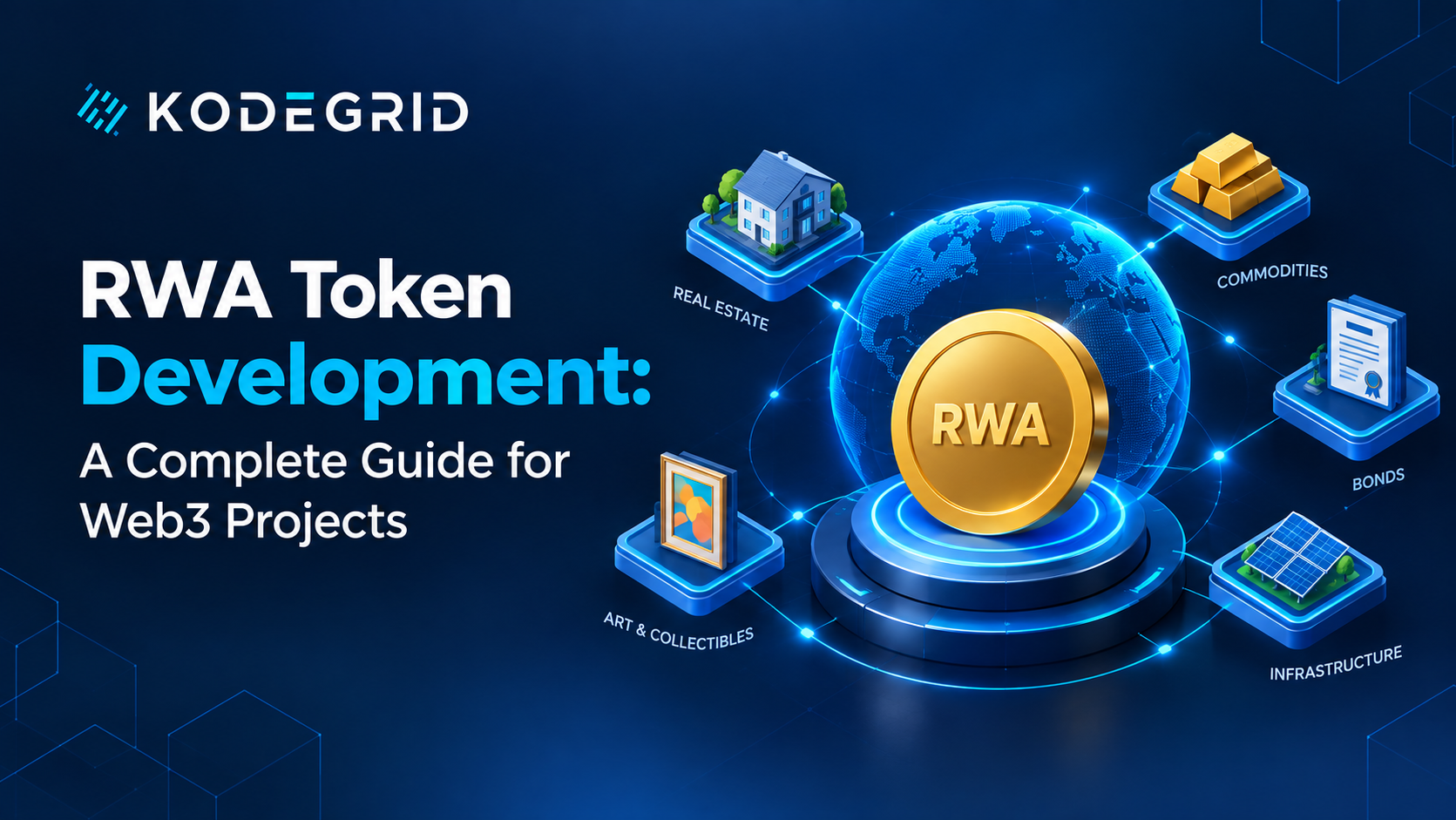
Real-world asset (RWA) tokenization is one of the fastest-growing trends in Web3. Instead of trading only digital-native coins, people can now own blockchain tokens that represent real property, bonds, gold, invoices, and more. For founders, this opens a huge market. For investors, it makes assets that were once hard to access much easier to buy and sell.
This guide explains what RWA tokens are, how they work, and how to build one, in simple terms and with examples.
What Is an RWA Token?
An RWA token is a digital token on a blockchain that represents ownership or rights in a real-world asset. The asset stays in the real world, while the token acts as a digital record of who owns a share of it.
Example: Imagine a commercial building worth $1 million. Instead of selling it to one buyer, you create 1,000,000 tokens, each representing a $1 share. An investor with just $100 can now own a small piece of the building and receive a proportional share of the rental income.
Common assets being tokenized include:
- Real estate
- Government bonds and treasury bills
- Gold and other commodities
- Private credit and invoices
- Art and collectibles
- Carbon credits
Why RWA Tokenization Is Growing
RWA tokens solve real problems in traditional finance:
- Lower entry barriers: Fractional ownership lets people invest small amounts.
- Better liquidity: Tokens can be traded faster than assets like property.
- 24/7 markets: Blockchain trading does not stop on weekends.
- Faster settlement: Transfers can complete in minutes instead of days.
- Transparency: Ownership and transactions are recorded on-chain.
Large financial institutions are now exploring tokenized funds and bonds, which adds credibility and attracts more projects into the space.
How RWA Token Development Works
Building an RWA token is different from launching a regular crypto token. The token is only valuable if the legal and real-world side is solid. Here is the process step by step.
Step 1: Choose the Asset
Pick an asset with clear ownership, a reliable valuation, and steady demand. Assets that produce income, such as rent or interest, are easier to explain to investors.
Step 2: Set Up the Legal Structure
This is the most important step. The token must be legally connected to the asset. Many projects create a special purpose vehicle (SPV), a separate legal company that holds the asset, and the tokens represent shares in that company.
Example: A real estate SPV owns the building. Token holders own shares in the SPV, so their rights are legally recognized.
Work with legal experts to confirm whether your token is considered a security in your target countries. Rules differ across the US, EU, UAE, Singapore, and other regions, so always check current requirements.
Step 3: Select the Right Token Standard
The standard you choose controls how the token behaves:
- ERC-20: The classic standard for fungible tokens, suitable for simple fractional ownership.
- ERC-3643: Designed for regulated tokens, with built-in identity checks and transfer restrictions.
- ERC-1400: Another security token standard with partitions and compliance controls.
- ERC-721 or ERC-1155: Useful when each asset is unique, such as a single piece of art.
RWA tokens often need rules like "only verified investors can hold this token," which basic tokens do not support.
Step 4: Choose the Blockchain
Ethereum is the most trusted option for institutional assets, thanks to its security and liquidity. Layer 2 networks and chains like Polygon offer lower fees. Many founders work with an ethereum token development company to choose the best network for their asset and audience.
Step 5: Build the Smart Contracts
The smart contract is the code that issues and manages your token. For RWA projects, it usually includes:
- Identity and KYC checks: Only approved wallets can hold or receive tokens.
- Transfer restrictions: Rules based on country, investor type, or holding period.
- Dividend or income distribution: Automatic payouts to token holders.
- Pause and recovery functions: Tools to handle emergencies or lost wallets.
- Minting and burning controls: Tokens are created or removed only when the asset side changes.
Because mistakes can be costly, many businesses work with an erc20 token development company that understands both token standards and compliance needs.
Step 6: Connect Real-World Data
The blockchain cannot see the real world by itself. Oracles and reporting tools bring in data like asset valuations, reserve proof, and payment records. Regular audits and attestations help prove that the asset truly exists and matches the tokens issued.
Step 7: Audit and Test
Get an independent smart contract security audit before launch, and test everything on a testnet first. For RWA projects, also review legal documents and custody arrangements, since the real-world side matters as much as the code.
Step 8: Launch and Distribute
Launch in stages, onboard verified investors, and list the token on a compliant platform or secondary market. Clear communication about risks, returns, and rights builds long-term trust.
Key Challenges to Plan For
- Regulation: Rules are evolving, so legal guidance is essential.
- Valuation: Real-world assets need reliable, regularly updated pricing.
- Custody: Someone must safely hold the physical or legal asset.
- Liquidity: A token is only easy to sell if buyers exist.
- Security: Both smart contracts and admin keys must be protected.
Should You Build In-House or Hire Experts?
RWA projects need blockchain developers, legal advisors, security auditors, and finance experts working together. That is a lot to manage for a new team.
Partnering with an experienced crypto token development company helps you avoid common mistakes in architecture, compliance, and security. A reliable token development company can also guide you from the idea stage through launch and long-term support.
If you are ready to start, explore our crypto token development services for smart contract development, token standard selection, audits, and deployment. The right token development services partner can turn a complex RWA concept into a secure, launch-ready product.
Conclusion
RWA tokenization connects traditional finance with blockchain, making valuable assets easier to own, trade, and manage. But success depends on more than code. You need a strong legal structure, the right token standard, reliable data, thorough audits, and a clear plan for investors.
If you approach crypto token development with careful planning and the right experts, you can build an RWA token that is secure, compliant, and trusted. Start with a well-defined asset, build compliance into the design from day one, and grow step by step. With solid token development, RWA projects can unlock real value for both builders and investors in 2026 and beyond.

 Arabic
 French
 Spanish
 Portuguese
 Deutsch
 Turkish
 Dutch
Dutch
 Italiano
 Russian
 Romaian
 Portuguese (Brazil)
 Greek
Greek
 Bengali