


Door for Soundproofing and Better Privacy in Modern Homes
Interior doors do more than separate one room from another. They influence privacy, sound control, comfort, appearance, and how effectively different areas of a home function. This becomes particularly important in modern homes where bedrooms, home offices, entertainment areas, and living spaces may be positioned close together.
Everyday sounds can easily travel through lightweight doors. Conversations, television, music, footsteps, and activity from nearby rooms can become distractions when the door does not provide enough resistance to airborne sound. At the same time, people inside a room may want greater privacy when working, sleeping, studying, or having conversations.
Choosing a door for soundproofing requires more than selecting a particular style. Door construction, core density, thickness, gaps around the frame, seals, hardware, and installation can all affect acoustic performance. Understanding these factors can help homeowners make a more informed choice during a renovation or new construction project.
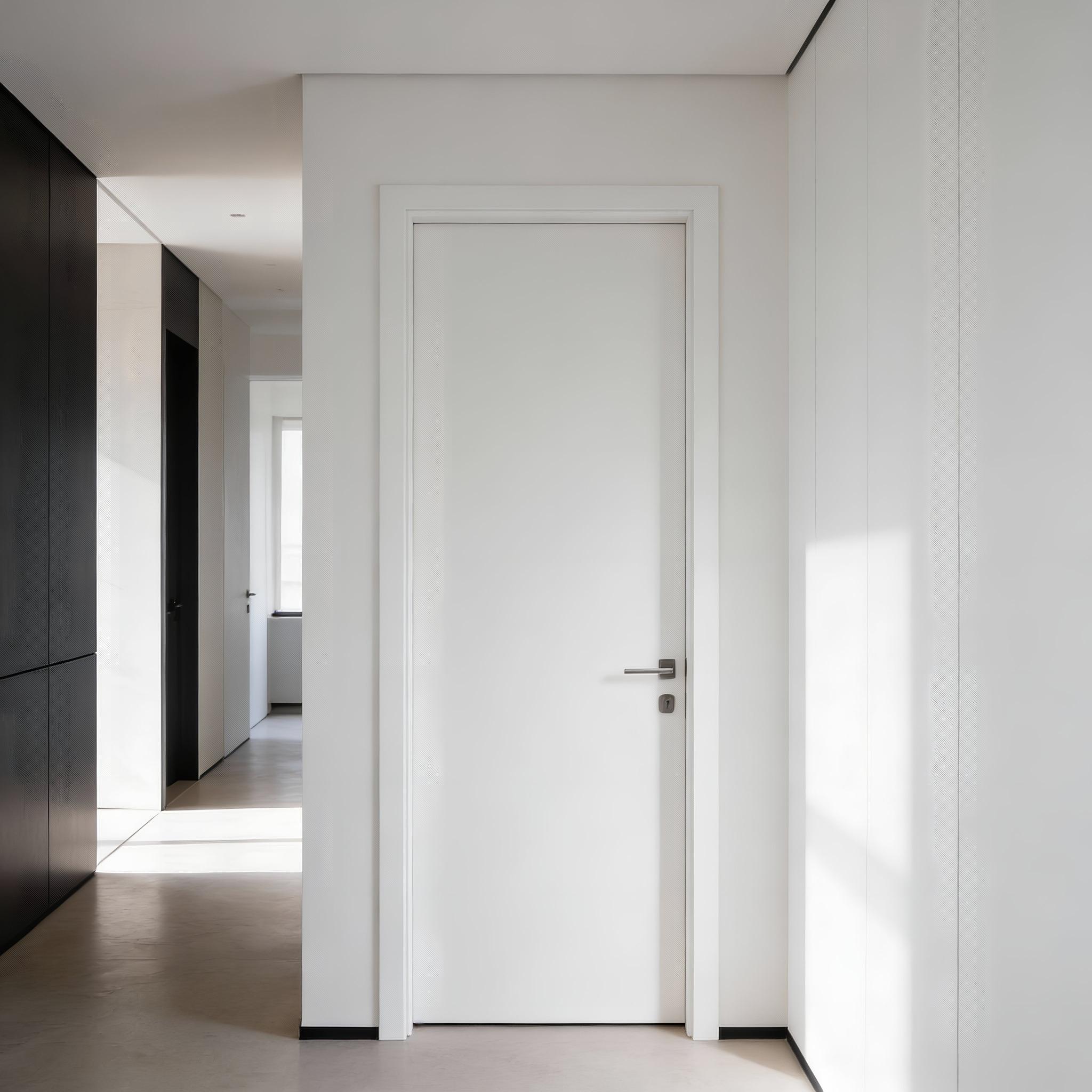
Why Interior Doors Matter for Sound Control
Walls usually contain more material than doors, but an opening within a wall can become a weak point for sound transmission. Even a well-built wall may provide limited privacy if the door installed in that opening is lightweight or has significant gaps around its edges.
Sound moves through air and can also travel through structures. When a door has a lightweight construction, sound waves may pass through it more easily. Gaps around the perimeter can create another pathway for noise.
This means improving acoustic comfort is not simply about finding a door labeled as soundproof. The complete door assembly matters.
The slab, frame, hinges, threshold, seals, and surrounding wall should work together. If one component has poor acoustic performance, it can reduce the effectiveness of the overall installation.
For homeowners, this is particularly relevant in rooms where privacy or concentration is important.
What Makes a Door Effective at Reducing Noise?
Several characteristics can contribute to better sound control.
Mass
A heavier door generally provides more resistance to airborne sound than a lightweight construction. Dense materials can reduce the amount of sound energy passing through the door.
This is one reason solid-core construction is frequently considered when acoustic performance is a priority.
Core Construction
The interior structure of a door affects its weight, rigidity, and acoustic characteristics. Hollow-core doors contain lightweight internal structures and are generally chosen when low weight and affordability are more important.
Solid-core construction uses a denser material that gives the door greater mass. Depending on the specific construction, this can help reduce sound transmission between rooms.
Thickness
Door thickness can also influence sound control. A thicker and denser assembly may provide greater resistance to airborne noise than a thinner lightweight door.
However, thickness should always be compatible with the existing or planned frame, hinges, hardware, and other installation components.
For more information about common interior door dimensions, see Evolux Doors' guide to standard interior door thickness.
Sealing
Even a dense door can perform poorly if there are large gaps around the edges. Sound can travel through these openings, reducing the privacy provided by the door itself.
Weatherstripping-style seals or acoustic-rated perimeter seals can help close these gaps when appropriate for an interior application.
Solid-Core Construction and Acoustic Performance
Solid-core doors are commonly considered for spaces where durability, privacy, and sound reduction are important. Their greater density provides more mass than many hollow-core alternatives.
This does not mean that every solid-core door will provide the same acoustic performance. Materials, thickness, construction methods, seals, and installation all influence the final result.
For homeowners comparing different options, it is useful to consider the complete specification instead of focusing only on the phrase "solid core."
A dense door can be particularly practical in bedrooms, offices, media rooms, and other spaces where reducing everyday noise is desirable.
Evolux Doors also explains how solid-core flush doors can support soundproofing, making this resource useful for homeowners who want to understand the subject in greater detail.
Understanding Sound Transmission Class Ratings
Sound Transmission Class, commonly abbreviated as STC, is a rating used to describe how well a building element reduces airborne sound transmission.
A higher STC value generally indicates greater resistance to airborne sound passing through the tested assembly. However, the rating applies to a specific tested construction rather than automatically representing the performance of every door installed in a building.
This distinction is important.
A door may have a particular acoustic rating under laboratory conditions, but the installed performance can be affected by gaps, the frame, seals, adjacent walls, and installation quality.
When comparing products for a renovation, homeowners should therefore look for documented acoustic information where available and consider the entire door assembly.
Choosing the Right Room for Acoustic Doors
Not every room needs the same level of sound control. Identifying where noise is actually causing a problem can help you prioritize your budget.
Bedrooms
Bedrooms are among the most common spaces where better acoustic separation can be useful. A bedroom located beside a television room, kitchen, staircase, or busy hallway may benefit from a denser door construction.
Reducing sound transmission can help create a quieter environment for sleeping and relaxation.
Home Offices
Working from home can create two privacy challenges. Outside noise can interrupt concentration, while conversations from inside the office may travel into other areas of the house.
A properly selected door can contribute to better separation. This is especially useful for video meetings, phone calls, and focused work.
Media Rooms
Home theaters and media rooms can generate significant sound. While the walls and ceiling are major components of acoustic design, the door should not become an obvious weak point.
A heavier door combined with appropriate seals can help limit sound movement between the media space and surrounding rooms.
Children's Rooms
Children's bedrooms and playrooms can also benefit from better separation. Parents may want to reduce noise entering bedrooms or prevent activity from spreading throughout the house.
The appropriate solution depends on the home's layout and the level of acoustic separation required.
Bathrooms
Privacy is often more important than extensive sound reduction in bathrooms. A well-fitted interior door can help limit conversations and everyday bathroom sounds while maintaining a comfortable appearance.
The Importance of Door Gaps
One of the most overlooked factors in acoustic performance is the gap around a door.
Sound can move through small openings. A visible gap beneath the door can be particularly noticeable because it creates a direct pathway between rooms.
The solution depends on the door and the building configuration. Door sweeps, thresholds, perimeter seals, and properly fitted frames can help reduce unwanted openings.
However, homeowners should avoid simply sealing every gap without considering ventilation and building requirements. Some rooms require specific airflow arrangements, and modifications should be appropriate for the property's design and local requirements.
A properly installed door should sit squarely within its frame and close consistently. Poor alignment can create uneven gaps and affect both privacy and everyday operation.
Door Frames and Seals Matter
The slab itself is only one part of the system. The frame provides the structure around it, while seals can close the space between the moving door and stationary frame.
If a dense door is installed into an unsuitable or poorly fitted frame, its acoustic benefits may be reduced.
When planning an installation, examine:
-
Frame material and construction
-
Perimeter gaps
-
Door alignment
-
Hinge placement
-
Latch engagement
-
Bottom clearance
-
Available sealing systems
-
Compatibility with existing trim
These details may appear small, but together they can have a meaningful effect on the way a room feels.
How Door Thickness Influences Performance
Thickness is another factor worth considering when selecting a door for a renovation.
A door needs enough structural material to perform its intended function. Greater thickness can contribute to a more substantial feel and may support better acoustic performance depending on the construction.
However, simply choosing the thickest available door is not always the correct approach. The door must work with the frame and hardware.
Hinges need to support the door's weight. The frame must accommodate the slab. Latches and handles need to align correctly. Casing and trim should also work with the finished installation.
For replacement projects, carefully measuring the existing door and opening before ordering a new unit can prevent compatibility problems.
Soundproof Interior Doors and Home Design
Homeowners sometimes assume that improving acoustic performance requires sacrificing style. That is not necessarily the case.
Soundproof interior doors can be selected in designs that complement the rest of the home. A modern interior may benefit from a smooth flush design, while a traditional or transitional home may suit a paneled configuration.
The visual design should be considered alongside the door's construction.
For example, a homeowner could choose a simple white door with contemporary hardware for a minimalist office. Another homeowner may prefer a paneled door with a classic finish for a bedroom.
The important point is to distinguish visual style from acoustic construction. Two doors can have similar appearances while having very different internal structures.
Flush Doors for Modern Interiors
Flush doors have smooth surfaces without raised or recessed decorative panels. Their clean appearance makes them a natural fit for contemporary and minimalist interiors.
For homeowners who want a simple visual appearance while also considering acoustic performance, the construction behind the flush surface becomes important.
A flush door can be manufactured with different core options. A denser construction can provide a more substantial door than a lightweight alternative.
Evolux Doors offers a Flush Doors collection designed around clean contemporary aesthetics. Homeowners can explore the available designs and configurations when considering a modern interior door solution.
Shaker Doors for Classic and Transitional Homes
Not every home calls for a completely flat door. Paneled doors can introduce subtle architectural detail while still working with contemporary interiors.
Shaker-style doors use a framed-panel appearance that can complement traditional, transitional, and modern spaces.
When acoustic performance is important, the visual style should not be the only consideration. The core, thickness, seals, and installation should also be evaluated.
This approach allows homeowners to select a door that works visually with the room while also addressing practical requirements such as privacy and sound control.
Homeowners interested in a paneled design can explore Evolux Doors' Shaker Doors collection for additional style options.
Interior Doors for Soundproofing in Home Offices
The growth of dedicated home offices has made acoustic privacy more relevant in residential design.
An office door needs to perform two functions. It should help keep unwanted household noise outside while also limiting conversations from traveling into nearby spaces.
A dense door construction can be part of the solution. Perimeter seals and careful installation can further improve the separation.
Furniture placement can also affect the overall environment. Bookshelves, curtains, rugs, and upholstered furniture can help absorb some sound within a room, although they should not be considered substitutes for proper door construction.
If an office is located beside a bedroom or living room, consider the entire wall assembly and door opening rather than treating the door as an isolated component.
Door Hardware and Acoustic Considerations
Hardware is often selected primarily for appearance and convenience, but it also needs to work correctly with the door's weight and construction.
A heavier door may require appropriately sized hinges and a suitable frame. The latch should engage properly so that the door closes firmly against the seals.
Handles should be comfortable to operate, while hinges should remain secure over time.
If the door does not close fully, even a well-constructed slab may provide less privacy than expected.
This is another reason professional installation can be valuable for projects where acoustic performance is a priority.
Acoustic Performance and Privacy Are Related but Different
Sound reduction and privacy are closely connected, but they are not identical.
A door that reduces airborne noise can help make conversations less audible from another room. However, privacy can also depend on room layout, wall construction, ceiling assemblies, and the behavior of sound within the entire building.
For example, a bedroom may have a dense door but still experience noise through a shared wall.
Similarly, a home office may have a well-sealed door but remain noisy because sound travels through the ceiling or ventilation system.
The best approach is to identify the main path through which sound is traveling and address the weakest part of the assembly.
Common Mistakes When Selecting an Acoustic Door
Focusing Only on the Door Slab
A heavy door cannot compensate for major gaps around the frame. Evaluate the complete assembly.
Ignoring the Frame
The frame needs to support the door and provide a suitable surface for seals and hardware.
Choosing Based Only on Appearance
A door can look substantial without having a dense internal construction. Always check the product specifications.
Forgetting About Installation
Incorrect alignment, gaps, or poorly adjusted hardware can reduce performance.
Assuming Maximum Thickness Is Always Better
Thickness needs to be appropriate for the opening, hardware, frame, and intended use.
Treating Every Room the Same
A bedroom, closet, bathroom, and home theater have different functional requirements. Prioritize acoustic upgrades where they will provide the most practical benefit.
How to Select a Door for Better Privacy
Start by identifying the reason privacy is needed. If the problem is conversations traveling between bedrooms, focus on the door's density, seals, and installation.
If the concern is noise from a home theater, consider the entire room assembly. If the goal is a quieter home office, look at both the door and surrounding walls.
Next, compare construction details. Ask about core material, thickness, acoustic ratings where available, and recommended hardware.
Finally, think about design. The door should coordinate with flooring, trim, wall colors, cabinetry, and other interior features.
Evolux Doors provides Flush Doors and Shaker Doors collections that allow homeowners and professionals to consider different visual approaches while evaluating the construction needed for their project.
Maintenance for Long-Term Performance
Even a well-installed door needs regular maintenance.
Check the hinges periodically and tighten loose hardware when necessary. Make sure the latch continues to engage correctly and inspect seals for wear.
If a door begins rubbing against the frame or develops an uneven gap, address the issue rather than ignoring it. Small alignment problems can become more noticeable over time.
Keep the door surface clean using products appropriate for its finish. Avoid harsh chemicals that could damage the coating.
For additional care recommendations, see Evolux Doors' guide to maintaining interior doors.
Regular maintenance helps preserve both the appearance and functionality of an interior door.
When to Consider Professional Installation
Installation quality can have a major influence on the final result. This is especially true when a door is heavy or when acoustic performance is an important requirement.
Professional installation can help ensure that the slab is properly aligned, hinges are correctly positioned, the latch engages consistently, and perimeter gaps are appropriate.
For larger renovation projects, it may also be useful to review the existing wall construction and determine whether the door is actually the main source of sound transmission.
If the surrounding wall allows significant noise through, replacing the door alone may not solve the entire problem.
Final Thoughts
Choosing the right interior door involves balancing appearance, durability, privacy, construction, and practical requirements. When sound control is important, homeowners should look beyond the visible surface and examine the complete door assembly.
A heavier core, suitable thickness, properly fitted frame, effective seals, and accurate installation can all contribute to better acoustic separation. The room's location and purpose should also guide the selection.
Whether the interior calls for a smooth contemporary surface or a classic paneled appearance, the door can be selected as part of a broader design strategy. By considering both performance and style, homeowners can create rooms that feel more comfortable, private, and functional.
For additional guidance, homeowners can explore Evolux Doors' resources on interior doors for soundproofing and privacy, solid-core flush door construction, Flush Doors, and Shaker Doors before making a final selection.
FAQs
Q: What type of door is best for reducing sound between rooms?
A: A dense, properly fitted door can provide better airborne sound reduction than a lightweight hollow construction. Solid-core options are often considered for bedrooms, offices, and media rooms, especially when combined with suitable seals and professional installation.
Q: Does a thicker door provide better soundproofing?
A: Thickness can contribute to sound reduction, but it is only one factor. Core density, materials, seals, frame construction, and installation also affect performance. The door should be compatible with the existing opening, hinges, hardware, and surrounding trim.
Q: Can interior doors improve privacy in a home office?
A: Yes. A well-fitted dense door can reduce the transfer of conversations and everyday household sounds. Perimeter seals and proper installation can further improve separation, although wall and ceiling construction should also be considered when privacy is a major concern.
Q: Are flush doors suitable for rooms where sound control matters?
A: They can be, depending on their internal construction and specifications. A flush surface describes the door's appearance rather than automatically determining acoustic performance. Homeowners should evaluate the core, thickness, seals, and installation when sound reduction is important.
Q: How can I reduce sound leaking around an interior door?
A: Check for gaps around the frame and beneath the door. Proper alignment, perimeter seals, suitable thresholds, and door sweeps can help reduce openings. However, ventilation and building requirements should be considered before sealing gaps or modifying an existing door assembly.

 Arabic
 French
 Spanish
 Portuguese
 Deutsch
 Turkish
 Dutch
Dutch
 Italiano
 Russian
 Romaian
 Portuguese (Brazil)
 Greek
Greek
 Bengali