


Tree Moving Services in Santa Clara, CA: A Practical Guide
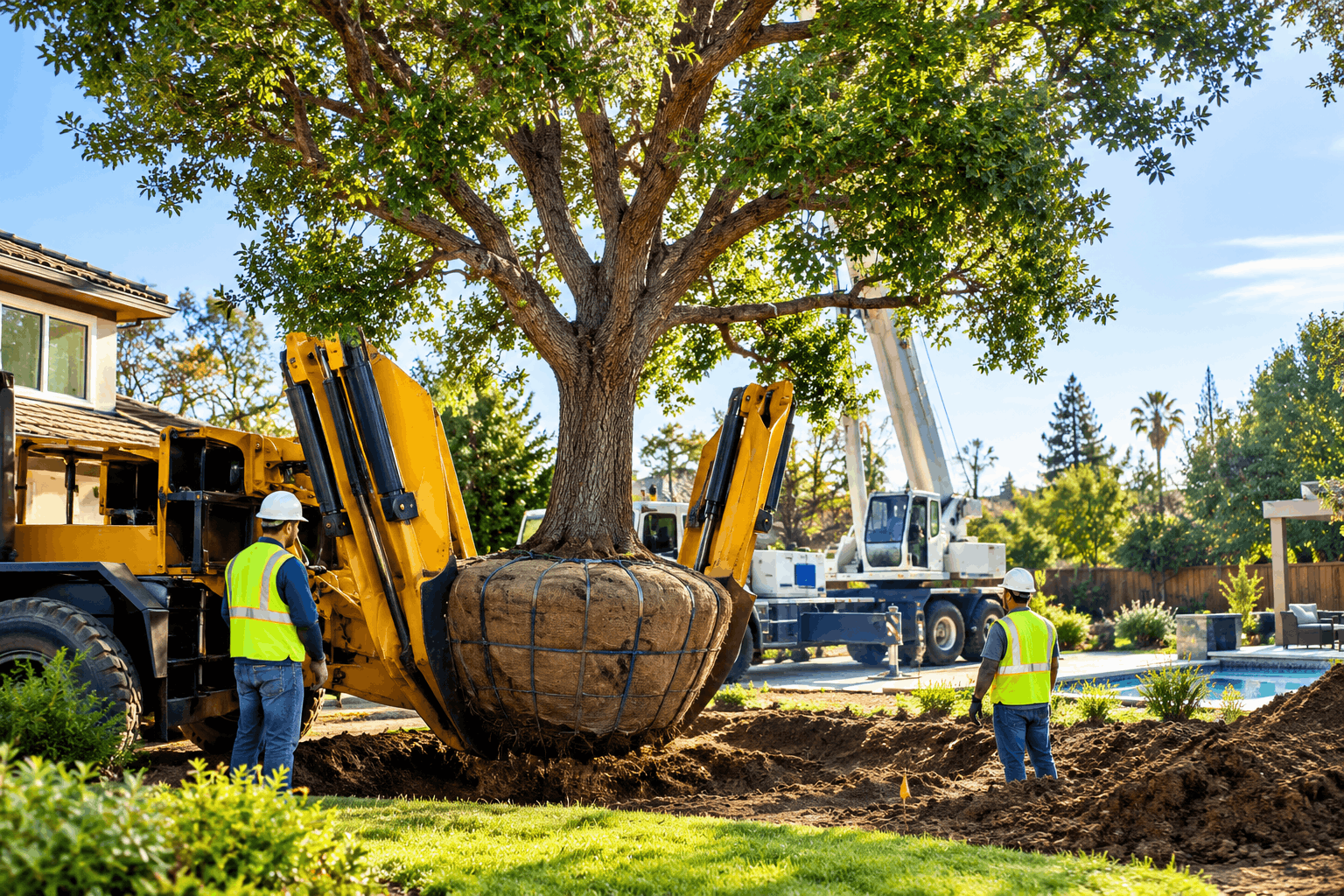
You finally have approval for the backyard addition. The plans look great. There is just one problem: a 20-year-old oak stands exactly where the foundation needs to go.
For many homeowners, the first thought is removal. But more property owners now look into Tree Moving Services in Santa Clara, CA as a way to keep mature trees instead of cutting them down. With the right planning, a well-established tree can move to a new spot and keep growing for decades.
This guide explains how tree relocation works, when it makes sense, and what to think about before you decide.
Why Moving a Tree Is Different From Planting One
Planting a young sapling is simple. You dig a hole, set it in, and water it. Moving a mature tree is a different kind of project.
Think of it like moving a family member who has lived in the same house for 30 years. They have deep roots in the neighborhood, established routines, and a support system. You can move them, but the transition needs care or they will struggle.
A mature tree depends on a wide network of roots to pull in water and nutrients. When that network is cut, the tree goes into shock. The goal of any relocation is to keep enough of that root system intact so the tree can recover in its new home.
How the Relocation Process Usually Works
Most professional tree moves start well before moving day. Arborists often begin with root pruning, which means cutting roots in a controlled circle around the trunk weeks or even months ahead of time.
Imagine packing a suitcase in advance instead of throwing everything into a bag the morning you leave. Root pruning pushes the tree to grow new feeder roots closer to the trunk. Those roots come along in the move.
On moving day, crews dig around the tree to form a root ball, the compact mass of soil and roots that travels with it. Larger trees are often boxed in wooden frames to hold the soil together. Depending on size, the tree may be lifted with a crane, a loader, or a specialized tree spade.
The new planting site gets prepared before the tree arrives. Soil quality, drainage, sun exposure, and space for future growth all matter. A healthy tree planted in the wrong spot will still decline.
Timing, Climate, and Local Conditions
Timing plays a big role in success. Many arborists prefer cooler months, when trees are less active and lose less water through their leaves. In the South Bay, that often means late fall through early spring.
The local climate adds another layer. Long dry summers mean a relocated tree needs a steady watering plan, especially during its first two years. Clay-heavy soils, common in parts of the valley, can also hold water in ways that affect root health.
Local rules matter too. Cities across the region, including Santa Clara, have guidelines for protected or significant trees. Before any work begins, it is smart to check whether a permit is needed for removal or relocation.
The Real Benefits of Keeping a Mature Tree
The most obvious benefit is time. A newly planted tree may take 15 to 25 years to reach the size of the one you already have. Relocation keeps that growth intact.
Mature trees also provide shade that lowers cooling needs during hot summer afternoons. They support birds and pollinators, reduce stormwater runoff, and soften the look of a property in ways young trees simply cannot yet.
There is also a financial angle. Real estate professionals often note that established landscaping adds real curb appeal. Agents at firms like SH & Co. Real Estate Services frequently see how a well-placed mature tree can shape a buyer's first impression of a home.
Then there is the emotional value. Some trees were planted by a parent, marked a family milestone, or simply became part of the home's character. Moving them preserves more than shade.
Common Situations Where Tree Relocation Makes Sense
Home additions and ADUs are among the most common reasons. As more homeowners build backyard units, trees often end up in the path of construction.
Commercial developments see this too. A new parking layout or building footprint may conflict with existing trees that the property owner or city wants to keep. Relocating them can help projects move forward while protecting the local canopy.
Landscape redesigns are another example. A homeowner may realize a tree planted years ago now blocks solar panels, crowds the house, or sits too close to a pool. Shifting it 30 feet may solve the problem without losing the tree.
Some people even move trees when they move homes. Specimen trees, prized palms, or rare varieties sometimes travel to a new property when the owner relocates within the area.
What to Consider Before You Decide
Not every tree is a good candidate. Species, age, health, and root structure all affect the odds of success. Some trees handle relocation well, while others react poorly to root disturbance.
Access matters as well. A large crane needs room to reach the tree and the new site. Tight side yards, overhead power lines, and underground utilities can limit options or raise costs.
When comparing Tree Transplant Services in Santa Clara, CA, look for certified arborists, clear aftercare guidance, and experience with trees similar in size and species to yours. A good evaluation should tell you honestly whether moving the tree is worth it.
Aftercare is where many relocations succeed or fail. Deep watering, mulching, staking, and regular check-ins during the first year give the tree its best chance to settle in.
The trees that thrive after a move are rarely the luckiest ones. They are the ones whose owners planned ahead.
Frequently Asked Questions
How much does it cost to move a mature tree?
Costs vary widely based on tree size, species, access, and equipment needs. Small trees may be relatively affordable, while large trees requiring cranes and boxing can cost several thousand dollars or more.
What is the survival rate of a transplanted tree?
Survival depends on the tree's health, species, root preparation, and aftercare. Trees that are root pruned in advance and watered consistently after the move have much better odds of recovery.
When is the best time of year to move a tree?
Cooler months are usually best, since trees are less active and lose less water. In most of Northern California, late fall through early spring is the preferred window.
Do I need a permit to relocate a tree?
It depends on the tree and the city. Many local governments protect certain species or sizes, so check with your city's planning or public works department before starting any work.
How long does it take for a moved tree to recover?
Most trees need one to three years to fully re-establish their root systems. During that time, steady watering and monitoring are key to long-term health.

 English
 Arabic
 Spanish
 Portuguese
 Deutsch
 Turkish
 Dutch
Dutch
 Italiano
 Russian
 Romaian
 Portuguese (Brazil)
 Greek
Greek
 Bengali