


How a Laser Rust Removal Tool Transforms Modern Metal Surface Cleaning
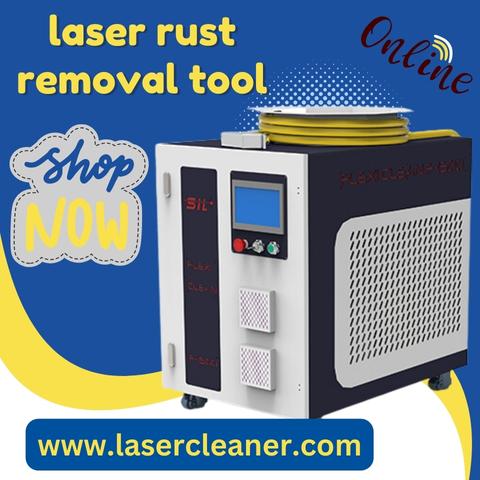
Rust is a common challenge in metalworking, manufacturing, maintenance, restoration, and industrial production. When moisture and oxygen react with iron or steel, corrosion gradually develops across the surface, affecting appearance and potentially interfering with further processing. Traditional rust removal methods can require considerable manual effort and may create dust, residue, or additional surface wear. A laser rust removal tool offers a modern way to address surface corrosion through controlled laser energy.
Laser cleaning technology is increasingly being used in workshops, factories, repair facilities, and restoration environments where accurate surface treatment is important. Instead of relying on abrasive contact, the laser interacts directly with unwanted rust and contaminants on the material surface. This makes the process suitable for applications where controlled cleaning and careful handling of the base material are required.
What Is a Laser Rust Removal Tool?
A laser rust removal tool is a laser cleaning system designed to remove rust and other unwanted surface contaminants from metal. The equipment directs a concentrated laser beam toward the affected area. When the laser energy interacts with the rust layer, the unwanted material absorbs the energy and is removed from the surface.
The process can be controlled according to the material, contamination level, and cleaning requirements. Operators can adjust appropriate working parameters to achieve the desired cleaning result while maintaining control over the treatment area.
Unlike mechanical methods that physically contact the surface, laser cleaning is a non-contact process. This is particularly useful when working with detailed components, equipment parts, molds, tools, and metal structures that require careful treatment.
How Laser Rust Removal Works
The working principle behind laser rust removal is based on the interaction between laser energy and surface contaminants. Rust generally has different optical and physical properties from the underlying metal. When a suitable laser pulse or continuous laser beam reaches the contaminated surface, the rust absorbs energy and is separated or vaporized.
The operator moves the laser cleaning head across the affected area. Depending on the system and application, the laser can be configured for different cleaning speeds, powers, frequencies, and scanning patterns.
This controlled process allows users to gradually clean rusted surfaces rather than aggressively removing material through grinding or blasting. The cleaning parameters can be selected according to the condition of the workpiece and the type of metal being treated.
Removing Rust From Different Metal Surfaces
Rust removal applications can involve many types of metal components. Steel structures, iron parts, machinery components, automotive parts, tools, pipes, molds, and fabricated metal products may develop corrosion during storage or operation.
A laser rust removal tool can be used for localized corrosion as well as larger surface areas, depending on the equipment configuration. For delicate parts, careful parameter selection is especially important because excessive laser energy may affect the base material.
Before beginning a production-scale operation, testing on a suitable sample or less visible section can help determine the appropriate settings. This approach allows operators to establish a cleaning process that matches the specific material and rust condition.
Preparing Metal Before Laser Cleaning
Proper preparation contributes to consistent cleaning results. Loose dirt, oil, grease, and other contaminants should be assessed before the laser treatment begins. Heavy contamination may require preliminary cleaning if it interferes with the rust-removal process.
The workpiece should also be positioned securely so that the operator can move the laser head smoothly across the surface. Uneven positioning or difficult access can make it harder to maintain consistent cleaning.
For industrial applications, establishing a repeatable preparation and cleaning procedure can help maintain consistent results across batches of components.
Applications in Industrial Maintenance
Industrial machinery can develop rust when exposed to humidity, water, chemicals, or unsuitable storage conditions. Corrosion may appear on machine frames, components, tools, fixtures, and replacement parts.
Laser cleaning provides a practical method for treating selected areas without using abrasive materials directly against the workpiece. Maintenance teams can use the technology as part of scheduled equipment care, component preparation, and restoration work.
For factories with frequently maintained machinery, the ability to perform controlled surface cleaning can make laser technology an important part of a broader maintenance process.
Automotive and Transportation Components
Rust is also a concern in automotive and transportation industries. Metal brackets, engine components, tools, frames, mechanical parts, and other components may require corrosion removal before repair, coating, welding, or inspection.
A laser rust removal tool can prepare selected surfaces by removing corrosion and unwanted deposits. Because the laser operates without direct mechanical contact, it can be useful for components with shapes, edges, and detailed areas that are difficult to treat using conventional abrasive equipment.
Before cleaning automotive components, operators should identify sensitive materials, coatings, electrical elements, and areas that require protection.
Surface Preparation Before Welding and Coating
Clean metal surfaces are important for many manufacturing and repair operations. Rust and contamination can interfere with subsequent processes such as welding, painting, coating, or bonding.
Laser cleaning can be incorporated into surface preparation workflows where corrosion needs to be removed before the next manufacturing step. By treating the surface before welding or coating, manufacturers can establish a cleaner starting point for the subsequent operation.
The required cleaning level depends on the application. A component intended for welding may require a different cleaning procedure from a decorative metal part being prepared for finishing.
Restoration of Tools and Metal Equipment
Older tools, machinery, architectural metalwork, and historical components can accumulate corrosion over time. Restoration projects often require careful handling because aggressive mechanical cleaning can alter the original surface.
For valuable or historically significant objects, testing and professional assessment should be performed before treatment to determine whether laser cleaning is appropriate.
Choosing the Right Laser Cleaning Equipment
Selecting suitable equipment depends on the intended application rather than simply choosing the highest available power. Users should consider the type of metal, thickness and condition of the rust, size of the cleaning area, required production speed, portability, operating environment, and available electrical supply.
Handheld systems can be useful for maintenance teams and applications involving different workpieces or difficult-to-reach areas. More specialized configurations may be appropriate for production environments requiring repeatable cleaning operations.
The laser source, scanning system, control interface, cooling arrangement, cleaning head, and overall equipment design should be evaluated according to the intended workload.
Developing an Effective Cleaning Process
Successful laser rust removal requires more than directing the beam at a contaminated surface. Operators should establish suitable parameters through testing and gradually refine the process.
Keeping records of successful parameters for specific materials can help create standardized procedures. In production environments, documented settings can also make operator training and quality control easier.
Workplace Safety and Operator Training
Laser cleaning equipment should always be operated according to the manufacturer's instructions and applicable workplace safety requirements. Industrial laser systems can present serious hazards, particularly to the eyes and skin.
The working area should be appropriately controlled, and suitable protective equipment should be used according to the laser classification and operating procedure. Operators should receive proper training before using the equipment.
Ventilation and fume extraction should also be considered because removing coatings, rust, paint, oil, or other contaminants can produce airborne particles or fumes. The material being cleaned should be identified before processing so that appropriate controls can be established.
The Growing Role of Laser Rust Removal
As industries continue looking for controlled and efficient surface-treatment methods, laser cleaning technology is becoming increasingly relevant. Its non-contact operating principle and ability to target surface contamination make it suitable for a wide range of maintenance, manufacturing, restoration, and preparation tasks.
For businesses handling regular corrosion problems, investing in suitable laser cleaning equipment can introduce a dedicated process for surface preparation. The exact equipment and configuration should be selected according to workload, materials, cleaning requirements, and workplace conditions.
Final Thoughts
A laser rust removal tool provides a modern approach to dealing with corrosion on metal surfaces. From industrial maintenance and automotive components to welding preparation and restoration projects, laser cleaning can be incorporated into many different workflows.

 English
 Arabic
 French
 Portuguese
 Deutsch
 Turkish
 Dutch
Dutch
 Italiano
 Russian
 Romaian
 Portuguese (Brazil)
 Greek
Greek
 Bengali