


Fiber Laser Welding: Precision Joining for Modern Metal Fabrication
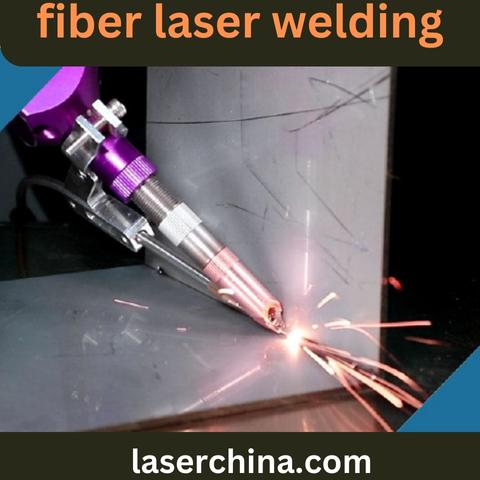
Metal fabrication continues to evolve as manufacturers look for cleaner, faster, and more controlled ways to join different components. Among modern welding technologies, fiber laser welding has become an important solution for industries that require accurate and consistent metal joining. By using a concentrated laser beam, this process can create precise welds while giving operators greater control over heat input and welding parameters.
From stainless steel and carbon steel to aluminum and other commonly used metals, fiber laser welding can be applied across a wide range of fabrication projects. Its growing use in workshops, manufacturing plants, automotive production, machinery manufacturing, and metalworking businesses reflects the demand for efficient welding processes that can support modern production requirements.
Understanding Fiber Laser Welding
Fiber laser welding is a fusion welding process that uses a high-intensity laser beam to heat and join metal surfaces. The laser is generated through a fiber-based laser source and directed toward the workpiece through an optical delivery system. When the focused beam reaches the metal, it creates a concentrated area of heat that melts the material and forms a weld pool.
As the molten metal cools, it creates a strong connection between the components. The highly focused nature of the laser allows welding energy to be concentrated in a relatively small area. This makes it possible to work with precise weld paths and carefully controlled penetration.
The process can be configured for different materials, thicknesses, joint designs, and production requirements. Operators can adjust parameters such as laser power, welding speed, focal position, shielding gas, and beam movement according to the application.
How the Welding Process Works
The welding operation begins with preparing and positioning the metal components. Clean and accurately aligned surfaces help create a more consistent welding process. Depending on the application, the workpiece may be secured using clamps, fixtures, or automated positioning equipment.
Once the components are positioned, the laser head is directed along the intended weld line. The laser beam concentrates energy onto the joint, rapidly heating the material. When sufficient energy is applied, the metal melts and forms a controlled weld pool.
Shielding gas is commonly used around the welding area to protect the molten metal from atmospheric contamination. The laser head then travels along the programmed or manually controlled welding path. After the laser passes, the molten area solidifies and forms the finished joint.
Materials Commonly Used With Fiber Laser Welding
Different metals can be processed using fiber laser welding when the equipment and parameters are correctly selected. Stainless steel is widely used because it is common in industrial equipment, kitchen equipment, architectural products, and manufacturing components.
Carbon steel is another frequently processed material. It is found in machinery frames, structural components, fabrication projects, and industrial equipment. Aluminum can also be welded using suitable laser settings, although its reflective properties and thermal characteristics require careful parameter selection.
Copper, galvanized materials, titanium, and various metal alloys may also be processed in specialized applications. Before starting production, manufacturers should evaluate material composition, thickness, surface condition, and joint design to determine appropriate welding parameters.
Fiber Laser Welding in Metal Fabrication
Modern fabrication shops often work with different components and production quantities. Fiber laser welding can be integrated into workflows involving sheets, tubes, frames, brackets, enclosures, and machine components.
For sheet metal work, accurate positioning and controlled heat application are important because excessive heat can affect the surrounding material. The concentrated welding area allows operators to manage the process carefully and produce clean joining lines when the equipment is correctly configured.
In industrial manufacturing, repeatable welding parameters can also help maintain consistency across multiple components. This is particularly useful when a business produces batches of similar products and needs a dependable welding process.
Applications Across Different Industries
The use of fiber laser welding extends across many industries. Automotive manufacturers can use laser welding for selected vehicle components, brackets, structural parts, and assemblies. Machinery manufacturers may apply the process when producing equipment housings, frames, mechanical components, and specialized assemblies.
In electronics and electrical equipment production, precise welding can be useful for smaller metal components and enclosures. The technology is also relevant to stainless-steel fabrication, kitchen equipment, medical equipment manufacturing, agricultural machinery, and custom metalworking.
Jewelry and precision manufacturing applications may require highly controlled energy delivery because components can be small and sensitive to excessive heat. With suitable equipment and settings, laser welding can support these specialized production requirements.
Handheld and Automated Welding Systems
Fiber laser welding equipment is available in different configurations. Handheld systems are designed to give operators greater flexibility when working with different component sizes and welding positions. They can be useful in fabrication workshops where production requirements change from one job to another.
Automated systems are suited to production environments where repeatability and controlled movement are important. Robotic welding cells and CNC-controlled equipment can follow predefined welding paths and integrate with larger manufacturing processes.
Preparing Metal for Laser Welding
Surface preparation has an important role in the welding process. Dirt, oil, rust, paint, moisture, and other contaminants can interfere with welding quality. Cleaning the joint area before welding helps create a more controlled process.
Proper alignment is equally important. Gaps between components should be appropriate for the selected welding method and material thickness. Fixtures can help keep components in position during welding, especially when multiple pieces need to maintain accurate alignment.
Operators should also inspect the material before production to identify surface defects, excessive contamination, or dimensional inconsistencies that could affect the finished joint.
Choosing Suitable Welding Parameters
Laser power is only one part of the welding setup. Welding speed, focal position, beam characteristics, shielding gas, gas flow, material thickness, and joint geometry all influence the welding result.
A higher power setting may be appropriate for thicker materials, while thinner sheets may require carefully controlled energy input. Welding speed also affects penetration and heat distribution. If the process moves too quickly, adequate penetration may not be achieved; if it moves too slowly, excessive heat may enter the workpiece.
For this reason, manufacturers generally perform test welds before beginning full production. Testing allows operators to establish suitable parameters for the particular material and joint design.
Safety and Operator Practices
Laser welding requires appropriate safety procedures because the equipment produces concentrated laser radiation and high temperatures. Operators should follow the manufacturer's safety instructions and use suitable protective equipment and controlled working environments.
Laser-safe enclosures or designated welding areas may be required depending on the equipment configuration. Proper ventilation and fume extraction should also be considered, particularly when welding coated or contaminated materials.
Training is another important part of safe operation. Operators should understand machine controls, material preparation, welding parameters, emergency procedures, and routine equipment inspection before using the system in production.
Maintenance and Production Consistency
Regular maintenance helps keep welding equipment operating correctly. Optical components, protective windows, nozzles, cooling systems, cables, and other machine parts should be inspected according to the manufacturer's maintenance schedule.
Keeping the welding area clean is also important because dust and metal particles can affect sensitive components. Operators should monitor weld quality during production and investigate changes such as inconsistent penetration, unusual weld appearance, or unstable laser output.
Selecting a Fiber Laser Welding Machine
When choosing equipment, manufacturers should consider their typical material types, thickness ranges, production volume, welding positions, workspace, and level of automation required. Laser power should be selected according to the applications rather than simply choosing the highest available specification.
The welding head, cooling system, control interface, wire-feeding system, safety configuration, and after-sales technical support are also relevant when evaluating equipment. A machine that matches the actual workload can provide a more practical solution for long-term production.
Fiber Laser Welding for Modern Manufacturing
As metal fabrication becomes more precise and production requirements continue to change, laser-based welding technology is becoming increasingly relevant. Fiber laser welding provides manufacturers with a controlled method for joining metal components across numerous applications.
Its use in handheld fabrication, automated production, machinery manufacturing, automotive components, stainless-steel products, and specialized metalworking demonstrates how versatile laser welding can be when properly configured. With suitable material preparation, parameter selection, operator training, and regular maintenance, the technology can become an important part of a modern fabrication workflow.
Final Thoughts
Fiber laser welding represents a modern approach to metal joining that combines concentrated laser energy with precise process control. From workshop fabrication to industrial manufacturing, it can be adapted to different materials, component designs, and production environments.

 English
 Arabic
 Spanish
 Portuguese
 Deutsch
 Turkish
 Dutch
Dutch
 Italiano
 Russian
 Romaian
 Portuguese (Brazil)
 Greek
Greek
 Bengali