


How to Choose the Right Leather for a Motorcycle Vest
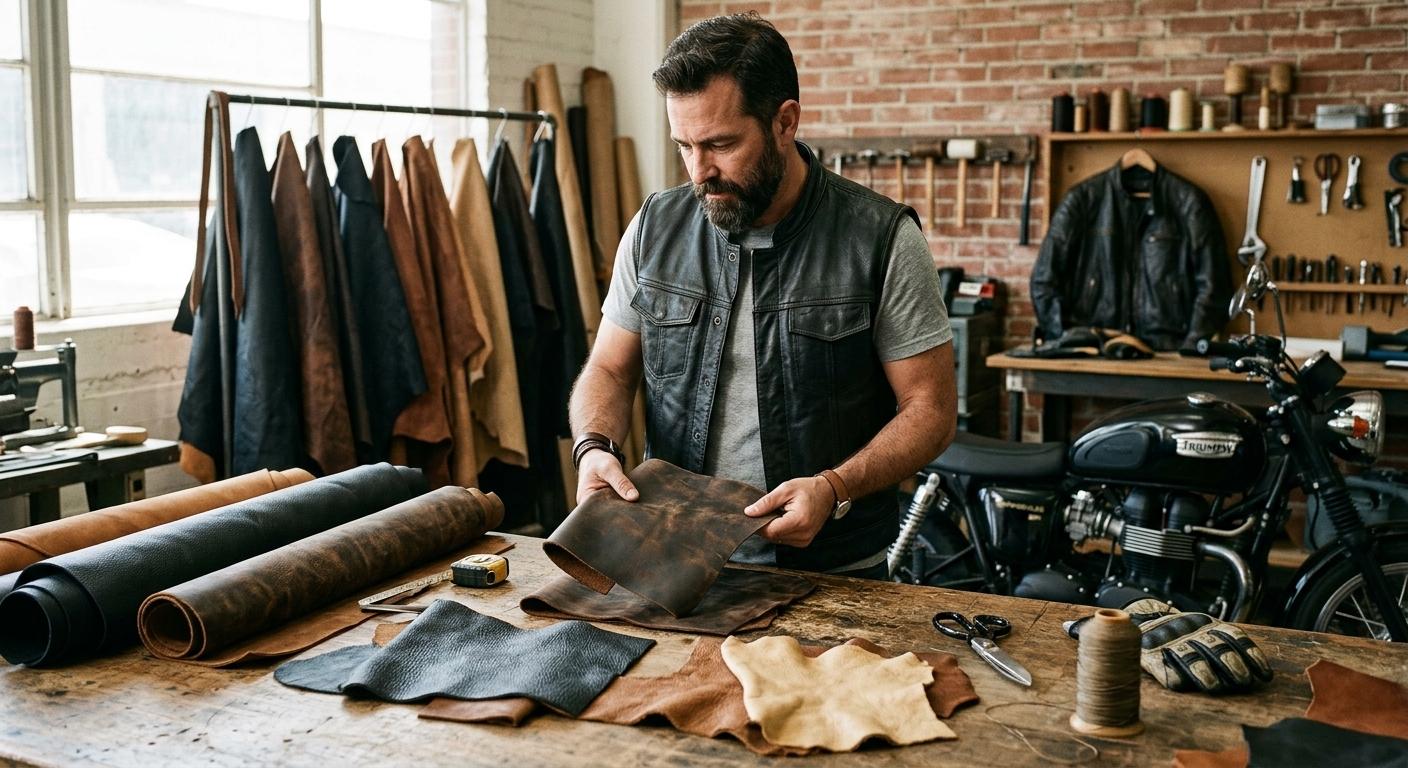
Two motorcycle vests can look nearly identical but feel completely different because of the hide type, leather thickness, grain quality, finish, and construction. Whether shopping for a men's leather biker vest, a women's leather motorcycle vest, or a club-style riding vest, the leather choice affects durability, weight, flexibility, break-in time, and riding comfort.
But the important thing is that there is no single perfect leather for every rider. The right choice depends on how the vest will be worn, layered, and used.
Why Leather Choice Matters
Choosing the right leather for a motorcycle vest affects more than appearance. The hide type determines durability, weight, flexibility, break-in time, weather comfort, and long-term wear. A heavy buffalo leather vest feels substantially different from a lighter goatskin vest, even when both are well-constructed.
The leather also affects maintenance requirements, patina development, and whether the vest feels stiff or supple during break-in. Riders who understand these differences can choose leather that matches their climate, riding habits, body shape, and personal preferences rather than simply buying the first vest that looks good.
What Makes Good Motorcycle Vest Leather?
Good motorcycle vest leather should balance several factors working together:
-
Durability: The hide should withstand regular wear and road use
-
Flexibility: Leather should move naturally without feeling stiff or restrictive
-
Thickness and weight: Affects structure, comfort, and layering
-
Grain quality: Influences appearance, texture, and aging
-
Break-in period: Some leathers soften quickly, others take longer
-
Finish: Affects maintenance, water behavior, and patina development
-
Climate suitability: Heavier leather may feel warm in summer, lighter leather may layer better
The hide species is only one part of the decision. Grain quality, tanning, stitching, hardware, and fit matter just as much.
Cowhide for Motorcycle Vests
Cowhide is the most common leather used in motorcycle vests because it offers a practical balance of durability, structure, availability, and everyday usability. Cowhide vests typically provide traditional motorcycle feel, structured construction that holds shape, moderate to heavy weight depending on thickness, reasonable flexibility after break-in, smooth or natural grain options, and long-term wear resistance.
A handcrafted men's leather biker vest made from cowhide can suit riders looking for a familiar, versatile option that works across different riding styles. Cowhide is widely used in cruiser gear, club vests, and touring setups because it balances toughness with comfort once broken in.
Buffalo and Other Leather Options
Riders looking beyond cowhide can consider several alternatives, each with different characteristics.
Buffalo Leather
Buffalo leather offers a heavier feel than most cowhide, pronounced grain texture with visible character, rugged appearance and substantial structure, and traditional biker aesthetic. Water buffalo leather is often chosen by riders who prefer a more wrinkled, textured look and want a vest that feels more substantial. It may take longer to break in but can develop a distinctive patina over time.
Goatskin
Goatskin provides lighter weight than cowhide or buffalo, more flexibility and easier movement, softer feel with natural grain, quicker break-in period, and reduced bulk for layering. Goatskin works well for riders who prefer a less heavy vest or ride in warmer climates where lighter leather feels more comfortable.
Specialist Hides
Some riders consider kangaroos or other exotic leathers for their unique properties, but these options vary in availability, cost, and actual performance. No single hide automatically outperforms others across all riding conditions and preferences.
Full-Grain vs Top-Grain Leather
Leather grade describes how the surface has been processed, not the animal species.
Full-Grain Leather
Full-grain leather retains the natural surface with minimal correction, shows visible grain and natural markings, develops patina over time, and typically feels substantial. Full-grain does not automatically mean the vest is better for riding, thickness, tanning, stitching, and construction also matter.
Top-Grain Leather
Top-grain leather has a lightly corrected surface for smoother finish, more consistent appearance across the hide, and good flexibility with quality variations. Top-grain can still be high quality when properly tanned and constructed.
The term original or genuine leather confirms the material contains real leather but gives limited information about thickness, grain quality, or riding performance. Riders should ask for specific details about hide type, grain, and thickness rather than relying on vague leather labels.
Leather Thickness and Weight
Leather weight creates a tradeoff between structure and comfort.
Heavier Leather
Heavier motorcycle vest leather offers:
-
More substantial feel and traditional biker presence
-
Greater structure that holds shape
-
Warmer temperature in hot weather
-
Longer break-in period
-
Suitable for riders who prefer a traditional heavy vest
Lighter Leather
Lighter motorcycle vest leather provides:
-
Less bulk and easier movement
-
Easier layering over hoodies or under jackets
-
More comfortable in warm weather
-
Softer feel and quicker break-in
-
Better for riders who dislike heavy vests
The heaviest leather is not automatically the best leather. Riders should choose a weight that works with their climate, planned layers, and riding habits.
Construction Matters More Than You Think
Premium leather cannot compensate for weak construction. A well-made vest should include:
-
Reinforced seams: Double stitching in high-stress areas
-
Panel construction: Multiple pieces shaped for riding movement
-
Heavy-duty zippers: YKK or equivalent quality closures
-
Snap closures: Secure fasteners that do not fail
-
Side laces or adjustments: Allow fit customization
-
Action back: Stretch panel or gussets for shoulder movement
-
Quality lining: Breathable, durable interior finish
-
Interior pockets: Usable storage without adding bulk
-
Back panel design: Large, uninterrupted space for motorcycle patches
Riders planning to sew patches onto the vest should check that the back panel is large enough, the leather is thick enough to hold stitching, and the construction allows secure embroidery or sewing.
Leather quality and vest construction should always be judged together.
Choosing a Men's Leather Biker Vest
A men's leather biker vest should fit the rider's chest, shoulders, and torso without restricting movement or becoming excessively loose. Check chest measurement across the widest part, shoulder width and armhole comfort, torso length for proper coverage, layering room for hoodie or jacket underneath, side adjustment for fit customization, and riding posture comfort when seated.
The vest should feel secure without pulling at the shoulders or riding up when reaching for handlebars. Choose the hide type and fit together rather than selecting leather first and hoping the fit works later. Club-style vests may have different proportions than touring or casual vests.
Choosing a Women's Leather Motorcycle Vest
A slim fit women's leather motorcycle vest should follow the rider's body proportions without becoming tight through one area and loose through another. Check bust fit without zipper strain, waist shaping that follows natural curves, hip room when seated, torso length and back coverage, shoulder movement without restriction, armhole size and comfort, side adjustment options, and layering room for base layers or jackets.
Petite, tall, and plus-size riders should verify that the vest offers appropriate torso length, armhole placement, and waist adjustment. Not all women need the same shaped pattern, fit should match individual body shape and riding position.
Match the Leather to Your Riding Style
Leather selection should connect with actual riding use.
Cruiser and Club Riding
Riders prefer structured cowhide or buffalo leather, patch-friendly back panels for club insignia, traditional biker aesthetic, and heavier construction that holds shape.
Commuting and Warm Weather
Choose lighter cowhide or goatskin, easier layering without excessive bulk, less heat retention in summer, and more comfortable flexibility for daily wear.
Touring
Prioritize comfort over long distances, secure closures and pockets for storage, long-wear fit without pressure points, and climate flexibility across changing weather.
Some riders wear a protective jacket under the vest for added coverage. In that case, comfort, appearance, layering room, and structure become bigger vest-specific priorities because the underlying jacket already provides arm protection and additional coverage.
Motorcycle Vest Buying Checklist
Before buying a motorcycle vest, check:
-
What type of leather is used?
-
Is the grain quality clearly described?
-
How heavy and flexible is the leather?
-
Does it fit comfortably over planned layers?
-
Are the seams reinforced with double stitching?
-
Are the zippers and snaps secure and durable?
-
Is the back panel suitable for patches if needed?
-
Does it feel comfortable in the riding position?
-
Does the leather weight suit the local climate?
-
Is the lining well constructed and breathable?
The checklist helps riders compare vests by function and quality rather than appearance alone.
Final Thoughts
The right leather for a motorcycle vest depends on the rider's preferred weight, feel, durability needs, climate, fit requirements, and riding style. Cowhide offers balanced versatility, buffalo provides heavier texture and rugged character, and goatskin delivers lighter flexibility. Whether choosing a men's leather biker vest or a women's leather motorcycle vest, hide type matters, but grain quality, thickness, construction, hardware, and comfort matter just as much.

 English
 Arabic
 Spanish
 Portuguese
 Deutsch
 Turkish
 Dutch
Dutch
 Italiano
 Russian
 Romaian
 Portuguese (Brazil)
 Greek
Greek
 Bengali