


How Can Refrigerator Placement and Storage Habits Affect Everyday Cooling Performance?
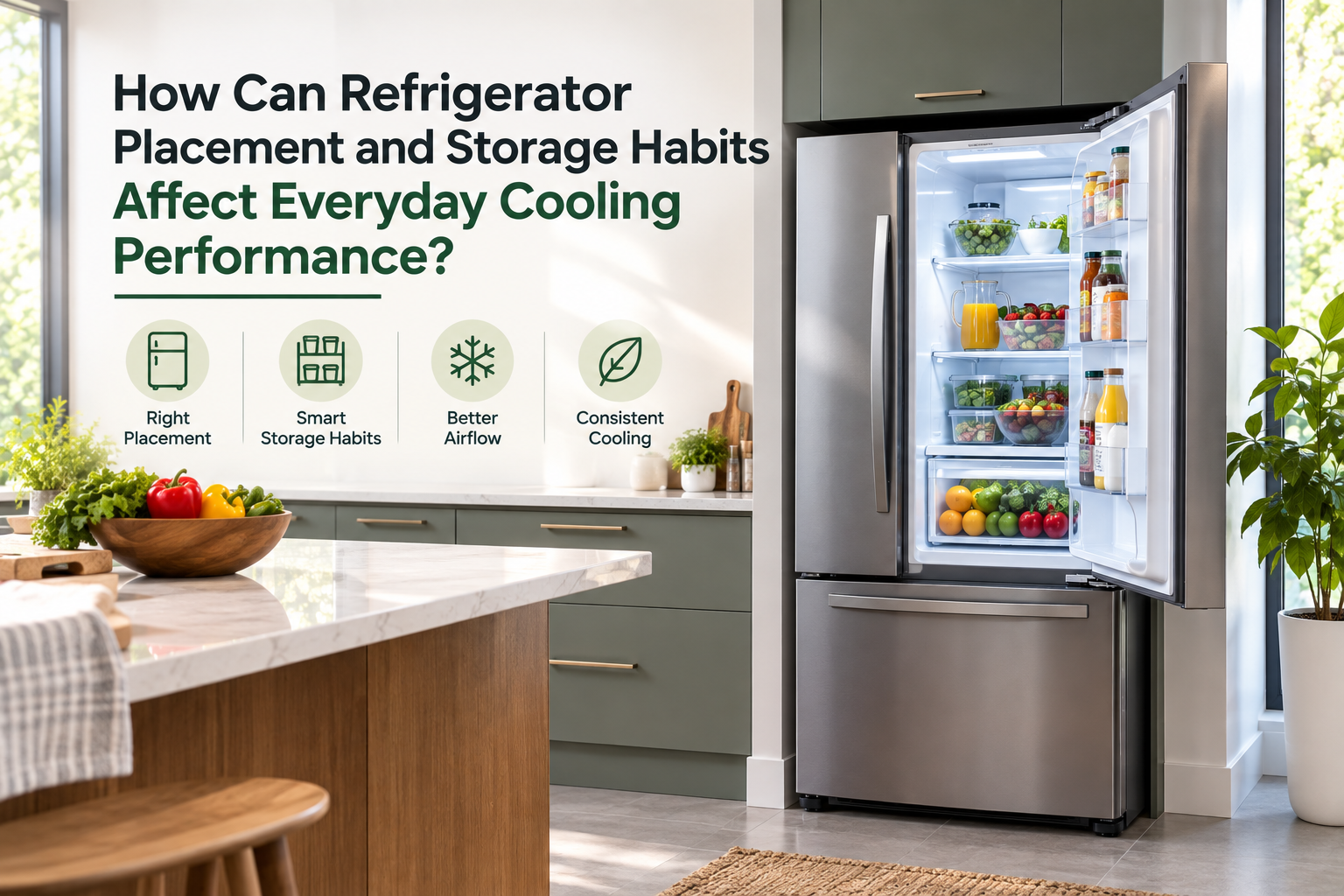
Buying a refrigerator involves more than selecting the right size or choosing a familiar brand. Where the appliance is installed, how food is arranged inside, how frequently the doors are opened, and how much ventilation is available around the unit can all influence everyday usability.
Someone comparing a Haier refrigerator with other options should therefore consider not only specifications but also how the appliance will fit into the kitchen and how the household normally stores food.
Making a few practical decisions before purchase can help you choose a model that offers useful capacity, convenient organization, and cooling technology suited to your daily routine.
Why Does Refrigerator Placement Matter?
A refrigerator continuously removes heat from its interior and releases it outside the cabinet. Because of this, the area around the appliance matters.
Placing the unit in a very tight space without suitable ventilation can make heat dissipation more difficult. Buyers should follow the installation clearances recommended for the individual model rather than pushing the appliance tightly against surrounding surfaces.
The location should also allow the doors to open comfortably.
If a refrigerator is positioned too close to a wall, cabinet, or kitchen counter, the doors may not open far enough to access drawers and shelves easily.
Checking the installation area before purchase can prevent these everyday inconveniences.
Should a Refrigerator Be Positioned Near Heat Sources?
Where possible, avoid placing the appliance unnecessarily close to strong heat sources.
Kitchen ovens, direct sunlight, and other heat-producing equipment can increase the temperature around the refrigerator.
This does not mean every kitchen requires a completely separate cooling area, but thoughtful placement can reduce unnecessary exposure to external heat.
Before ordering a model, observe the intended location during different parts of the day.
A space that appears suitable in the morning may receive strong direct sunlight later in the afternoon.
Kitchen layout should therefore be considered alongside refrigerator dimensions.
How Can Family Size Affect Storage Requirements?
The number of people in the household influences how much food is normally stored, but family size is only one part of the decision.
A small family that buys groceries once a week may require more storage than a larger household that purchases fresh items every day.
Think about the amount of:
· Fresh vegetables
· Drinks
· Dairy products
· Frozen food
· Leftovers
· Prepared meals
· Large containers
that normally need refrigeration at the same time.
This gives a more realistic picture of your storage requirements than choosing capacity only according to the number of family members.
Why Is Internal Organization Important?
A large refrigerator can still feel crowded if its storage layout does not suit the household.
Shelf height, vegetable drawers, bottle racks, freezer compartments, and door pockets influence how easily food can be organized.
Adjustable shelves can be particularly useful when tall containers or large dishes need to be stored.
Deep door compartments may help households that keep several large bottles, while spacious vegetable drawers can make fresh produce easier to organize.
Freezer arrangement matters as well.
If your household regularly stores frozen meat and prepared food, look at the usable freezer layout rather than only the total capacity stated in the specifications.
Can Overfilling Affect Everyday Use?
A refrigerator needs enough space for food to be organized properly.
Packing every shelf tightly can make it harder to find items and may interfere with normal airflow within some designs.
On the other hand, buying excessive capacity simply to avoid crowding may not be necessary.
The better solution is to choose a size that comfortably accommodates normal groceries while allowing items to remain organized.
Regularly removing expired or unused food can also prevent unnecessary crowding.
Organization is not only about appearance. It can make daily use faster because frequently needed items are easier to locate without keeping the door open for extended periods.
What Is the Role of Inverter Technology?
An inverter refrigerator uses compressor technology designed to adjust operation according to cooling requirements.
Instead of relying only on a simple fixed-speed pattern, an inverter system can vary compressor activity as cooling demand changes.
This can support more controlled operation, but the technology should still be considered as part of the overall appliance.
Capacity, insulation, room conditions, temperature settings, door-opening frequency, and installation can all influence electricity use.
For this reason, choosing an inverter model does not remove the need to select the correct refrigerator size or use it sensibly.
Technology works best when the appliance itself is suitable for the household.
How Can Door-Opening Habits Affect Cooling?
Every time the refrigerator door opens, some cold air escapes and warmer room air enters.
The cooling system then works to restore the selected internal temperature.
Frequently opening the door or leaving it open while deciding what to take out can increase this workload.
Organizing commonly used items in easy-to-reach positions can help.
For example, drinks, milk, and regularly used food containers can be placed where they are quickly accessible.
This small habit can make everyday use more convenient and reduce the amount of time the door remains open.
Why Should Refrigerator Prices Be Compared Carefully?
People researching the PEL refrigerator price in Pakistan may see considerable differences between models from the same brand.
This is because price can reflect several specifications rather than brand name alone.
Capacity, cooling technology, compressor type, internal design, freezer arrangement, exterior finish, and additional features can all contribute to price differences.
A useful comparison should therefore involve products with broadly similar capacities and technologies.
Comparing a smaller conventional model directly with a larger inverter appliance based only on price can give an incomplete picture.
First identify what size and technology your household needs, and then compare prices within that group.
Should You Leave Extra Space for Future Needs?
Buying slightly more capacity can make sense if household requirements are expected to change.
A growing family or a shift toward weekly grocery shopping may increase storage needs.
However, future planning should remain realistic.
Choosing dramatically more capacity than necessary can result in an appliance that takes up additional kitchen space without providing much everyday benefit.
Think about how your food-storage habits are likely to change over the next several years rather than buying purely for occasional large gatherings.
The refrigerator should primarily serve your normal routine.
How Important Are Door Seals?
Door seals help maintain the closed environment inside the refrigerator.
If the door does not close properly, cool air may escape and warm air may enter more easily.
Keep the sealing surfaces clean and make sure containers or food packages are not preventing the door from shutting completely.
If a door appears loose or does not seal as expected, follow the manufacturer's maintenance guidance.
This is a simple part of refrigerator care that can easily be overlooked.
Should Hot Food Be Placed Directly Inside?
Very hot food can temporarily raise the temperature inside the appliance.
Food should be handled according to appropriate food-safety guidance before storage rather than being left at room temperature for excessive periods.
The main point is to organize meal preparation and storage sensibly.
Using covered containers can also help keep shelves organized and reduce spills or odors from spreading between foods.
Good storage habits make the refrigerator easier to clean and help families make better use of available space.
What Should You Measure Before Buying?
Before choosing any model, measure more than the empty space where the refrigerator will stand.
Check:
· Available width
· Height
· Depth
· Door-opening clearance
· Nearby cabinets and walls
· Suitable ventilation space
· Delivery-route dimensions
The appliance may need to pass through a main entrance, corridor, staircase, lift, or kitchen doorway before reaching its final location.
A refrigerator that fits perfectly into its intended position is not useful if it cannot be delivered through the available access route.
FAQs
1. How much space should be left around a refrigerator?
Clearance requirements vary by model, so buyers should follow the installation instructions provided by the manufacturer.
2. Does refrigerator placement affect its operation?
Placement can matter because ventilation, surrounding heat, direct sunlight, and available door clearance can influence everyday use.
3. Is inverter technology suitable for every household?
It can be a useful option, but capacity, storage requirements, available space, and budget should also influence the decision.
4. Why do refrigerator prices vary within the same brand?
Different models can vary in capacity, compressor technology, cooling features, internal storage, finish, and overall specifications.
5. Should I choose the largest refrigerator that fits my kitchen?
Not necessarily. Choose enough capacity for regular household needs while considering available space and normal grocery habits.
Final Thought
Refrigerator performance and convenience depend on more than specifications listed on a product page. Placement, ventilation, storage organization, door-opening habits, capacity, and cooling technology all contribute to the everyday experience.
Before buying, examine your kitchen space and think about how much food your household normally stores. Then compare refrigerators within a suitable capacity range rather than choosing only by brand, appearance, or price.
A well-matched appliance should fit comfortably into the kitchen, organize everyday groceries efficiently, and provide the cooling technology needed for your routine. Making the decision around real household habits can help you avoid paying for unnecessary capacity or features while creating a more practical food-storage setup.

 Arabic
 French
 Spanish
 Portuguese
 Deutsch
 Turkish
 Dutch
Dutch
 Italiano
 Russian
 Romaian
 Portuguese (Brazil)
 Greek
Greek
 Bengali