


The Future of Innovation: Exploring Today’s Advances and Tomorrow’s Most Advanced Technologies
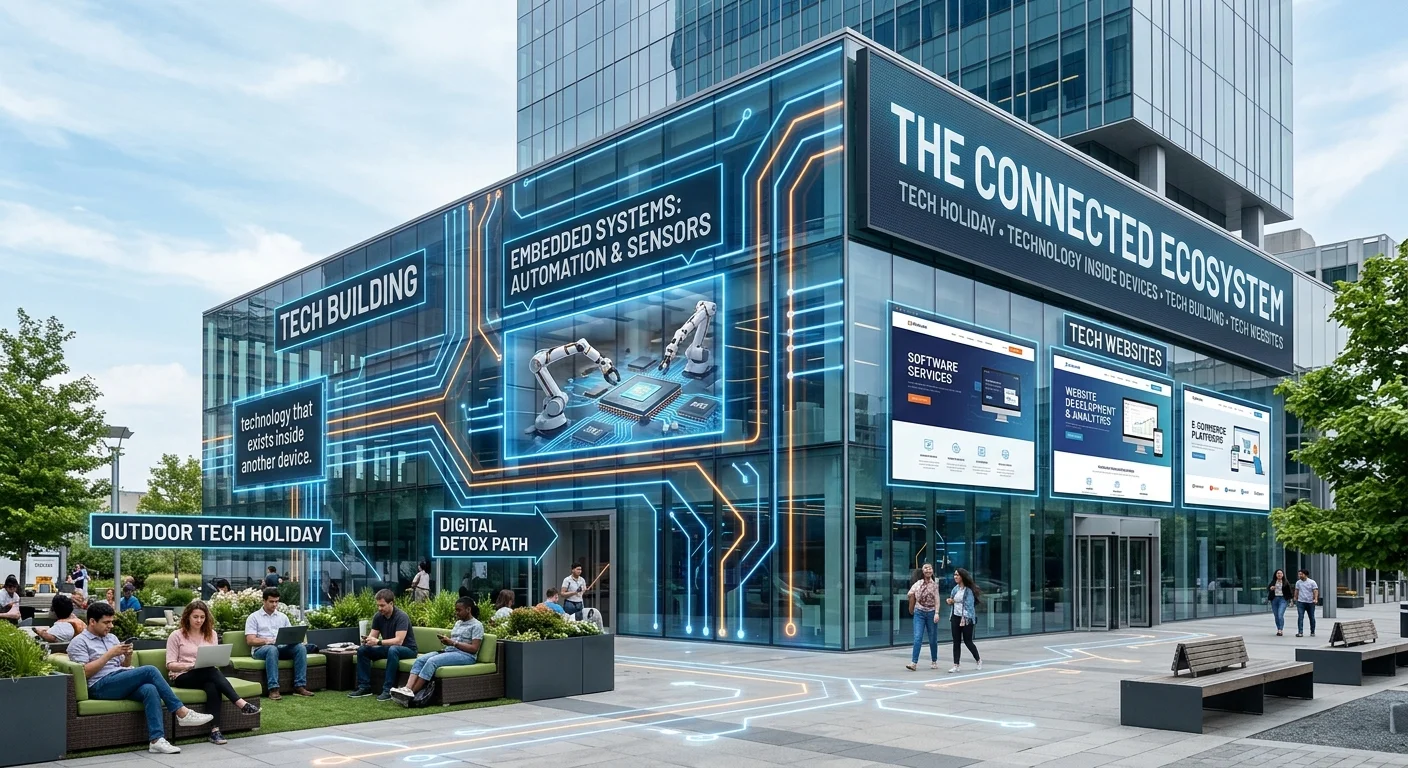
Technology is evolving at an unprecedented rate, moving from passive tools that assist us to autonomous systems that reason, act, and transform industries. From artificial intelligence and quantum computing to breakthroughs in biotechnology, understanding modern technological growth requires looking at four key dimensions: innovations, advances, current breakthroughs, and future horizons.
Innovations in Technology
An innovation in technology refers to applying new ideas, methods, or devices that disrupt existing models or create entirely new capabilities to solve complex global challenges.
-
Agentic AI & Autonomous Workflows: AI has shifted from simple content generation to taking autonomous actions. Agentic AI systems can orchestrate end-to-end business workflows, write software, and execute multi-step strategic tasks with minimal human intervention.
-
3D Bioprinting & Synthetic Biology: Researchers use living cells as bio-ink to print functional human tissues, skin grafts, and complex organ structures, pushing medicine toward personalized regenerative care.
-
Metalenses & Micro-Optics: Ultra-flat optical surfaces replace heavy, bulky glass lenses in everyday hardware—from smartphone cameras to surgical endoscopes—using nano-engineered light manipulation.
-
Solid-State & Long-Duration Storage: Battery breakthroughs are enabling high-density energy storage, allowing renewable power from solar and wind grids to remain stable and reliable for days at a time.
Advances in Technology
An advance in technology represents the continuous refinement, scaling, or optimization of existing technologies—making them faster, smaller, more efficient, and accessible.
-
Edge Computing Infrastructure: Data processing is moving closer to the source rather than relying solely on centralized cloud servers. This reduces latency for autonomous vehicles, smart cities, and real-time medical monitoring.
-
CRISPR 2.0 & Gene Editing: Precision gene therapy has moved from experimental trials to real-world clinical applications, curing genetic disorders like sickle cell disease at the DNA level.
-
Smart Materials & Bioplastics: Self-healing concrete, biodegradable plastics made from organic waste, and advanced composite alloys are redefining construction and industrial manufacturing.
-
Humanoid Robotics & Logistics: Advanced robotics have transitioned out of controlled lab environments into warehouses, factories, and care facilities to execute physical labor alongside humans.
The Most Advanced Technologies on Earth
While measuring the "most advanced" technology depends on scale and complexity, three foundational fields currently represent the pinnacle of human engineering:
|
Technology |
Core Breakthrough |
Primary Applications |
|
Quantum Computing |
Uses quantum mechanical phenomena (superposition and entanglement) to perform calculations in seconds that would take supercomputers thousands of years. |
Molecular modeling, drug discovery, financial modeling, and breaking complex encryption. |
|
EUV Photolithography |
Uses extreme ultraviolet light to print billions of micro-transistors onto silicon wafers at sub-nanometer scales—the boundary of physical atomic limits. |
Semiconductor manufacturing, AI processors, supercomputing hardware. |
|
Brain-Computer Interfaces (BCIs) |
Translates electrical signals from the human nervous system into digital command code in real time. |
Neural prosthetics control, speech restoration for non-verbal patients, hands-free computing. |
What Technology Holds for the Future
The future of technology will be defined by the convergence of digital, physical, and biological systems, redefining human potential and our relationship with machines.
-
Artificial General Intelligence (AGI): Systems capable of matching or exceeding human cognitive abilities across varied domains, reasoning flexibly through novel problems without specialized retraining.
-
Commercial Fusion Energy: Clean, virtually limitless energy generated by replicating the atomic process of stars, offering a path to permanent zero-carbon power generation.
-
Space-Based Economies: Expanding infrastructure beyond Earth through orbital manufacturing in microgravity, lunar research stations, and deep-space resource harvesting.
-
Human Augmentation: Neural implants, bio-compatible prosthetics, and exoskeletons that continuously monitor health, enhance physical capabilities, and restore lost motor function.

 Arabic
 French
 Spanish
 Portuguese
 Deutsch
 Turkish
 Dutch
Dutch
 Italiano
 Russian
 Romaian
 Portuguese (Brazil)
 Greek
Greek
 Bengali