


AI in Supply Chain Management: How AI Is Transforming Logistics
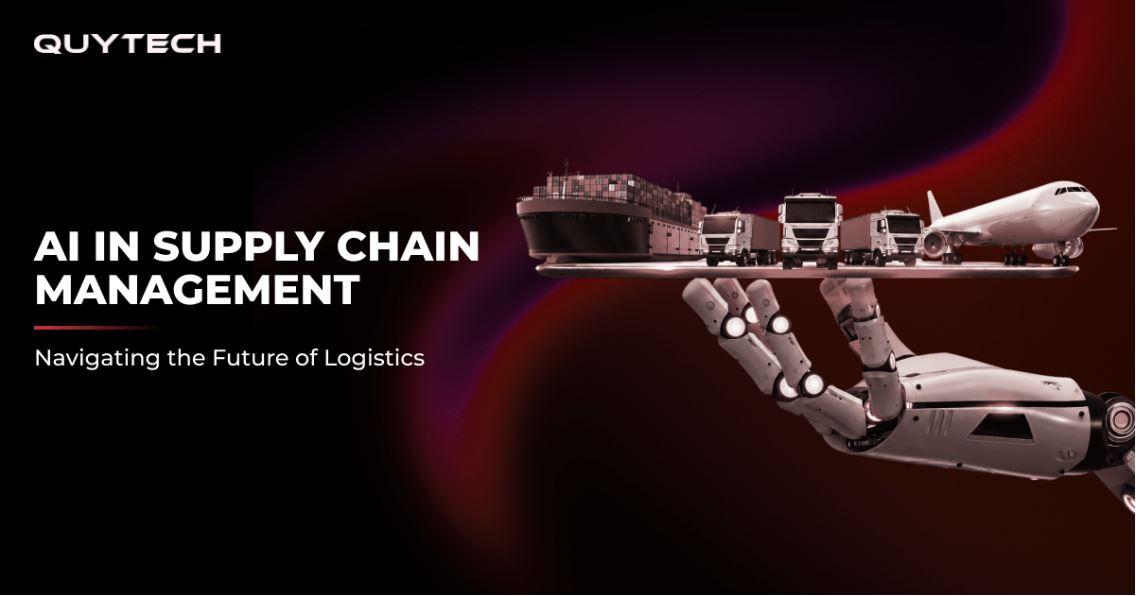
Artificial Intelligence (AI) is changing how businesses manage supply chains. From demand forecasting and inventory management to warehouse automation and route optimization, AI helps companies improve efficiency, reduce costs, and respond faster to supply chain disruptions.
With AI-powered solutions, businesses can analyze large amounts of data, identify patterns, automate repetitive tasks, and make better decisions.
How AI Is Used in Supply Chain Management
AI can support different areas of supply chain operations, including:
1. Demand Forecasting
AI analyzes historical sales, market trends, and other data to predict future demand. This helps businesses avoid overstocking and stock shortages.
2. Inventory Management
AI can monitor inventory levels and identify when products or raw materials need to be reordered. This helps maintain the right stock levels and reduce waste.
3. Warehouse Automation
AI-powered robots, computer vision, and automated systems can support sorting, picking, packing, and tracking activities, making warehouse operations faster and more efficient.
4. Quality Control
Computer vision and machine learning can identify product defects and support automated quality inspections.
5. Route Optimization
AI analyzes traffic, delivery data, and other real-time information to identify efficient delivery routes and improve shipment tracking.
6. Risk Management
AI can identify potential risks such as shipment delays, demand changes, bad weather, and supplier issues. AI agents can also trigger actions, such as rerouting shipments, when specific problems are detected.
7. Predictive Maintenance
AI combined with IoT sensors can monitor equipment and predict possible failures before they cause major disruptions.
Benefits of AI in Supply Chain Management
Implementing AI can provide several benefits, including:
- Improved operational efficiency
- More accurate demand forecasting
- Better inventory management
- Reduced transportation and operational costs
- Greater supply chain visibility
- Faster decision-making
- Early risk detection
- Improved customer satisfaction
AI can also help businesses automate response processes, allowing teams to focus on more strategic tasks.
How to Implement AI in Your Supply Chain
Businesses can follow these steps to introduce AI into supply chain operations:
- Identify the challenge: Determine which supply chain problem AI needs to solve.
- Collect and prepare data: Gather data from sales, inventory, suppliers, logistics, and external sources.
- Develop the AI solution: Build a solution based on the specific business requirement.
- Train and test: Train the AI model using quality data and test its performance.
- Deploy gradually: Start with a specific process or department before expanding across the supply chain.
- Monitor and improve: Continuously update the solution as business needs and data change.
Challenges of AI in Supply Chain
AI implementation can involve challenges such as poor data quality, integration with existing systems, cybersecurity risks, implementation costs, and data privacy concerns. Businesses should address these areas before scaling an AI solution.
Final Thoughts
AI in supply chain management can help businesses improve forecasting, optimize inventory, automate operations, manage risks, and make faster data-driven decisions. As AI agents and predictive technologies continue to evolve, businesses can use them to create more responsive and intelligent supply chains.
Reference Link: https://www.quytech.com/blog/ai-in-supply-chain-management/

 English
 Arabic
 French
 Spanish
 Portuguese
 Deutsch
 Dutch
Dutch
 Italiano
 Russian
 Romaian
 Portuguese (Brazil)
 Greek
Greek
 Bengali