


The Science Behind KLOW Blend Peptides: A Comprehensive Guide
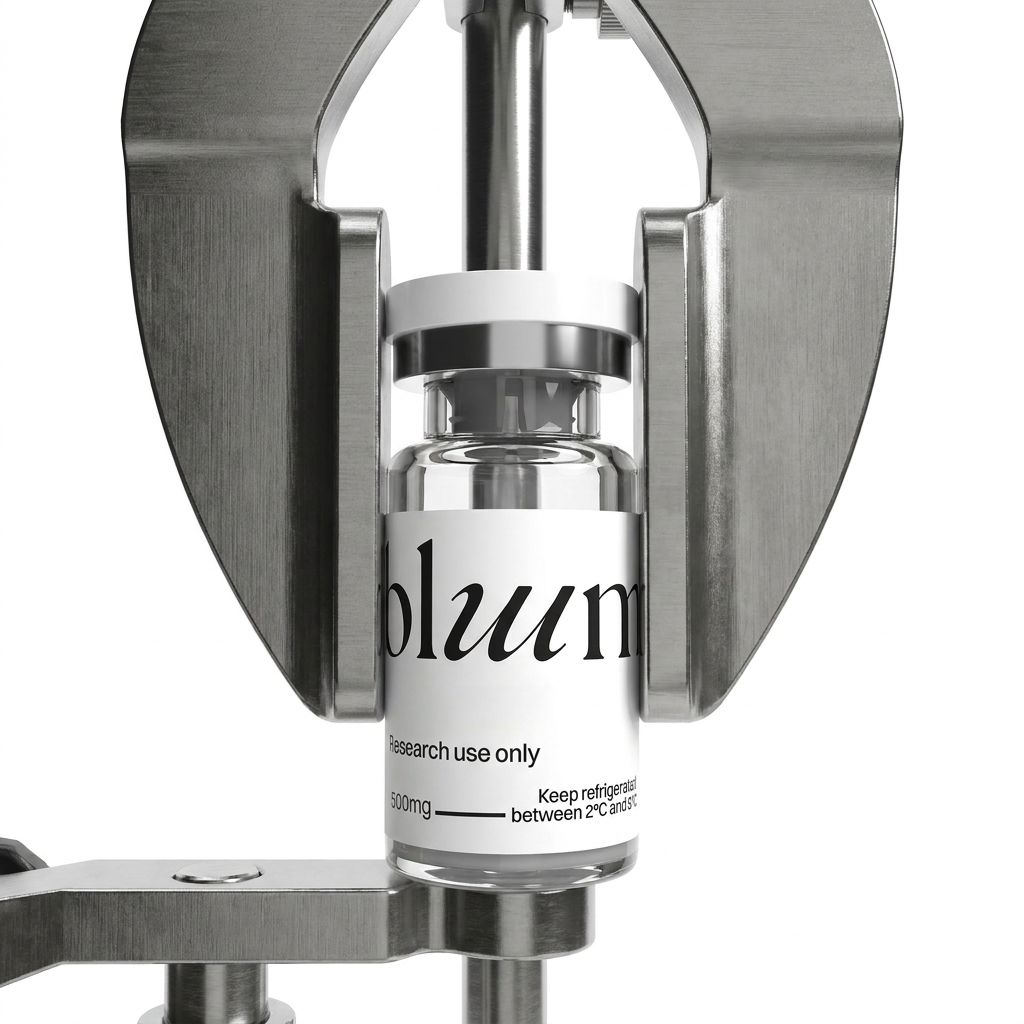
The exact composition of a KLOW formulation can vary because the name is not a universal pharmaceutical standard. Some research formulations commonly describe GHK-Cu as the largest component, with smaller amounts of BPC-157, TB-500, and KPV. Researchers should therefore examine the specific formulation, analytical documentation, and batch information rather than assuming that every product labeled KLOW has identical characteristics. This distinction is particularly important when comparing experimental findings from different laboratories or suppliers.
Researchers have shown interest in the blend because these peptides are studied in areas such as tissue remodeling, cellular signaling, inflammation, and repair processes. KLOW blend peptides are generally described as a research formulation containing four distinct peptides: GHK-Cu, BPC-157, TB-500, and KPV. Rather than being a single naturally occurring molecule, KLOW is a combination designed around the different biological pathways associated with its individual components. However, it is important to recognize that the scientific evidence for the individual peptides is not the same as evidence for the complete combination.
The Four Peptides in the KLOW Research Model
GHK-Cu is a copper-binding peptide that has been investigated for its relationship with extracellular-matrix activity, collagen-related processes, and tissue remodeling. BPC-157 is a synthetic peptide that has received considerable attention in preclinical research involving connective tissue, gastrointestinal models, and injury-related pathways. TB-500 is commonly described as a synthetic fragment associated with thymosin beta-4 research, particularly research involving cellular movement and repair. KPV is a short peptide fragment derived from alpha-melanocyte-stimulating hormone and has been investigated for its potential role in inflammatory signaling.
These four components give KLOW its research appeal because they represent different biological areas rather than simply duplicating the same mechanism. GHK-Cu is primarily associated with matrix-related research, BPC-157 with tissue and vascular responses, TB-500 with cellular migration, and KPV with inflammatory pathways. This creates a theoretical basis for investigating several processes within one experimental model. Still, a logical mechanism does not prove that the combined formulation produces an additive or synergistic effect.
How GHK-Cu Contributes to the Research Picture
GHK-Cu has one of the longer research histories among the components commonly associated with KLOW blend peptides. It is a naturally occurring copper-binding peptide that has been examined in connection with extracellular-matrix regulation, collagen production, cellular signaling, and tissue remodeling. Laboratory research has helped researchers understand why copper-associated peptides may influence cellular behavior. Much of the interest surrounding GHK-Cu comes from its potential involvement in processes that are important for maintaining and remodeling connective tissues.
The evidence should nevertheless be interpreted according to the experimental setting. Findings from cell cultures or topical applications cannot automatically be translated into systemic effects. Researchers studying GHK-Cu should distinguish between observations made in laboratory systems, animal models, and controlled human research. This evidence-based approach helps prevent the common mistake of treating promising biological activity as proof of a specific therapeutic outcome.
BPC-157 and Its Preclinical Research
BPC-157 is another major component associated with KLOW and has been investigated extensively in animal models. Research has explored its relationship with tissue injury, gastrointestinal integrity, vascular responses, and connective-tissue processes. Proposed mechanisms include effects involving cellular signaling, blood-vessel formation, and pathways associated with tissue response following injury. These findings have made BPC-157 an increasingly discussed compound in experimental peptide research.
Despite the large amount of preclinical interest, the evidence remains substantially stronger in laboratory and animal research than in well-controlled human studies. Therefore, searches for terms such as bpc 157 for sale should not be interpreted as evidence that the compound has established clinical effectiveness or an approved therapeutic role. Commercial availability and scientific validation are separate issues. Researchers should focus on study quality, analytical identity, purity, experimental design, and reproducibility when evaluating BPC-157 research.
TB-500, KPV, and Complementary Mechanisms
TB-500 is generally discussed in connection with thymosin beta-4 research and cellular migration. Thymosin beta-4 itself has been investigated in experimental models involving wound repair, cell movement, and tissue responses. An important scientific distinction is that TB-500 should not automatically be considered identical to full-length thymosin beta-4. Researchers need to identify the exact molecule used in a study before applying its findings to a different research material.
KPV provides another research direction because it has been examined primarily in relation to inflammatory pathways, particularly in cellular and animal models. Its biological activity has generated interest in how inflammatory signaling might interact with tissue-repair processes. When considered alongside GHK-Cu, BPC-157, and TB-500, KPV contributes an inflammation-focused component to the theoretical model. However, the available evidence for each component remains separate, and the combined behavior of all four peptides requires direct investigation.
Potential Research Applications of KLOW
The potential applications of KLOW blend peptides are largely based on questions surrounding tissue remodeling, inflammatory signaling, cellular migration, and repair mechanisms. A laboratory investigation might examine whether different components influence separate stages of a biological response. For example, researchers could evaluate molecular markers associated with inflammation while simultaneously measuring changes in cellular migration or extracellular-matrix activity. Such studies could help determine whether the theoretical complementarity of the four components translates into measurable experimental effects.
Another interesting research direction is the comparison between individual peptides and the complete blend. A properly controlled study could include separate experimental groups for each component, the complete formulation, and an appropriate control. This would make it possible to determine whether the blend produces a response that can be explained by one component or whether interactions between components contribute something additional. Without this type of comparative design, claims about synergy remain theoretical rather than experimentally demonstrated.
Why Analytical Verification Matters
Analytical verification is especially important when studying multi-component peptide formulations. Researchers need confidence that the material being examined actually contains the stated compounds and that its characteristics remain consistent from batch to batch. Techniques such as high-performance liquid chromatography can help assess chromatographic purity, while mass spectrometry can provide valuable information about molecular identity. Batch-specific documentation can further support traceability and research integrity.
A certificate of analysis can be useful, but researchers should evaluate what the document actually demonstrates rather than treating the presence of a COA as automatic proof of quality. Important details include the tested batch, analytical methods, reported purity, identity testing, laboratory information, and date of analysis. For a multi-component formulation, confirming the identity and characteristics of each component is particularly relevant. Careful documentation strengthens reproducibility and makes experimental findings easier to interpret.
Evidence Gaps and Scientific Limitations
The most important limitation surrounding KLOW is the lack of direct combination-level evidence. Research exists for individual components, but that does not establish how GHK-Cu, BPC-157, TB-500, and KPV behave when combined. There is currently no strong body of controlled research demonstrating the pharmacokinetics, long-term safety profile, or specific efficacy of the complete four-peptide formulation. Consequently, statements about KLOW should remain appropriately cautious.
Researchers should also remember that evidence quality varies considerably between the individual components. Some findings come from cell-based experiments, others from animal models, and some research involving related compounds has reached human studies under specific conditions. These categories should not be treated as interchangeable. A responsible scientific review identifies the model, compound, route, endpoint, and limitations before drawing conclusions from a study.
Comparing KLOW With Other Research Peptides
KLOW is sometimes discussed alongside other emerging research peptides, including compounds associated with metabolic research. Retatrutide, for example, belongs to a very different research category and has been investigated as an experimental multi-receptor metabolic drug candidate. Someone searching for retatrutide for sale may encounter commercial claims that are unrelated to the quality or maturity of the clinical evidence. The fact that a research compound is commercially listed does not establish regulatory approval, safety, or suitability for personal use.
The distinction between KLOW and retatrutide is therefore scientifically important. KLOW is a vendor-defined combination of several research peptides with evidence largely derived from studies of its separate components. Retatrutide, by contrast, has been investigated through formal clinical-development programs focused on metabolic conditions. Comparing them simply because both appear in peptide-related searches would overlook their substantially different research objectives, mechanisms, and evidence bases.
Future Directions for KLOW Research
Future research could improve understanding of KLOW by examining the formulation systematically rather than relying primarily on component-level findings. Studies could investigate molecular interactions, pharmacokinetic behavior, cellular responses, tissue-level outcomes, and potential differences between individual peptides and the complete combination. Well-designed experiments would also help determine whether the proposed mechanisms remain active when the compounds are present together.
For the scientific community, reproducibility should remain a central priority. Researchers can contribute stronger evidence by documenting formulation composition, analytical verification, experimental conditions, controls, measured endpoints, and limitations in sufficient detail. Independent replication would be especially valuable because it can determine whether observations are consistent across laboratories. Until such evidence develops, KLOW should be viewed primarily as an interesting research formulation rather than a clinically established treatment.
Final Perspective on KLOW Blend Peptides
The science behind KLOW blend peptides is best understood by separating established component research from hypotheses about the combination. GHK-Cu, BPC-157, TB-500, and KPV each have distinct research histories involving cellular signaling, tissue remodeling, inflammation, or repair-related mechanisms. Those individual findings provide a scientific rationale for further investigation, but they do not prove that the four components produce a particular combined effect.
A careful approach therefore focuses on evidence quality rather than marketing language. Researchers should examine the exact formulation, verify the identity and purity of experimental materials, distinguish animal findings from human evidence, and avoid treating theoretical synergy as demonstrated fact. The future value of KLOW research will ultimately depend on controlled studies that directly examine the complete formulation and clearly define its biological effects, limitations, and reproducibility.

 English
 Arabic
 French
 Spanish
 Portuguese
 Deutsch
 Turkish
 Dutch
Dutch
 Italiano
 Russian
 Portuguese (Brazil)
 Greek
Greek
 Bengali