


Servo Motor Planetary Reducer: Backlash, Load & Efficiency Guide
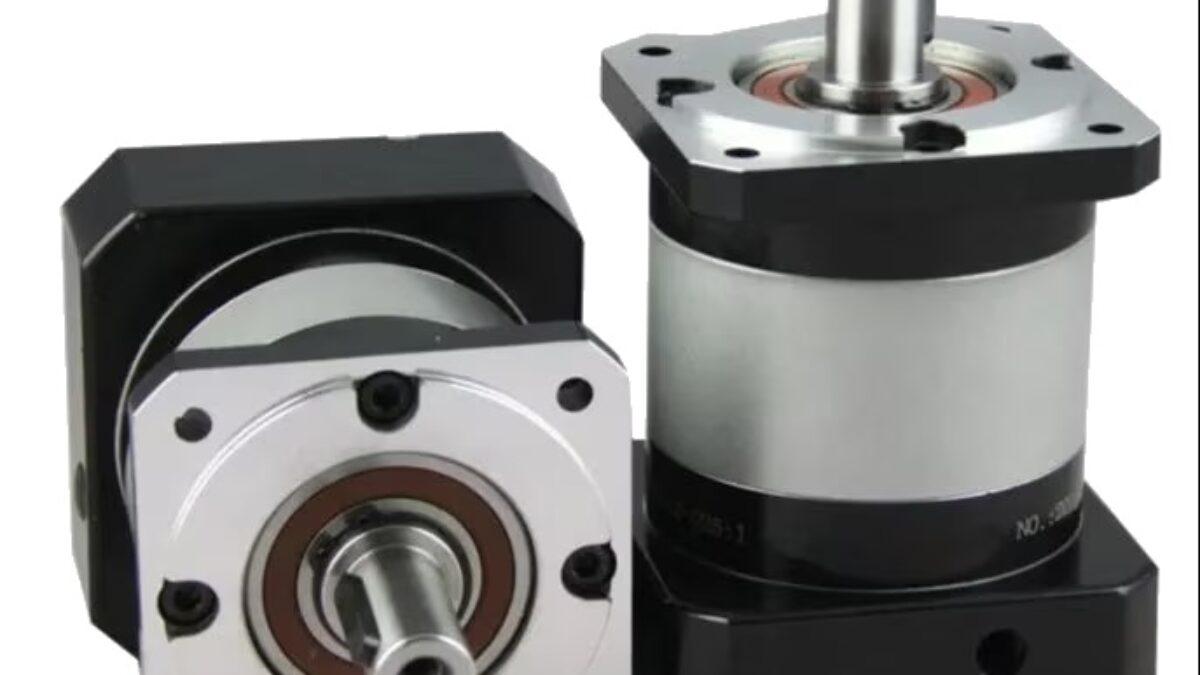
A Servo Motor Planetary Reducer is a precision gearbox designed to help servo-driven machines achieve controlled speed, higher output torque, accurate positioning, and reliable load handling. In industrial automation, selecting the right reducer is not simply about choosing a gear ratio. Engineers must also evaluate backlash, load capacity, efficiency, input speed, torsional rigidity, duty cycle, and motor compatibility. A properly selected planetary reducer can help a servo motor deliver its available power more effectively while maintaining stable and repeatable mechanical motion.
For automation manufacturers and machine builders in India, Genesis Technomation India Pvt Ltd offers a PRF Series Servo Motor Planetary Reducer range designed for precision motion-control applications. The range includes different frame sizes and reduction configurations for applications requiring controlled speed, increased torque, and compact mechanical transmission.
What Is a Servo Motor Planetary Reducer?
A Servo Motor Planetary Reducer is a gearbox installed between a servo motor and the machine's driven mechanism. Its primary purpose is to modify the motor's speed and torque characteristics to better suit the mechanical load.
Servo motors are capable of high-speed operation and rapid acceleration. However, many machine mechanisms require:
- Lower output speed
- Higher output torque
- Accurate positioning
- Controlled acceleration
- High repeatability
- Greater load-handling capability
A planetary reducer addresses these requirements through a planetary gear arrangement consisting of a sun gear, planet gears, and ring gear.
The multiple planet gears distribute the transmitted load across several gear contacts. This construction allows a planetary gearbox to achieve high torque density while maintaining a relatively compact form.
Genesis describes its servo planetary reducers as solutions for reducing speed and increasing torque while supporting high-precision and controlled-motion applications.
Why Backlash Matters in Servo Applications
Backlash is one of the most important specifications to consider when selecting a planetary reducer for a servo system.
Backlash refers to the small amount of mechanical clearance between mating gear teeth. Some clearance is necessary for proper gear operation, lubrication, and thermal expansion. However, excessive clearance can create unwanted movement when the direction of rotation changes.
This becomes particularly important in servo-driven applications because servo systems frequently perform:
- Start-stop movements
- Position corrections
- Direction reversals
- Indexing
- High-speed acceleration and deceleration
- Repeated positioning cycles
If mechanical backlash is significant, the servo motor may rotate slightly before the output mechanism responds after a direction change. This can affect positioning accuracy and repeatability.
A precision planetary reducer with appropriately controlled backlash can therefore help the mechanical system respond more closely to the servo command.
Genesis specifically describes its PRF planetary reducers as suitable for precision motion systems and highlights minimal backlash as a design characteristic.
Backlash and Positioning Accuracy
Backlash should not be considered independently from the rest of the machine.
The final positioning accuracy of a servo system depends on several components, including:
- Servo motor encoder resolution
- Servo drive tuning
- Gearbox backlash
- Torsional rigidity
- Coupling characteristics
- Mechanical stiffness
- Load inertia
- Machine structure
- Installation accuracy
Therefore, selecting a low-backlash gearbox is important, but it is only one part of achieving accurate positioning.
Understanding Load Capacity
The second major consideration is load capacity.
A planetary reducer must transmit the required torque while supporting mechanical forces acting on its output shaft. Depending on the machine design, the reducer may experience radial loads, axial loads, continuous torque, peak torque, and emergency-stop loads.
Genesis' PRF Series provides different allowable radial and axial load capacities depending on frame size. For example, the published maximum allowable radial load ranges from 185 N for PRF40 to 2,250 N for PRF160, while maximum allowable axial load ranges from 150 N to 1,500 N across the listed frame sizes.
This illustrates why gearbox selection should be based on actual application conditions rather than motor power alone.
Continuous Load vs Peak Load
Machine designers should distinguish between continuous and peak loading.
Continuous load is the torque or mechanical load that the gearbox experiences during normal operation.
Peak load occurs during events such as:
- Rapid acceleration
- Rapid deceleration
- Direction changes
- Product jams
- Emergency stops
- Mechanical impacts
The gearbox must be capable of handling these conditions without exceeding its specified limits.
The Genesis PRF specifications state a maximum torque of 1.5 times rated torque and an emergency-stop torque of 2.5 times rated torque. These figures should be considered within the manufacturer's specified operating conditions when sizing the reducer.
How Reduction Ratio Affects Torque
Reduction ratio is directly related to the relationship between input speed and output speed.
For an ideal simplified gearbox:
Output Speed = Input Speed ÷ Reduction Ratio
As the reduction ratio increases, output speed decreases. At the same time, the gearbox can provide greater mechanical torque multiplication, subject to efficiency and the gearbox's rated capacity.
For example, a 10:1 reduction means that the output rotates at approximately one-tenth of the input speed under the simplified relationship.
However, selecting a higher ratio is not automatically better. The appropriate ratio depends on:
- Required output speed
- Required output torque
- Motor operating speed
- Load inertia
- Acceleration requirements
- Positioning requirements
- Machine cycle time
A ratio that is too high may unnecessarily reduce output speed, while an insufficient ratio may fail to provide the required torque.
Servo Motor Planetary Reducer Efficiency Explained
Efficiency is another critical parameter when selecting a planetary reducer.
Gearbox efficiency represents how much of the input mechanical power is transferred to the output after accounting for losses.
In practical terms:
Output Power = Input Power × Gearbox Efficiency
Losses can occur because of:
- Gear meshing
- Bearing friction
- Lubrication
- Sealing
- Internal mechanical resistance
Higher efficiency means less mechanical power is lost inside the gearbox.
The Genesis PRF Series specifications list full-load efficiency of L1 ≥96% and L2 ≥94%. The actual performance depends on the selected configuration and operating conditions.
Why Efficiency Matters
Gearbox efficiency can influence:
- Motor power utilization
- Heat generation
- Energy consumption
- Operating temperature
- Overall machine performance
- Long-term operating cost
For machines operating continuously or for many hours per day, even a small difference in efficiency can become meaningful over the equipment's operating life.
Torsional Rigidity and Servo Performance
Backlash and efficiency are important, but torsional rigidity also affects servo motion.
Torsional rigidity describes the gearbox's resistance to twisting when torque is applied.
A gearbox with higher torsional rigidity can help maintain a more stable mechanical relationship between the input and output.
The published Genesis PRF specifications list torsional rigidity values ranging from 0.7 Nm/arcmin for PRF40 to 35 Nm/arcmin for PRF160.
This parameter becomes particularly relevant in applications involving:
- Precision positioning
- Rapid acceleration
- Repeated direction changes
- High dynamic loads
- CNC movement
- Robotic motion
A complete servo system should therefore be evaluated for backlash and torsional rigidity rather than looking at torque capacity alone.
Input Speed Considerations
Servo motors commonly operate at high rotational speeds, so the gearbox must be rated appropriately.
According to the Genesis specifications, maximum input speed varies by PRF frame size. The listed maximum input speeds are:
- PRF40: up to 8,000 rpm
- PRF60: up to 8,000 rpm
- PRF80: up to 6,000 rpm
- PRF90: up to 6,000 rpm
- PRF120: up to 6,000 rpm
- PRF160: up to 4,000 rpm
Rated input speeds are lower and also vary by frame size.
Therefore, the servo motor's operating speed should always be checked against the gearbox's rated and maximum input speed.
How to Select the Right Servo Motor Planetary Reducer
Selecting the correct gearbox starts with understanding the complete machine requirement.
1. Calculate Required Torque
Determine the continuous torque and peak torque required by the driven mechanism.
Do not size the reducer only according to motor horsepower. The actual mechanical load should be considered.
2. Determine Required Output Speed
Calculate the desired output speed and compare it with the servo motor's operating speed.
This helps determine an appropriate reduction ratio.
3. Evaluate Backlash
If the machine requires high positioning accuracy or frequent direction changes, backlash becomes especially important.
4. Check Radial and Axial Loads
Pulley systems, belt drives, gears, lead screws, and other mechanical arrangements can generate radial and axial forces.
These forces should remain within the gearbox's specified limits.
5. Check Peak and Emergency Loads
Acceleration, deceleration, mechanical shocks, and emergency stops can generate loads substantially higher than continuous operating torque.
6. Consider Efficiency
For continuous-duty equipment, gearbox efficiency should be considered as part of the overall energy and thermal design.
7. Confirm Mounting Compatibility
Check:
- Motor flange
- Motor shaft diameter
- Output shaft
- Mounting holes
- Gearbox dimensions
- Coupling requirements
Correct mechanical compatibility is essential for reliable installation.
PRF Series Servo Motor Planetary Reducer
Genesis offers the PRF Series in multiple frame sizes, including PRF40, PRF60, PRF80, PRF90, PRF120, and PRF160. The published product specifications include multiple reduction ratios and different rated torque levels depending on the selected frame and configuration.
The listed rated torque range extends from smaller-capacity configurations to substantially higher torque capacities in larger PRF models. The product page also specifies IP65 protection, an operating temperature range of -10°C to 90°C, and an average life of 20,000 hours under the stated conditions.
This range allows machine builders to select a gearbox according to the required combination of torque, speed, load, and physical dimensions.
Applications of Servo Motor Planetary Reducers
Servo planetary reducers are used in applications where controlled mechanical motion is important.
CNC Machines
CNC equipment requires precise positioning and controlled movement. A planetary reducer can help transmit servo motor torque to machine axes while supporting the required mechanical speed.
Robotics
Robotic systems require controlled acceleration, accurate positioning, and reliable torque transmission. A planetary reducer can provide mechanical torque multiplication in a compact package.
Packaging Machines
Packaging equipment frequently performs rapid indexing and repeated movements. Low backlash and suitable load capacity can be important for maintaining repeatable machine cycles.
Printing and Converting
Printing machinery requires coordinated and controlled movement. Servo motors combined with planetary reducers can provide controlled transmission for rollers and positioning mechanisms.
Textile Machinery
Textile automation may require continuous operation, accurate synchronization, and controlled torque transmission.
Pick-and-Place Systems
Pick-and-place equipment frequently accelerates and decelerates quickly. Gearbox torque capacity and torsional rigidity can therefore become important selection factors.
Genesis identifies CNC machines, robotics, packaging and labeling, printing, textile machinery, pharmaceutical equipment, food processing, semiconductor manufacturing, laser cutting, and material handling among applications for its servo motor and planetary reducer solutions.
Best Place to Buy Servo Motor Planetary Reducer
For businesses looking for a Servo Motor Planetary Reducer for industrial automation and precision motion applications, Genesis Technomation India Pvt Ltd provides a dedicated PRF Series range with multiple frame sizes and technical configurations.
Best place to Buy Servo Motor Planetary Reducer:
Genesis Technomation India Pvt Ltd
The product range provides specifications covering rated torque, maximum torque, emergency-stop torque, radial and axial load capacity, torsional rigidity, input speed, noise, efficiency, dimensions, and other parameters.
When contacting a supplier, it is useful to provide the servo motor model, motor power, operating speed, required output speed, load torque, peak torque, duty cycle, mounting dimensions, and application type. These details help determine the appropriate reducer configuration.
Conclusion
A Servo Motor Planetary Reducer should be selected by evaluating much more than its reduction ratio. Backlash, load capacity, efficiency, torsional rigidity, input speed, and mechanical compatibility all influence the performance of a servo-driven automation system.
Low and controlled backlash can support accurate positioning, while adequate radial and axial load capacity helps the gearbox handle forces generated by the machine mechanism. High transmission efficiency helps minimize mechanical losses, while suitable torsional rigidity can contribute to stable dynamic motion.
The Genesis PRF Series provides multiple frame sizes and configurations, with published specifications covering torque, load capacity, input speed, efficiency, torsional rigidity, and protection characteristics.
For CNC machines, robotics, packaging systems, textile machinery, printing equipment, automated assembly, and other industrial applications, properly matching the Servo Motor Planetary Reducer to the servo motor and mechanical load is essential for achieving reliable and repeatable motion.
If your application requires a combination of precision, torque, controlled speed, and efficient power transmission, evaluating the correct planetary reducer based on the actual machine load and operating conditions can help create a more dependable motion-control system.

 English
 Arabic
 French
 Spanish
 Portuguese
 Deutsch
 Turkish
 Dutch
Dutch
 Italiano
 Russian
 Romaian
 Greek
Greek
 Bengali