Modern architecture focuses on creating buildings that combine visual appeal, natural light, ventilation, and practical functionality. Facade design plays an important role in achieving these goals, especially when incorporating window systems that complement the building's overall appearance. Vertical sliding windows are a popular choice for contemporary residential and commercial spaces because they offer a space-saving opening mechanism and a clean, balanced look.
When integrated thoughtfully into modern facades, these windows can improve indoor comfort while supporting different architectural styles. Their design flexibility also makes them suitable for projects that require both traditional details and modern finishes.
Minimalist Facades With Clean Lines
Minimalist architecture emphasizes simplicity, uncluttered surfaces, and carefully selected materials. Vertical sliding windows work well with this approach because their straight frames and symmetrical proportions can complement clean architectural lines.
Designers can combine slim window frames with neutral exterior colours, smooth wall finishes, and subtle decorative elements. Black, grey, and bronze window frames can create contrast against light-coloured facades, while matching frames can provide a more seamless appearance.
For residential buildings, this combination creates a refined exterior without unnecessary visual complexity. In commercial projects, it supports a professional and contemporary architectural identity.
Contemporary Facades That Maximize Natural Light
Natural light is an important consideration in modern building design. Well-positioned vertical sliding windows can help bring daylight into interior spaces while maintaining an organized exterior appearance.
Larger glazed areas may be suitable for living rooms, offices, and other spaces where daylight is a priority. However, window size and placement should account for the building's orientation and local climate.
In regions with intense sunlight, designers may combine vertical sliding windows with external shading devices, recessed openings, or suitable glazing. These features can help manage solar heat gain while preserving the facade's visual appeal.
Combining Traditional and Modern Architectural Elements
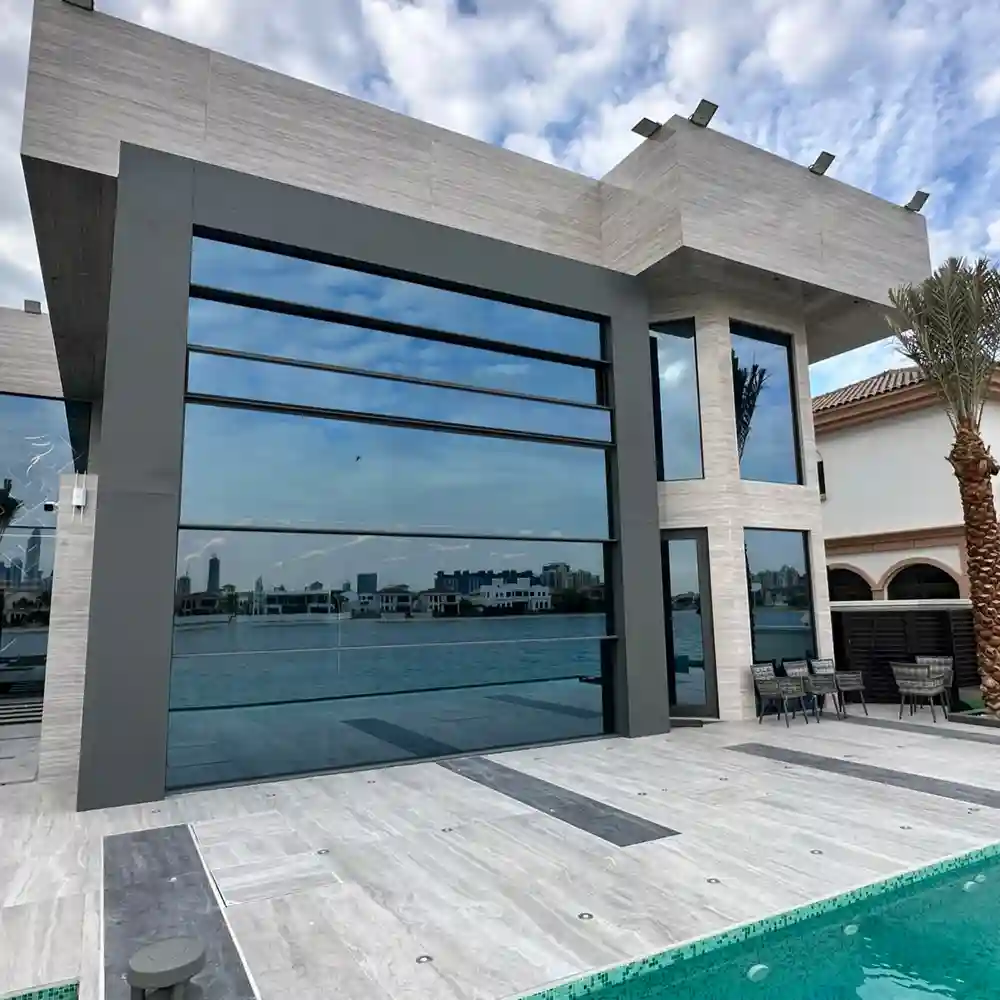
Modern facades do not always need to follow a completely minimalist style. Vertical sliding windows can also complement buildings that incorporate traditional architectural details, such as decorative mouldings, textured finishes, and symmetrical elevations.
For example, a contemporary villa can combine vertical sliding windows with stone cladding or textured exterior walls to create a balanced appearance. Selecting frame colours that coordinate with the building's exterior materials helps maintain a consistent design.
This approach is particularly useful for renovation projects where homeowners want to update the building's appearance without losing its original architectural character.
Using Materials and Colours to Enhance Facade Design
The choice of materials around a window can significantly influence the overall exterior. Aluminium frames, textured wall finishes, natural stone, and contemporary cladding can all work with vertical sliding windows.
Designers often consider the following combinations:
-
Glass and aluminium: Creates a clean, modern appearance with defined window frames.
-
Stone and textured finishes: Adds depth and contrast to residential facades.
-
Neutral exterior colours: Helps windows blend naturally with the building's architecture.
-
Contrasting frame finishes: Makes the window a noticeable design feature.
Material selection should also consider durability, weather resistance, and maintenance requirements.
Improving Ventilation and Indoor Comfort
Beyond aesthetics, vertical sliding windows offer practical advantages. Their sliding operation does not require additional space for an opening sash, making them useful in rooms with limited clearance, balconies, or exterior walkways.
Depending on the specific window design, opening the upper or lower sash can support different ventilation arrangements. Proper placement and suitable window specifications can help improve airflow, although actual ventilation depends on the building layout and surrounding conditions.
Conclusion
Modern facade concepts can make vertical sliding windows an integral part of a building's architectural identity. From minimalist elevations to designs combining traditional and contemporary materials, these windows offer flexibility in appearance and everyday use. By considering frame finishes, glazing, natural light, ventilation, and local climate conditions, architects and homeowners can create attractive facades that meet both aesthetic and practical requirements.



 English
 Arabic
 French
 Spanish
 Portuguese
 Deutsch
 Dutch
Dutch
 Italiano
 Russian
 Romaian
 Portuguese (Brazil)
 Greek
Greek
 Bengali