


Bio CNG Plant Setup in India: Cost, Land, Machinery and Approval Guide
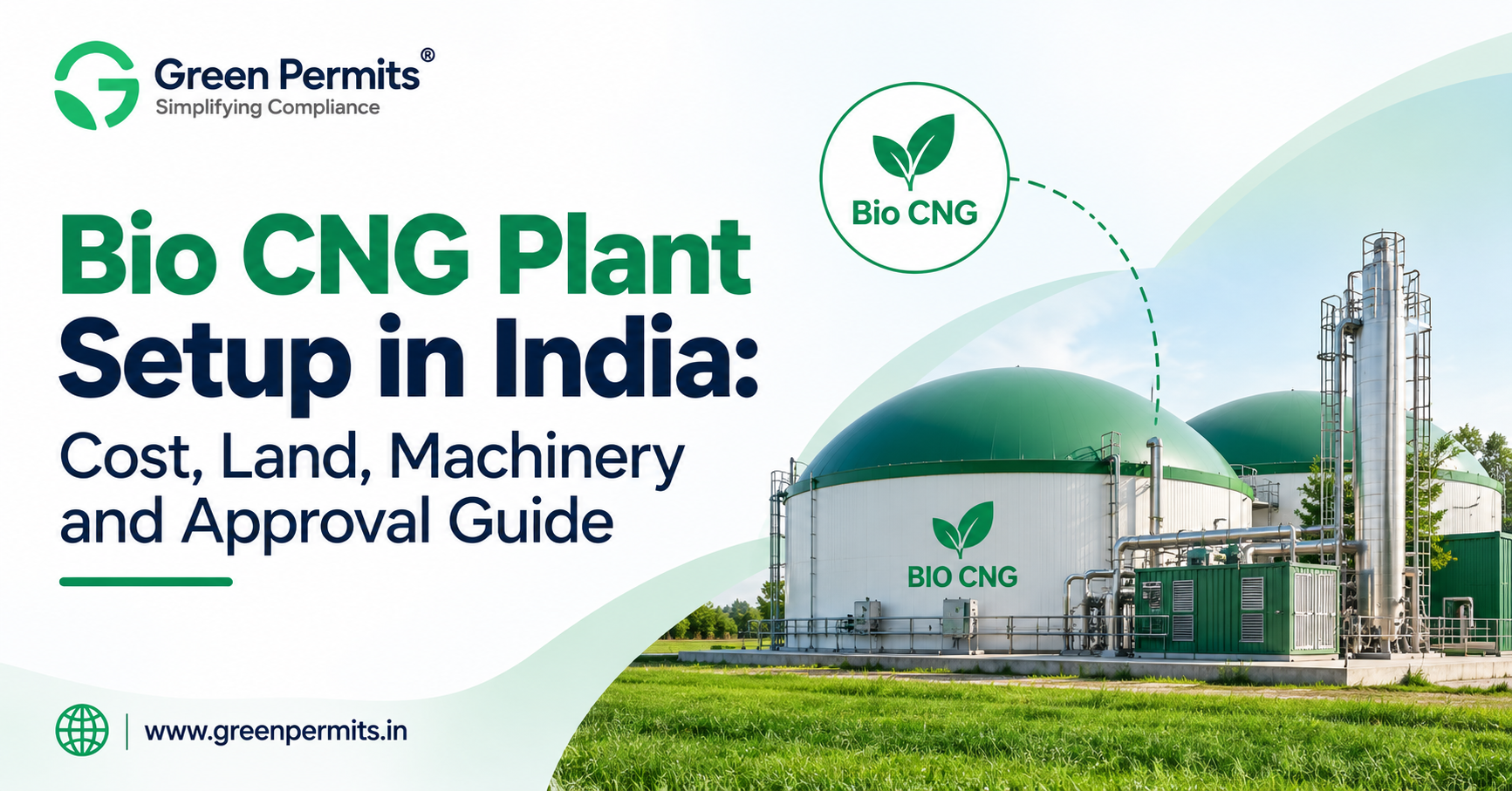
India is steadily increasing its focus on cleaner fuels, waste-to-energy projects, and alternatives to conventional natural gas. One of the most promising opportunities in this space is the Bio CNG plant, also commonly referred to as a Compressed Bio Gas or CBG plant.
A Bio CNG plant converts organic waste such as cattle dung, agricultural residue, food waste, press mud, poultry litter, municipal organic waste, and other biodegradable feedstock into purified biogas. After removing impurities and increasing methane concentration, the gas can be compressed and used as a fuel.
For entrepreneurs, farmers, industries, sugar mills, waste management companies, and infrastructure investors, setting up a Bio CNG plant can create two major revenue streams: sale of compressed biogas and sale or utilization of digested organic manure.
However, the commercial success of a project depends on much more than installing a biogas digester. Feedstock availability, plant capacity, land, technology selection, approvals, gas offtake, financing, and project economics all need to be studied before investment.
This guide explains the major requirements involved in Bio CNG plant setup in India, including approximate investment, land requirement, machinery, raw materials, approvals, process, and important planning considerations.
What Is a Bio CNG Plant?
A Bio CNG plant uses anaerobic digestion to convert biodegradable organic material into biogas.
Raw biogas generally contains methane along with carbon dioxide, moisture, hydrogen sulphide, and other impurities. The gas is purified through a gas upgrading system so that the methane concentration reaches the required quality level. The purified gas is then compressed for storage, transportation, or sale.
Depending on the project, the Bio CNG can be supplied to:
- Oil and gas marketing companies
- City gas distribution networks
- Industrial users
- Commercial vehicle fleets
- Captive industrial operations
The Government of India has also created a unified registration mechanism for planned and operating Biogas, CBG and Bio CNG plants through the GOBARdhan registration platform.
Why Bio CNG Projects Are Important in India
India generates large quantities of agricultural residue, cattle dung, food waste, industrial organic waste, and municipal biodegradable waste every year.
Traditionally, much of this waste has limited commercial utilization. Bio CNG projects can convert part of this waste into a marketable fuel while also producing digestate that can be processed into organic manure.
The sector has received policy attention through initiatives such as SATAT - Sustainable Alternative Towards Affordable Transportation. SATAT was launched in October 2018 to encourage production of compressed biogas from biomass and waste sources. Oil and gas marketing companies including IOCL, BPCL, HPCL, GAIL and IGL have participated in CBG procurement initiatives.
This creates opportunities for both large developers and smaller regional projects located close to agricultural or industrial feedstock clusters.
Who Can Set Up a Bio CNG Plant?
Bio CNG projects can be developed by different types of businesses and entrepreneurs.
Potential project developers include:
- Private companies
- Farmers and farmer producer organizations
- Sugar mills
- Dairy farms and gaushalas
- Food processing companies
- Municipal waste management companies
- Agricultural businesses
- Renewable energy companies
- Waste management companies
- Industrial groups looking for clean fuel
- Individual entrepreneurs and investors
Existing businesses with access to consistent organic waste generally have an advantage because feedstock cost and supply security strongly influence project economics.
Raw Materials Used in a Bio CNG Plant
Choosing the right raw material is one of the most important parts of project planning.
Common feedstocks include cattle dung, press mud, food waste, poultry litter, agricultural residues, vegetable market waste, sewage sludge and biodegradable industrial waste.
Different materials have different biogas yields, moisture levels, handling requirements and retention periods.
For example, a project using cattle dung will have a completely different logistics model from a project based on press mud or crop residue.
The developer should therefore estimate:
- Daily feedstock requirement
- Seasonal availability
- Moisture percentage
- Expected biogas yield
- Procurement price
- Collection radius
- Transportation cost
- Storage requirement
- Competing demand for the feedstock
A plant should ideally be located close to the main feedstock source. Transporting large volumes of low-density biomass over long distances can significantly increase operating costs.
Bio CNG Plant Capacity
Bio CNG projects can be developed at different capacities depending on the feedstock and target market.
Commercial plants may be planned for approximately:
- 1 TPD Bio CNG
- 2 TPD
- 3 TPD
- 5 TPD
- 10 TPD
- 20 TPD or above
A 5 TPD plant does not simply mean that only 5 tonnes of biomass is required every day.
The quantity of raw material required can be many times higher because the final Bio CNG output depends on the methane potential of the selected feedstock.
A detailed material balance should therefore be prepared before deciding the plant capacity.
Land Required for a Bio CNG Plant
There is no single land requirement applicable to every Bio CNG project.
Land requirement depends on factors such as plant capacity, feedstock type, storage area, digester technology, gas purification system, manure processing, utilities, internal roads, greenbelt and future expansion.
As a broad planning range, smaller commercial projects may require around 2 to 4 acres, while larger integrated plants may need 5 to 10 acres or more.
The land should provide sufficient space for:
- Feedstock unloading
- Raw material storage
- Pre-processing
- Digesters
- Gas holders
- Purification equipment
- Compressors
- Cascades
- Digestate handling
- Organic manure processing
- Utility systems
- Fire safety arrangements
- Internal movement
- Greenbelt and buffer areas
Before purchasing land, the developer should also verify land-use compatibility, road connectivity, electricity availability, water availability and distance from feedstock sources.
Bio CNG Plant Machinery and Equipment
A commercial Bio CNG plant consists of several integrated processing systems.
The exact equipment depends on the feedstock and technology, but a typical plant may include:
Feedstock Receiving and Preparation System
Raw materials are received, weighed and prepared before entering the digester.
Equipment may include shredders, conveyors, mixers, slurry tanks, pumps, dosing systems and feed hoppers.
Anaerobic Digestion System
The digester is the main biological processing section of the plant.
Microorganisms break down organic material in an oxygen-free environment and produce biogas.
Depending on the feedstock, the plant may use wet digestion, dry digestion, continuous stirred tank reactors or other suitable technologies.
Gas Storage System
Biogas produced in the digester is temporarily stored before purification.
Gas holders should be designed considering expected production fluctuations and plant safety requirements.
Bio CNG Purification System
Raw biogas cannot generally be directly compressed as Bio CNG.
The purification system removes substances such as:
- Carbon dioxide
- Hydrogen sulphide
- Moisture
- Other unwanted gas components
Technologies may include membrane separation, pressure swing adsorption, water scrubbing or other purification systems.
Gas Compression System
After purification, the gas is compressed using a high-pressure compressor.
The compressed gas may then be filled into cascade systems or supplied through other approved delivery arrangements.
Digestate and Manure Processing
The material remaining after digestion is called digestate.
Depending on the project design, it may be separated into solid and liquid fractions.
Solid digestate can potentially be processed into organic manure, subject to applicable requirements and market demand.
Approximate Bio CNG Plant Cost in India
Project investment depends heavily on capacity, feedstock, automation, gas upgrading technology and infrastructure.
A very broad indicative investment range may be:
Bio CNG Output CapacityIndicative Project Investment1 TPD₹4 crore - ₹7 crore2 TPD₹7 crore - ₹11 crore3 TPD₹10 crore - ₹15 crore5 TPD₹15 crore - ₹25 crore10 TPD₹25 crore - ₹45 crore+These numbers should only be treated as preliminary planning estimates.
The actual project cost may change substantially depending on land cost, civil construction, digesters, feedstock pre-treatment, gas purification technology, compressors, storage, electrical systems, utilities and working capital.
A Detailed Project Report should therefore be prepared before finalizing the investment.
Major Cost Components of a Bio CNG Project
The total investment typically includes several components rather than just machinery.
These can include:
- Land and site development
- Civil construction
- Feedstock handling equipment
- Digesters
- Gas storage
- Purification system
- Compression system
- Cascade filling arrangement
- Electrical infrastructure
- Water treatment
- Digestate management
- Laboratory equipment
- Fire and safety systems
- Engineering and installation
- Pre-operative expenses
- Working capital
In many projects, civil work and feedstock infrastructure can represent a significant portion of the investment.
Bio CNG Plant Setup Process
A structured development process can reduce the chances of costly mistakes.
Step 1: Feedstock Study
The project should first identify how much raw material is available within an economical procurement radius.
This study should cover seasonality, pricing, transportation, competing buyers and long-term availability.
Step 2: Feasibility Study
A technical and financial feasibility study should evaluate:
- Proposed capacity
- Biogas yield
- Plant utilization
- Gas production
- Raw material requirement
- Operating cost
- Revenue
- Project IRR
- Payback period
- Break-even level
Step 3: Land Finalization
The site should be finalized only after checking feedstock logistics, approvals, infrastructure and connectivity.
Step 4: Technology Selection
The digestion and gas purification technologies should be selected based on actual feedstock characteristics.
Selecting technology before studying feedstock can create major operating problems later.
Step 5: DPR Preparation
The Detailed Project Report usually includes project concept, feedstock assessment, technology, plant layout, machinery, financial projections, implementation schedule, approvals and risk analysis.
MNRE's BioURJA documentation for relevant waste-to-energy/BioCNG applications also identifies a DPR among important Stage-1 documentation for eligible applications.
Step 6: Approvals and Registrations
Applicable permissions should be obtained from central, state and local authorities.
Step 7: Equipment Procurement and Construction
Machinery orders and civil construction can begin after engineering design and approval planning.
Step 8: Installation and Commissioning
Equipment is installed, tested and integrated.
Trial production is then carried out to stabilize the biological process and gas purification system.
Step 9: Commercial Operations
After required testing and approvals, the facility can begin commercial gas production.
Approvals Required for a Bio CNG Plant in India
The approvals differ depending on state, capacity, feedstock and project configuration.
Typical approvals may include:
- Business incorporation and GST registration
- Land-use approval, where applicable
- Consent to Establish from the State Pollution Control Board
- Consent to Operate from the State Pollution Control Board
- Factory licence, where applicable
- Fire NOC
- Electrical approvals
- Local building or development approvals
- GOBARdhan registration
- PESO-related permissions where applicable to gas compression, storage or cascades
- Legal Metrology requirements where applicable
- Organic manure or fertilizer-related compliance depending on the final digestate product
- Applicable water or groundwater permissions
- Labour and industrial registrations
The approval matrix should be prepared specifically for the proposed plant rather than using a generic checklist.
GOBARdhan Registration
One important registration for the sector is the Unified Registration Portal for Biogas, CBG and Bio CNG projects.
According to MNRE's BioURJA portal, the GOBARdhan portal enables individuals or organizations operating or planning such plants in India to obtain a registration number.
The registration can form part of the project's broader government and scheme-related compliance documentation.
Government Support and Financial Assistance
Developers often explore government support when planning Bio CNG projects.
MNRE has operated Waste-to-Energy programmes covering eligible biogas and BioCNG projects. Under the programme framework, applications for Central Financial Assistance are processed through the BioURJA portal and eligible proposals must follow the applicable scheme conditions.
However, subsidy availability, budgets, eligible technologies and application timelines can change.
Developers should therefore verify the latest scheme position before including any subsidy in financial projections.
Revenue Sources from a Bio CNG Plant
A properly planned plant may generate revenue from more than one source.
The major revenue source is typically compressed biogas.
Additional revenue may potentially come from:
- Fermented organic manure
- Liquid fermented organic manure
- Waste processing or tipping arrangements
- Captive energy savings
- Carbon-related opportunities, where independently eligible
However, revenue from secondary products should not be overestimated.
Gas sales and feedstock economics should generally remain the core financial assumptions of the project.
Common Challenges in Bio CNG Plant Projects
Inconsistent Feedstock Supply
A plant designed for continuous operation requires dependable daily raw material.
Seasonal agricultural residue or irregular food waste can reduce capacity utilization.
Poor Feedstock Quality
Unexpected contamination, moisture variation or composition changes can disturb digestion performance.
Wrong Technology Selection
A system designed for cattle dung may not perform equally well with high-fibre crop residue.
Technology should always be matched with feedstock characteristics.
Gas Offtake Issues
Producing gas is only one part of the business.
The developer also needs a reliable buyer, transportation arrangement or connection to the target gas market.
Digestate Management
A large Bio CNG plant can generate substantial digestate.
The project should therefore have a clear plan for processing, storing and marketing the by-product.
Underestimating Working Capital
Feedstock procurement, manpower, power, transportation, maintenance and biological stabilization require ongoing working capital.
Why a Feasibility Study Is Important Before Investment
A Bio CNG project can involve investment ranging from several crore rupees to ₹50 crore or more.
Making the investment before verifying raw material and gas economics can create serious financial risk.
A feasibility study helps investors understand whether the proposed project can realistically operate at the required capacity.
Important areas to study include:
- Feedstock availability
- Feedstock radius
- Daily raw material consumption
- Gas yield
- Bio CNG production
- Technology requirement
- Land requirement
- Capital expenditure
- Operating expenditure
- Gas selling price
- Manure revenue
- EBITDA
- IRR
- Break-even
- Payback period
How a Bio CNG Consultant Can Help
A professional project consultant can support the project from concept stage to commissioning.
Consulting support can include feedstock assessment, market study, site selection, feasibility analysis, Detailed Project Report, machinery planning and regulatory mapping.
For businesses unfamiliar with the sector, this coordination can be especially useful because the project involves multiple disciplines: waste management, biological processing, gas handling, environmental compliance and financial planning.
A consultant can also help identify gaps before major capital is committed.
For example, if a proposed 5 TPD plant requires much more raw material than is commercially available within the planned collection radius, it is better to identify that problem during the feasibility stage than after machinery has already been ordered.
Benefits of Setting Up a Bio CNG Plant
When developed at the right location with secure feedstock and offtake, Bio CNG projects can offer several advantages.
They support waste utilization, renewable gas generation and circular economy development.
For industries generating their own organic waste, a Bio CNG plant can also reduce waste disposal dependency while creating energy from an existing waste stream.
Other possible benefits include:
- Renewable fuel production
- Revenue from waste
- Organic manure production
- Diversification into clean energy
- Reduced dependence on fossil fuels
- Rural employment generation
- Improved organic waste management
Conclusion
Setting up a Bio CNG plant in India can be a promising opportunity, but project success depends on careful planning before investment.
Feedstock availability should be studied first. The plant capacity, land, machinery and financial model should then be designed around the actual feedstock supply rather than theoretical assumptions.
Developers should also plan approvals, Bio CNG offtake, digestate utilization, working capital and future expansion from the beginning.
Green Permits supports entrepreneurs, companies and investors with Bio CNG plant feasibility studies, DPR preparation, project planning, regulatory approvals, Consent to Establish, Consent to Operate and end-to-end compliance support.
For professional assistance with your Bio CNG project:
Website: https://www.greenpermits.in
Phone: +91 78350 06182
Email: wecare@greenpermits.in

 English
 Arabic
 French
 Spanish
 Portuguese
 Deutsch
 Dutch
Dutch
 Italiano
 Russian
 Romaian
 Portuguese (Brazil)
 Greek
Greek
 Bengali