


How Retinal Detachment Laser Surgery in Dubai Helps Protect Your Vision
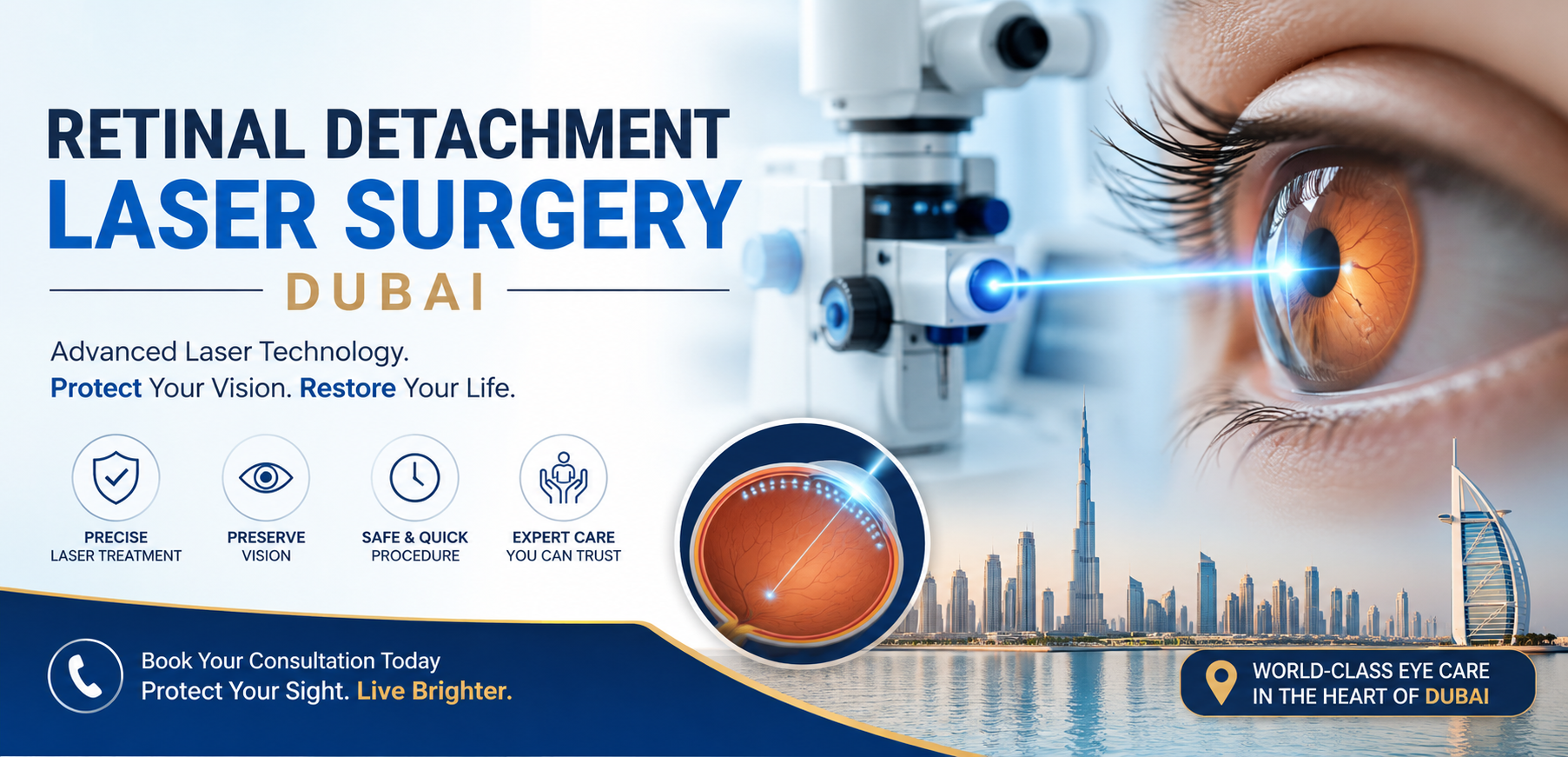
A sudden change in vision can be unsettling, especially when it happens without warning. Flashes of light, a growing number of floaters, or a dark curtain-like shadow across your sight should never be ignored. These symptoms can sometimes indicate a retinal problem that requires prompt assessment. Retinal detachment laser surgery Dubai is often discussed as an advanced approach to treating or preventing retinal complications, but the appropriate procedure depends on the type, location, and severity of the retinal condition. Understanding what laser treatment can and cannot do may help patients feel more prepared when speaking with an eye specialist. This guide explains the role of retinal laser treatment, what patients may experience, its advantages and disadvantages, and important questions to ask before treatment.
What Is Retinal Detachment?
Retinal detachment occurs when the retina, a light-sensitive layer at the back of the eye, separates from its normal position.
Because the retina is responsible for converting light into signals that the brain interprets as vision, detachment can threaten sight if it is not treated promptly.
A retinal detachment may develop after a retinal tear or hole allows fluid to pass underneath the retina. It can also occur because of changes inside the eye, including traction from the vitreous gel.
Common warning signs include:
- Sudden flashes of light
- A sudden increase in eye floaters
- Blurred or distorted vision
- A shadow or dark curtain moving across the field of vision
- Loss of peripheral vision
- A noticeable reduction in vision
Not every person experiences all of these symptoms. Some retinal tears may cause surprisingly few symptoms, which is why professional examination is important when warning signs appear.
How Does Laser Treatment Work?
Retinal laser treatment, also called laser photocoagulation, uses carefully controlled laser energy to create tiny treatment spots around a retinal tear, hole, or other targeted area.
The laser creates microscopic burns that eventually form scar tissue. This scar tissue can help create a stronger adhesion between the retina and the underlying tissue.
Laser treatment is commonly used to seal retinal tears or areas at risk of developing retinal detachment. It is important to understand that laser treatment is not suitable for every established retinal detachment.
When the retina has already detached significantly, other procedures may be necessary. Depending on the circumstances, an ophthalmologist may consider options such as pneumatic retinopexy, scleral buckling, or vitrectomy.
When Is Retinal Laser Treatment Recommended?
An eye specialist may recommend retinal laser treatment when an examination identifies a retinal tear, retinal hole, or particular retinal changes that create a significant risk of detachment.
The decision depends on several factors, including:
- The location and size of the retinal tear
- Whether fluid has passed underneath the retina
- The patient's symptoms
- Previous retinal problems
- The condition of the other eye
- Overall retinal health
- Whether the retina is already detached
A detailed dilated retinal examination is therefore essential before deciding on treatment.
What Happens During Retinal Laser Surgery?
For suitable retinal conditions, laser treatment is generally performed as an outpatient procedure.
The process may involve:
1. Eye examination
The ophthalmologist examines the retina after dilating the pupil. Additional imaging may be performed when necessary.
2. Numbing the eye
Local anaesthetic eye drops are usually used to reduce discomfort.
3. Laser application
A specialised laser is directed at the affected retinal area. The doctor places a controlled pattern of laser spots around the tear or vulnerable region.
4. Completion and observation
The procedure generally does not require a hospital stay. The patient may experience temporary visual changes afterward and may need someone to accompany them home depending on the treatment and clinic instructions.
The exact experience varies from person to person.
Advantages and Disadvantages of Retinal Laser Treatment
Laser treatment can be valuable in appropriately selected retinal conditions, but it is not a universal solution. Understanding both sides can help patients have a realistic discussion with their ophthalmologist.
| Advantages | Disadvantages |
|---|---|
| Can help seal certain retinal tears | Not suitable for every retinal detachment |
| May reduce the risk of progression in selected cases | May cause temporary visual discomfort or blurring |
| Usually performed without hospital admission | Multiple treatment sessions may sometimes be required |
| Treatment is precisely targeted | Existing retinal damage may not be reversible |
| Recovery is generally relatively straightforward | Complications, although uncommon, are possible |
| Can be used as preventive treatment for selected retinal breaks | Follow-up examinations remain important |
The most important point is that early diagnosis can influence the available treatment options. Laser treatment may prevent a retinal tear from progressing, but an established retinal detachment may require a different surgical approach.
Is Retinal Detachment Laser Surgery Painful?
Most patients tolerate retinal laser treatment well. Numbing eye drops are commonly used, although some people may notice pressure, mild discomfort, or brief sensations during treatment.
Afterward, temporary irritation, light sensitivity, or blurred vision can occur.
If severe pain, rapidly worsening vision, increasing redness, or other concerning symptoms develop after treatment, the patient should contact their eye-care provider promptly.
What Is Recovery Like?
Recovery depends on the retinal problem and the treatment performed.
After laser treatment, patients may be advised to:
- Avoid strenuous activity for a period recommended by their doctor.
- Follow prescribed eye-drop instructions.
- Attend scheduled retinal examinations.
- Report new flashes, floaters, shadows, or vision loss immediately.
- Avoid driving until vision has returned to a safe level.
Laser scars take time to become fully established. Therefore, feeling normal immediately after treatment does not mean follow-up care is unnecessary.
Why Follow-Up Matters After Retinal Treatment
Retinal conditions can change over time. A treated retinal tear may be stable while another retinal tear develops elsewhere.
Follow-up appointments allow the ophthalmologist to examine the treated area and check the surrounding retina.
Patients should seek urgent eye assessment if they experience:
- New flashes
- A sudden increase in floaters
- A curtain or shadow in vision
- Sudden peripheral vision loss
- Significant deterioration of sight
These symptoms should not be assumed to be a normal part of recovery.
Choosing Retinal Eye Care in Dubai
When looking for retinal treatment, patients should focus on appropriate diagnosis, retinal expertise, modern examination facilities, and clear communication about treatment options.
A consultation with Eye Consultant Dubai can help patients understand their retinal condition and whether laser treatment or another procedure is appropriate.
Rather than choosing treatment based only on the procedure's name, patients should ask about the diagnosis, the purpose of treatment, expected outcomes, possible risks, and follow-up requirements.
10 Frequently Asked Questions
1. What is retinal detachment laser surgery?
Retinal laser treatment uses controlled laser energy to create scar tissue around selected retinal tears or weak areas. It can help prevent retinal detachment in appropriate cases.
2. Can laser treatment repair every retinal detachment?
No. Laser treatment is mainly used for selected retinal tears or areas at risk. An established retinal detachment may require another surgical procedure.
3. Is retinal laser treatment painful?
Most patients experience little discomfort because the eye is usually numbed. Some may feel pressure or brief discomfort during treatment.
4. How long does retinal laser treatment take?
The duration varies according to the number and location of retinal problems being treated. Many treatments can be completed during an outpatient appointment.
5. Can retinal laser treatment restore lost vision?
Laser treatment primarily aims to seal a retinal break or reduce the risk of further retinal damage. It cannot necessarily restore vision already lost because of retinal damage.
6. What are the warning signs of retinal detachment?
Important warning signs include sudden flashes, many new floaters, a dark curtain or shadow, and sudden loss of peripheral or central vision.
7. Can retinal detachment be prevented?
Some retinal detachments can be prevented when a retinal tear or high-risk retinal lesion is detected and treated early. Regular retinal examinations can be particularly important for people with risk factors.
8. Can I drive after retinal laser treatment?
Driving should be avoided until your ophthalmologist confirms that your vision is adequate and safe for driving.
9. Will I need follow-up after laser treatment?
Yes. Follow-up allows the doctor to confirm that the treated area is stable and check for additional retinal problems.
10. When should I seek urgent retinal care?
Seek urgent eye assessment if you suddenly develop flashes, numerous new floaters, a curtain-like shadow, or sudden vision loss. These symptoms can require prompt evaluation.
Conclusion
Retinal problems deserve timely attention because the retina plays a crucial role in vision. Retinal detachment laser surgery Dubai may be an effective treatment or preventive option for selected retinal tears and high-risk retinal changes, but the correct approach depends on the individual diagnosis.
If you notice sudden flashes, new floaters, shadows, or changes in your vision, do not delay an eye examination. Speak with a qualified retinal specialist to understand the condition and the treatment options available for your eyes.

 English
 Arabic
 French
 Spanish
 Portuguese
 Deutsch
 Dutch
Dutch
 Italiano
 Russian
 Romaian
 Portuguese (Brazil)
 Greek
Greek
 Bengali