


Engineering Reliable Supported Ball Mechanisms
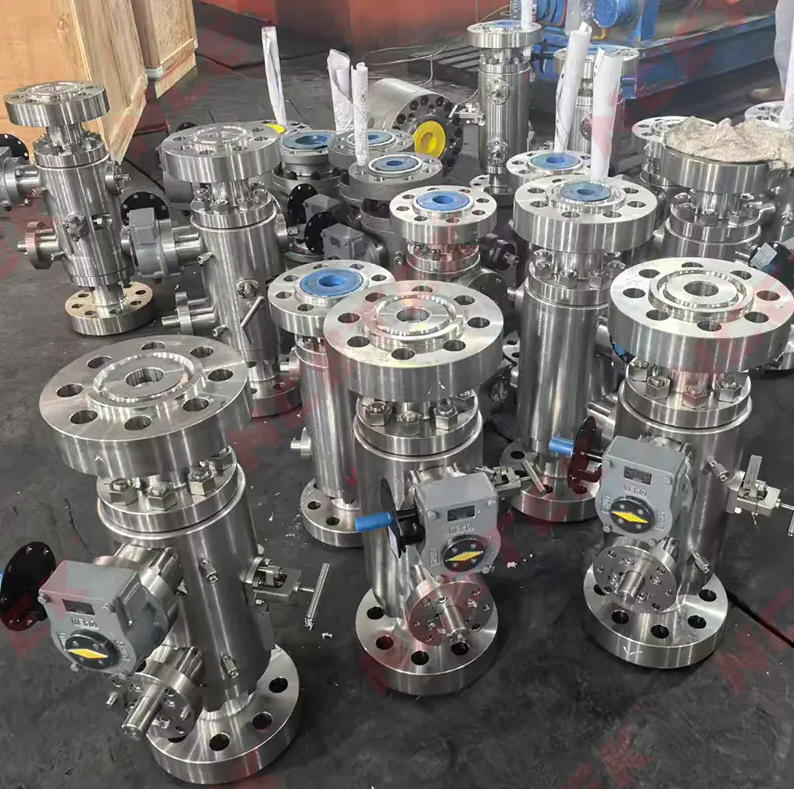
Industrial pipeline systems can place substantial mechanical demands on flow control equipment, particularly when valves are installed in large-diameter or high-pressure applications. A Forged Steel Trunnion Mounted Ball Valve combines a forged steel body with a mechanically supported ball structure to address the structural and operational requirements of demanding pipeline environments. Its performance depends on coordinated engineering across material selection, forging, machining, sealing, assembly, and testing.
Forging technology can provide a dense and mechanically robust body structure because the manufacturing process shapes heated metal under controlled force. Depending on the required service conditions, carbon steel, stainless steel, or alloy steel may be considered for different valve components. Material selection should take into account pressure, temperature, corrosion exposure, process media, and applicable project requirements. The body material must also work appropriately with internal components and connection structures.
The trunnion-mounted configuration provides mechanical support for the ball at designated points. Unlike a floating arrangement, the ball does not rely entirely on line pressure to maintain its position. Supporting the ball can reduce the load transferred through the seats and influence the torque required for operation. This characteristic becomes increasingly relevant when valve size and operating pressure increase, although the final design must always correspond to the actual system conditions.
Precision machining follows the forging process and is critical to the dimensional accuracy of the completed valve. Internal cavities, trunnion supports, ball surfaces, stem interfaces, and seat pockets require controlled machining. The ball surface should be sufficiently accurate to establish consistent interaction with the sealing components. Likewise, properly machined stem interfaces support smooth transmission of movement from the actuator or manual operating mechanism.
Sealing technology must be selected according to the intended operating environment. Seats may need to accommodate changes in pressure, temperature, and fluid characteristics while maintaining appropriate contact with the ball. Different seat materials can provide different levels of chemical compatibility and temperature suitability. Stem sealing is also important because it forms a barrier around the moving stem and helps control potential leakage between the internal process area and the external environment.
Actuator integration should be considered during the engineering stage rather than treated as a separate installation issue. Pneumatic, electric, hydraulic, or manual operating arrangements may be selected according to project requirements. The actuator must provide suitable movement and torque for the valve configuration. Correct coupling between the actuator and stem helps ensure that opening and closing forces are transferred effectively without placing unnecessary mechanical stress on individual components.
Quality control covers several stages of production. Forged components can be inspected before machining, while critical dimensions should be verified during and after manufacturing. Assembly inspection confirms the correct positioning of the ball, trunnion supports, seats, stem, and other internal parts. Completed valves can then undergo pressure, leakage, and functional testing based on applicable specifications and project requirements.
Application environments can include oil and gas pipelines, petrochemical facilities, power generation, gas processing, industrial utilities, and other process systems. Each environment can introduce different combinations of pressure, temperature, fluid composition, and operating frequency. For this reason, valve selection should begin with the actual process conditions rather than simply selecting a general valve category.
Installation and maintenance requirements also influence the overall equipment configuration. Large valves may require suitable lifting access and sufficient space around the actuator. Pipeline alignment should be checked carefully during installation to avoid unnecessary external loads. During service, operators may inspect operating components, sealing areas, connections, and actuator performance according to the maintenance plan.
For industrial flow control projects, Forged Steel Trunnion Mounted Ball Valve selection involves more than choosing a forged body and supported ball. Material compatibility, machining accuracy, sealing design, actuator integration, testing, and installation conditions all contribute to the finished system. Industrial valve configurations and related solutions can be reviewed at https://www.ncevalve.com/product/ when evaluating equipment for demanding pipeline applications.

 Arabic
 French
 Spanish
 Portuguese
 Deutsch
 Turkish
 Dutch
Dutch
 Italiano
 Russian
 Romaian
 Portuguese (Brazil)
 Greek
Greek
 Bengali