


SOP Development Services in India: How to Create Effective Manufacturing SOPs
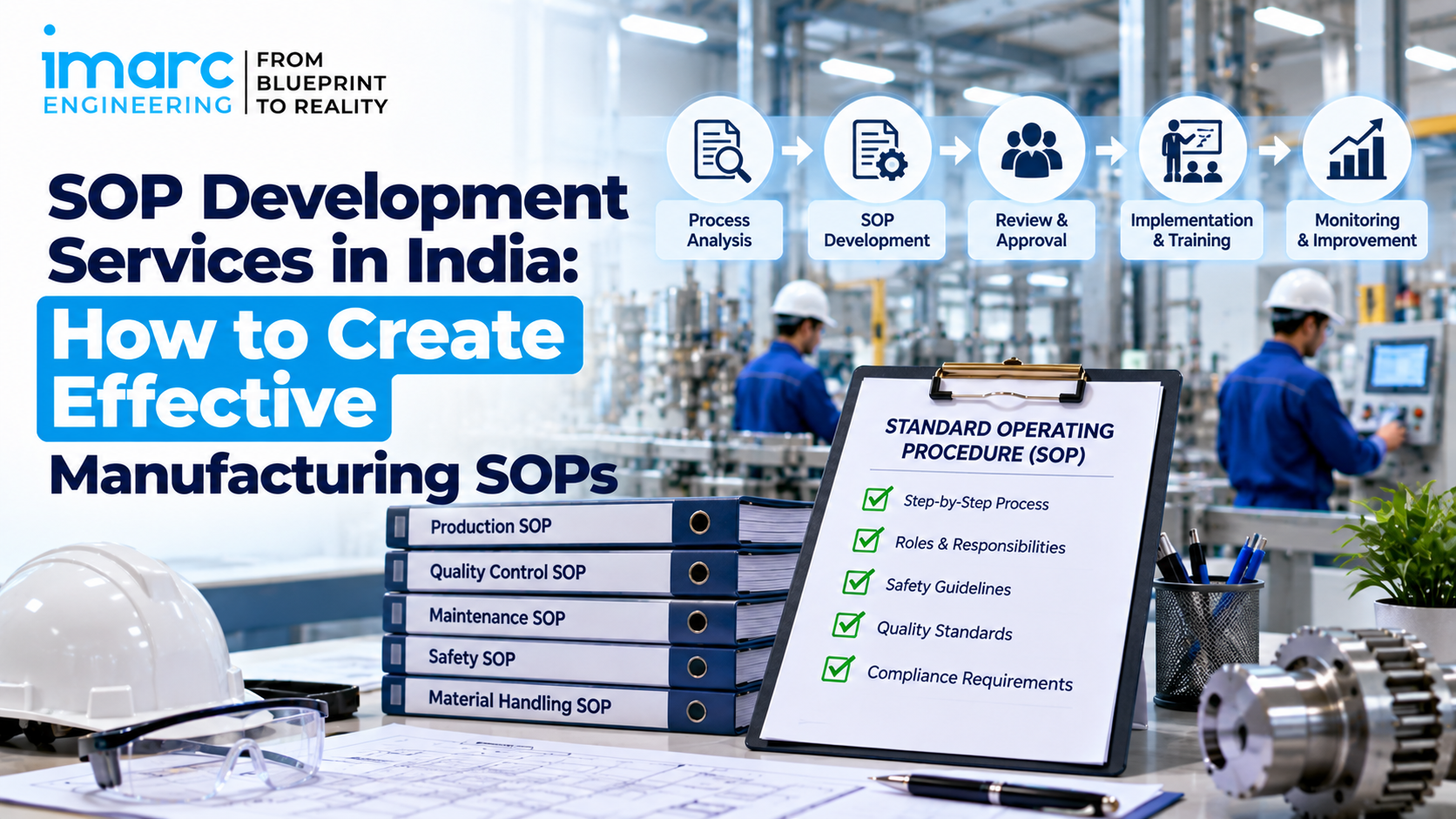
Manufacturing SOPs often fail for a simple reason: they are written for the file, not for the floor. The document is approved, training sheets are signed and the procedure still cannot be followed under real production conditions. Operators improvise, supervisors accept local methods and auditors later find that practice and documentation do not match.
SOP development services in India help manufacturers close that gap. The work is not typing instructions into a template. It is converting actual process knowledge into clear, controlled and usable standard operating procedures that support consistency, training and compliance.
Why Effective SOPs Matter in Manufacturing
A standard operating procedure defines the controlled method for performing a process. In plants, SOPs protect consistency across shifts, reduce dependence on individual memory and create the baseline for training, deviation handling and audits.
Weak SOPs create predictable problems:
- Process variation between teams and shifts
- Longer onboarding time for new operators
- Incomplete or inconsistent records
- Audit findings on practice-versus-procedure gaps
- Difficulty investigating defects, deviations and complaints
India’s manufacturing sector continues to expand under policy support and investment momentum:
- Manufacturing growth is estimated at around 7% at constant prices in FY 2025-26 (MoSPI First Advance Estimates).
- FDI into manufacturing rose 18% in FY 2024-25 to US$19.04 billion (Ministry of Commerce & Industry / DPIIT).
- PLI cumulative investment has exceeded ₹2.16 lakh crore, with cumulative production and sales surpassing ₹20.41 lakh crore as of December 2025 (PIB).
- Logistics costs have improved to an estimated 7.97% of GDP (DPIIT-NCAER study).
As plants scale and face tighter customer and compliance expectations, usable SOPs become an operating requirement—not only a documentation task.
What SOP Development Services Typically Cover
Effective SOP development support usually includes:
- Process prioritisation by risk and variation
- Shop-floor process observation and method capture
- Drafting of clear, sequence-based procedures
- Alignment with records, forms and system entries
- Cross-functional review with production, quality and technical owners
- Implementation support through training and controlled release
- Post-release verification that practice matches the procedure
The outcome should be procedures people can follow, not documents that only satisfy a checklist count.
What Makes a Manufacturing SOP Effective
An effective SOP is:
- Accurate — reflects the real controlled method
- Clear — understandable to the people who do the work
- Actionable — states what to do, in order, with defined checks
- Controlled — versioned, approved and available at point of use
- Linked — connected to records, training and change control
- Enforceable — practical enough that supervisors can require adherence
Long technical narrative without sequence, ownership and acceptance criteria rarely changes behaviour.
How to Create Effective Manufacturing SOPs
1. Prioritise processes by risk
Start with processes that affect product quality, safety, compliance, throughput or recurring errors. Do not begin with low-risk administrative tasks.
2. Observe the process as it is performed
Walk the job with experienced operators across shifts. Capture steps, decision points, tools, checks and common failure modes. Writing only from memory or old files recreates old gaps.
3. Define the controlled standard method
Where practice varies, agree the intended method with production, quality and relevant technical owners before drafting.
4. Write in process sequence
A practical structure includes:
- purpose and scope
- roles and responsibilities
- materials, tools and equipment
- step-by-step method
- in-process checks and limits
- records to complete
- safety precautions
- handling of abnormal conditions
5. Use shop-floor language
Direct instructions work better than vague phrases such as “as required” or “properly cleaned” unless measurable criteria are defined.
6. Link procedures to evidence
Every critical step that must be proven should connect to a form, log, batch record field or system entry.
7. Review with users before approval
Operators and supervisors should confirm that the SOP can be followed under real production conditions.
8. Release through training and version control
An SOP is not implemented until affected personnel are trained, the effective date is clear and obsolete copies are removed from point of use.
9. Verify after implementation
Watch the process after release. If practice diverges, either retrain or correct the SOP. Do not leave the gap open.
SOP Development and Compliance
From a compliance perspective, SOPs support:
- Controlled operations
- Training evidence
- Audit traceability
- Deviation investigation baselines
- Change-control evaluation
- Consistent product and process history
Auditors typically test whether the SOP is current at point of use, whether operators follow it, whether records match required checks and whether changes are controlled. Documentation without practice does not satisfy these tests.
Shop-Floor Implementation: Where SOP Programmes Fail
Implementation fails when plants:
- Write SOPs in isolation from operations
- Release large volumes of documents at once
- Train for attendance rather than competence
- Leave obsolete copies in process areas
- Ignore supervisor ownership
- Update SOPs only before audits
Sustainable programmes need fewer, better SOPs—owned by process teams and confirmed on the floor.
Common Mistakes in SOP Development
- Copying templates from other plants without adaptation
- Writing for auditors only, not for operators
- Overloading one SOP with multiple processes
- No version-control discipline
- No link between process changes and SOP updates
- Measuring progress by number of SOPs written
- No periodic review after equipment, material or method changes
These mistakes create documentation volume without process control.
Practical SOP Quality Checklist
Before release, confirm:
- Process owner is named.
- Scope and boundaries are clear.
- Steps match observed best controlled practice.
- Critical checks have measurable criteria.
- Required records are identified.
- Safety and abnormality handling are included.
- Users have reviewed usability.
- Training plan and effective date are defined.
- Old versions will be removed from point of use.
- Post-implementation verification is planned.
If these points are incomplete, compliance risk remains even after approval.
When Manufacturers Should Use SOP Development Services
External support is especially useful when:
- Audit or customer inspections are approaching
- Process variation between shifts is high
- Documentation exists but is not followed
- New lines, equipment or products are being introduced
- Multi-site operations need a common SOP standard
- Internal teams lack bandwidth to rebuild procedures while running production
SOP development services create value when they improve control and consistency, not when they only expand the archive.
How IMARC Engineering Can Help
IMARC Engineering supports manufacturers who need stronger process standardisation and shop-floor readiness. Effective SOPs are part of operational discipline—connecting method control, compliance evidence and daily execution.
Support may include:
- Process and workflow definition support
- Identification of practice-versus-standard gaps
- Operational readiness inputs for documentation and implementation
- Advisory across pharmaceuticals, food and beverage, chemicals, auto components, electronics, FMCG and discrete manufacturing
If your plant needs SOP development services to create effective manufacturing procedures that work on the floor and stand up in audits, IMARC Engineering can help structure a practical approach: https://www.imarcengineering.com/contact?service=standard-operating-procedure-development
Conclusion
SOP development services in India help manufacturers create effective manufacturing SOPs by combining process observation, clear writing, controlled release and shop-floor verification. Procedures must standardise the method, support compliance evidence and remain practical for daily use.
Plants that treat SOP development as controlled process design improve consistency and audit confidence. Plants that produce documents only for inspections usually rediscover the same practice gaps at the next review.
An SOP is effective only when the plant can follow it, prove it and improve it under control.
Contact Us:
IMARC Engineering
Phone: +91-120-433-0800
Email: sales@imarcengineering.com
India: C-130, Sector 2, Noida, Uttar Pradesh 201301
LinkedIn: https://www.linkedin.com/showcase/imarc-engineering/

 English
 Arabic
 French
 Spanish
 Portuguese
 Deutsch
 Turkish
 Dutch
Dutch
 Italiano
 Romaian
 Portuguese (Brazil)
 Greek
Greek
 Bengali