


Bacteriostatic Water for Injection: A Complete Guide for Researchers
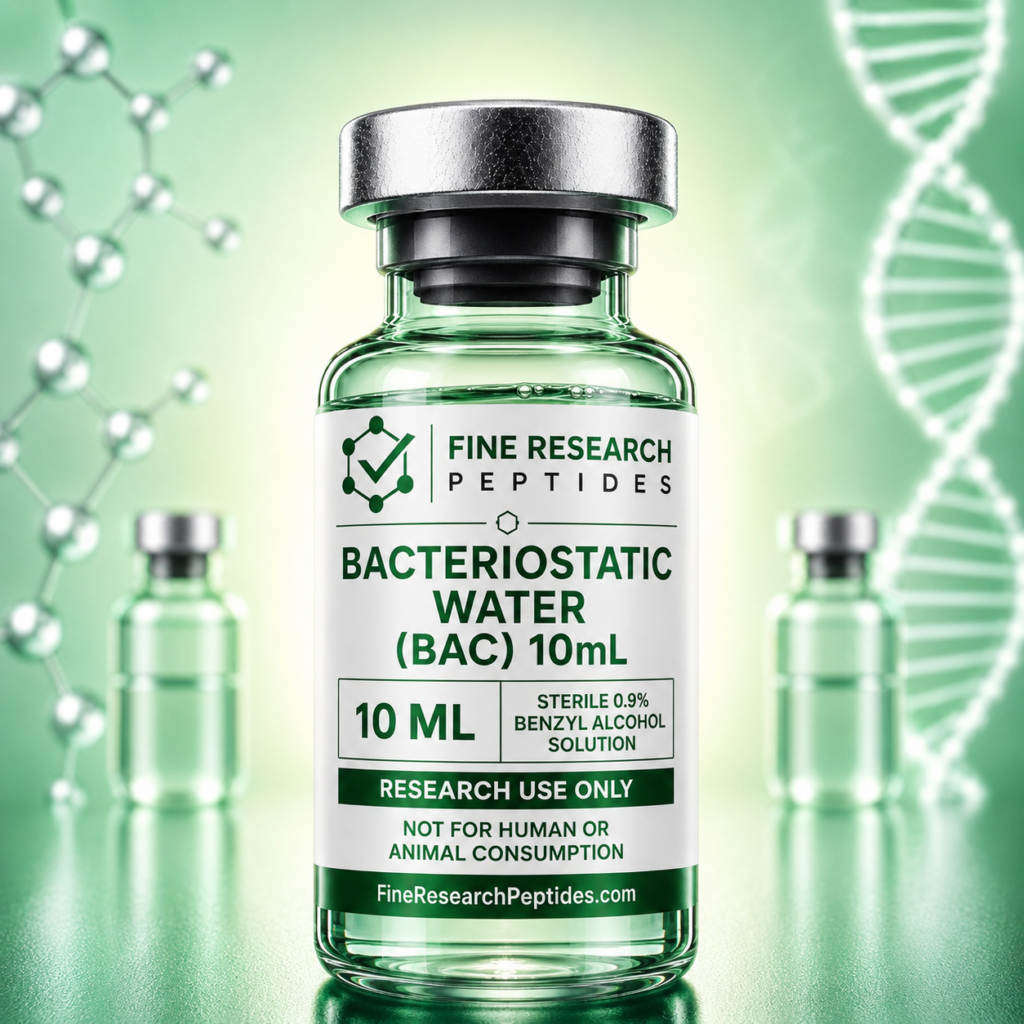
The term bacteriostatic refers to the preservative's ability to inhibit the growth of microorganisms under appropriate conditions. It does not mean that contamination is impossible or that contaminated materials can be made safe. Product labeling determines how a particular preparation should be stored, handled, and used. For research environments, understanding the distinction between a pharmaceutical diluent and general laboratory water is essential for maintaining appropriate quality standards and avoiding inappropriate applications.
Researchers and healthcare professionals should therefore view it as a specialized pharmaceutical preparation rather than ordinary laboratory water or a universal solvent. Bacteriostatic water for injection is a sterile, nonpyrogenic preparation intended primarily for use as a diluent for compatible injectable medicines. Unlike preservative-free sterile water, it commonly contains benzyl alcohol as an antimicrobial preservative. Its purpose is to provide a suitable aqueous vehicle when the instructions for a particular product specify its use.
Why Researchers May Encounter Bacteriostatic Water
Researchers working in pharmaceutical development, formulation science, analytical laboratories, or related fields may encounter bacteriostatic water when studying injectable formulations. Certain medications are specifically labeled for reconstitution or dilution with a compatible bacteriostatic preparation. The correct choice depends on the individual product's formulation, stability, route of administration, and manufacturer's instructions. Consequently, researchers should never assume that bacteriostatic water is appropriate simply because another injectable compound can be used with it.
For laboratory work, the choice of a diluent can influence experimental consistency and material compatibility. Researchers may need to consider factors such as preservative content, pH, stability, formulation characteristics, and the requirements of the specific protocol. Maintaining clear records of the materials used can also improve reproducibility. A well-documented research workflow makes it easier to determine whether unexpected experimental observations could be associated with the compound, diluent, storage conditions, or another variable.
Bacteriostatic Water vs. Sterile Water
One of the most important distinctions for researchers is the difference between bacteriostatic water and sterile water for injection. Bacteriostatic water contains an antimicrobial preservative, while sterile water for injection is generally preservative-free. This difference can affect compatibility and suitability for particular medications or experimental applications. The two products should therefore not be treated as interchangeable simply because both are sterile aqueous preparations.
The presence of benzyl alcohol also creates important considerations. Certain populations and applications may require avoidance of benzyl alcohol-containing preparations, and product-specific labeling may contain additional restrictions. Researchers should review the relevant documentation before incorporating a diluent into a laboratory procedure. A qualified pharmacist or other appropriate professional can provide guidance for approved pharmaceutical applications, while laboratories should follow their own validated protocols and institutional requirements for research work.
Quality, Sterility, and Documentation
Quality is particularly important when a sterile product is being considered for laboratory or pharmaceutical use. Researchers should inspect the product's labeling, container integrity, lot information, expiration information, and relevant manufacturer documentation. The solution should be consistent with its labeled appearance, and damaged or questionable containers should not be incorporated into a controlled workflow. These basic checks can help laboratories identify potential quality concerns before a material becomes part of an experiment.
Sterility should also be treated as a specific quality attribute rather than an assumption. Historical regulatory safety notices have demonstrated that concerns involving the sterility assurance of individual lots can occur, which is why appropriate product verification and traceability matter. Researchers should record relevant batch information and follow established procedures for receiving and inspecting sterile materials. Good documentation creates an audit trail that can support investigations when an unexpected result or quality concern arises.
Storage and Handling Considerations
Storage conditions for bacteriostatic water should always be based on the labeling of the specific product. Different pharmaceutical preparations can have different storage requirements, so researchers should not automatically transfer instructions from one product to another. Containers should remain properly identified and protected from conditions that could compromise their integrity. Laboratories can also benefit from inventory procedures that track lot numbers and expiration information throughout the period in which materials remain in storage.
Handling should follow appropriate aseptic and institutional procedures because the presence of a preservative does not eliminate contamination risks. The preservative is not a replacement for proper laboratory technique, container integrity, or controlled handling. Researchers should avoid using products with questionable seals, unexpected appearance, or unclear identification. These precautions are especially important when materials may subsequently be incorporated into sensitive pharmaceutical or analytical research workflows.
Considering Peptide Research Materials
Peptide research often involves discussions about solvents, diluents, stability, and formulation characteristics. Researchers may encounter bacteriostatic water when reviewing materials associated with peptide-related investigations, but its suitability depends on the specific peptide and research protocol. Different peptides can have different chemical characteristics, stability requirements, and experimental conditions. Therefore, researchers should rely on documented compatibility information rather than assuming that a particular diluent is universally suitable for peptide research.
The same principle applies when encountering online listings such as semax 5mg peptide for sale. The availability of a research product online does not by itself establish its identity, purity, stability, regulatory status, or suitability for human use. Researchers evaluating peptide materials should focus on batch identification, analytical characterization, supplier documentation, stated composition, storage requirements, and intended research use. A product's advertised concentration or name should not replace appropriate quality assessment when scientific reproducibility is important.
Responsible Evaluation of Research Peptides
When a laboratory evaluates a peptide material, a structured procurement process can reduce uncertainty. Researchers may review the stated compound identity, lot number, analytical testing, purity information, certificate of analysis, storage conditions, and supplier traceability. Depending on the research objective, additional characterization may be appropriate. Establishing acceptance criteria before procurement also helps researchers compare materials using consistent scientific standards instead of relying primarily on promotional descriptions.
Products marketed as research materials should also be kept distinct from approved pharmaceutical products. A research-use designation does not establish that a compound is authorized for administration to humans or that it has the same manufacturing controls as a regulated medicine. This distinction is especially relevant when searching for products described as semax 5mg peptide for sale. Researchers should ensure that laboratory documentation accurately reflects the material's intended purpose and does not confuse experimental availability with clinical approval or established therapeutic use.
Building a Researcher-Focused Checklist
Before adding bacteriostatic water to a laboratory inventory, researchers can use a practical checklist covering identity, composition, manufacturer information, lot number, expiration information, container integrity, storage requirements, and intended use. For pharmaceutical applications, compatibility should be confirmed against the relevant product instructions. For laboratory research, the material should be evaluated against the established protocol and institutional requirements. This structured process can reduce avoidable errors and improve consistency across research projects.
A similar checklist can be applied when evaluating peptide materials. Researchers should consider whether the supplier provides meaningful batch-specific documentation and whether analytical information supports the stated identity and purity. They should also verify that the material's storage and handling requirements can be accommodated by the laboratory. Whether reviewing bacteriostatic water for injection or a listing for semax 5mg peptide for sale, evidence-based procurement is more reliable than choosing materials solely because they are inexpensive, widely advertised, or readily available online.
Final Considerations for Researchers
Bacteriostatic water for injection serves a specific role in pharmaceutical and laboratory contexts, particularly as a diluent for compatible injectable products when its use is specified. Its preservative content distinguishes it from preservative-free sterile water and creates additional compatibility and safety considerations. Researchers should therefore evaluate the product's labeling, quality documentation, storage requirements, and intended application before incorporating it into a research workflow.
For laboratories working with peptides, responsible material selection is equally important. Online availability does not automatically establish the quality, authenticity, regulatory status, or suitability of a research compound. Searches involving semax 5mg peptide for sale should therefore be approached through the same principles of identity verification, analytical documentation, traceability, and appropriate research-use classification. A careful, documentation-focused approach can support reproducible research while helping laboratories maintain sound scientific and quality practices.

 English
 Arabic
 French
 Spanish
 Portuguese
 Deutsch
 Turkish
 Dutch
Dutch
 Italiano
 Russian
 Portuguese (Brazil)
 Greek
Greek
 Bengali