


Laser Cleaning Machine Price: What Determines the Cost and Which System Fits Your Work
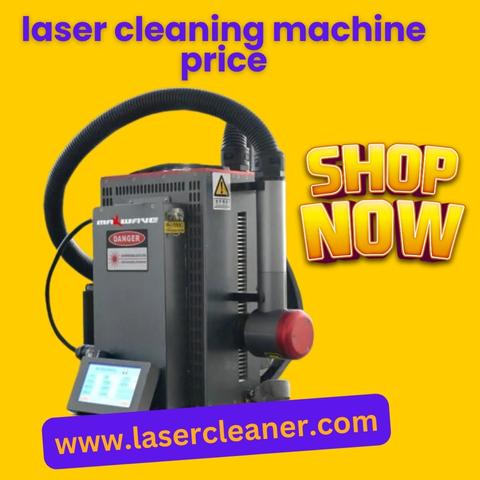
When researching a laser cleaning machine price, buyers quickly discover that there is no single fixed figure. Prices can range from a few thousand dollars for compact systems to tens of thousands of dollars or considerably more for advanced industrial and automated equipment. The final cost depends on laser technology, power, configuration, cooling, components, automation, and the application for which the machine is designed.
A laser cleaning machine uses concentrated laser energy to remove rust, paint, oxide layers, grease, coatings, and other contaminants from a surface. Because different materials and cleaning tasks require different levels of energy and precision, manufacturers offer several configurations to meet specific industrial requirements.
Understanding Laser Cleaning Machine Price
The first step toward understanding pricing is to look beyond the machine's advertised wattage. Two machines with similar power ratings can have substantially different prices because their laser sources, scanning systems, cooling arrangements, control electronics, and overall construction may differ.
Current industry pricing references show that handheld and industrial laser cleaners can range from approximately $2,500 to more than $20,000, while sophisticated automated systems can cost substantially more. These figures are general market ranges rather than fixed quotations, and the actual price depends on configuration and supplier.
For buyers comparing quotations, the most useful approach is to identify the required cleaning process first and then compare machines with similar specifications.
How Laser Power Influences Cost
Laser power is one of the most visible factors affecting a laser cleaning machine price. Lower-power systems are commonly used for precision cleaning, light contamination, smaller components, and applications where controlled energy delivery is important.
Higher-power systems are generally intended for larger surfaces, heavier rust, thick coatings, and industrial cleaning operations where productivity is important.
For example, 100W to 300W systems may be considered for precision-oriented work, while 1000W, 1500W, 2000W, and 3000W continuous-wave systems are commonly marketed for heavier industrial cleaning. However, higher wattage should not automatically be interpreted as a better choice. The correct power depends on the material, contaminant, surface area, and required cleaning speed.
Pulsed and Continuous-Wave Laser Systems
Laser technology is another major factor behind price differences.
Pulsed laser cleaning systems deliver energy in short pulses. This allows operators to work on applications where controlling heat input is particularly important. Such systems are often considered for precision components, molds, delicate surfaces, and applications requiring carefully controlled material interaction.
Continuous-wave, or CW, laser cleaners provide continuous laser output. They are frequently used for heavy rust removal, paint stripping, weld preparation, and larger industrial surfaces where cleaning speed is an important consideration.
Because pulsed systems require specialized laser sources and precise pulse control, they can have a significantly different price structure from CW systems. Therefore, comparing a 200W pulsed machine directly with a 1500W CW machine only by wattage can be misleading.
Handheld Laser Cleaning Machine Price
Handheld systems are popular because they provide flexibility for workshops, maintenance teams, fabrication companies, automotive operations, and on-site cleaning services.
Entry-level handheld machines may be available at several thousand dollars, while professional systems with higher power, better components, advanced cooling, and additional support can cost considerably more.
The price of a handheld machine can also change according to whether it uses air cooling or water cooling. Higher-power equipment generally requires more substantial thermal management, which can increase the overall system cost.
When comparing handheld machines, buyers should therefore examine the complete configuration rather than looking only at the advertised price.
What Components Affect the Price?
A laser cleaning machine is made up of several integrated components. The laser source is an important part of the overall cost, but it is not the only consideration.
The laser cleaning head influences beam delivery and scanning performance. The control system determines how the operator adjusts cleaning parameters. Cooling equipment is important for maintaining stable operation, particularly in higher-power systems.
Electrical components, housing, fiber cables, optical parts, emergency controls, and factory testing can also contribute to the final quotation.
This explains why two machines advertised at the same wattage can have noticeably different prices. A specification such as "1500W" describes only one part of the complete system.
Price Differences Between Factory and Local Suppliers
The location and purchasing channel can also influence the final laser cleaning machine price.
A factory-direct quotation may represent an equipment price before shipping, customs, taxes, installation, and local service costs. A distributor or local dealer may include additional services such as installation, training, warranty assistance, spare parts, and technical support.
For international buyers, an apparently inexpensive factory quotation should therefore be compared with the complete delivered cost. Shipping arrangements, import duties, electrical requirements, installation, and local regulations may all affect the final investment.
A clear quotation should identify exactly what is included so that different suppliers can be compared fairly.
Choosing a Machine According to the Cleaning Application
The cleaning application should be established before selecting a machine.
For light rust and oxidation on relatively small components, a lower-power system may provide sufficient performance. Automotive workshops may require a more versatile configuration for parts, tools, and maintenance work.
Metal fabrication companies dealing with weld preparation, heavy rust, and larger steel surfaces may consider higher-power CW systems. Manufacturers working with molds or precision components may investigate pulsed technology where controlled heat input is important.
Large industrial facilities may also require automated systems rather than handheld equipment. Automation can increase the initial investment because the laser cleaner may need integration with robotic equipment, enclosures, extraction systems, sensors, and specialized controls.
Additional Costs to Consider
The purchase price is only one part of the overall budget.
Buyers should consider shipping, installation, training, electrical requirements, cooling equipment, fume extraction, safety equipment, spare parts, and warranty arrangements. For imported machines, customs and local taxes can also affect the final cost.
It is useful to request a detailed quotation showing the machine configuration and all additional charges separately. This makes it easier to determine whether two competing prices actually represent comparable equipment.
Operating expenses should also be considered. Laser cleaning does not require abrasive blasting media, and the process can reduce dependence on certain chemical or abrasive consumables, but electricity, maintenance, replacement parts, and appropriate workplace safety measures still need to be included in operating planning.
How to Compare Laser Cleaning Machine Quotations
When comparing suppliers, start by checking the laser type and rated power. Then examine the laser source, cleaning head, cooling system, control system, scanning range, fiber cable, warranty, and included accessories.
Ask whether the quoted price is EXW, FOB, CIF, or delivered to your location. Confirm whether installation and training are included. It is also useful to request cleaning samples using the same material and contamination that your business normally handles.
A supplier that can demonstrate the machine on your actual application can provide more useful information than a quotation based only on general specifications.
Why Application Testing Matters
Different contaminants respond differently to laser energy. Rust, paint, oxide, oil, carbon deposits, and other surface contamination can require different settings.
Testing helps determine the appropriate power, scanning speed, frequency, focus, and other parameters. It can also help confirm whether the substrate remains suitable after cleaning.
For this reason, purchasing decisions should be based on actual cleaning requirements rather than choosing the cheapest available machine or simply selecting the highest wattage.
Finding the Right Balance Between Price and Performance
A suitable machine should match the workload, material, cleaning area, and production requirements. Buying an underpowered system can make large cleaning jobs inefficient, while purchasing a much more expensive configuration than necessary can increase the initial investment without providing useful additional capability.
The laser cleaning machine price should therefore be evaluated together with the machine's intended workload, expected service life, technical support, and operating requirements.
For businesses planning to provide laser cleaning as a service, expected job volume is another important consideration. A machine that can handle the required workload consistently may be more appropriate than a low-cost system designed for occasional use.
Final Thoughts
Understanding laser cleaning machine price requires more than checking a number on a supplier's website. Power, laser type, components, cooling, configuration, automation, purchasing channel, and application requirements all influence the final cost.

 English
 Arabic
 French
 Portuguese
 Deutsch
 Turkish
 Dutch
Dutch
 Italiano
 Russian
 Romaian
 Portuguese (Brazil)
 Greek
Greek
 Bengali