


Real Estate App Development Services for Modern Property Businesses
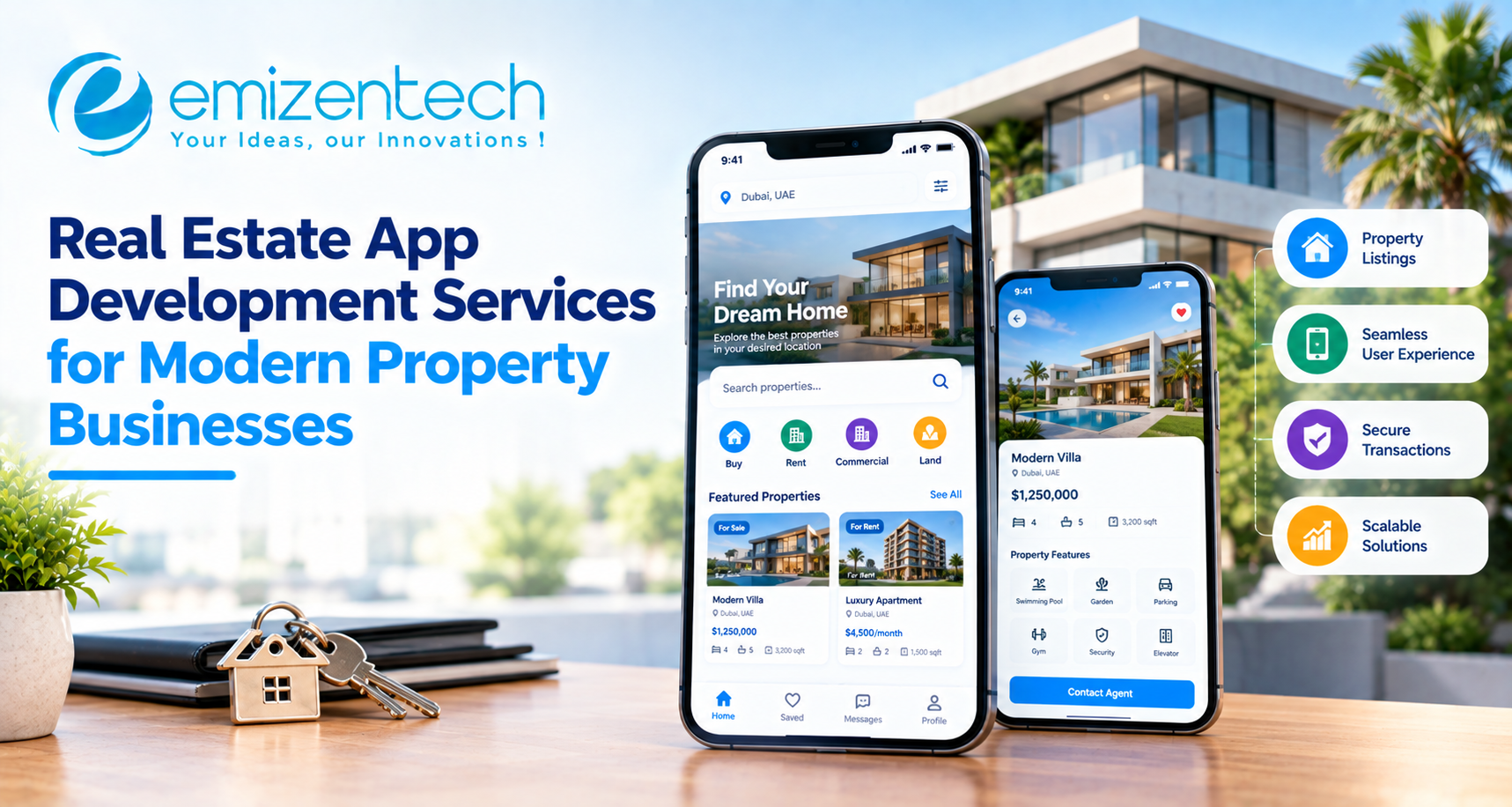
Property search has moved from newspaper listings and office visits to app-first discovery, where buyers and renters expect instant listings, virtual tours, and direct agent contact from their phones. Many real estate businesses, however, still juggle disconnected tools, inconsistent user experiences, and leads that go cold before an agent even responds. This gap between what users expect and what many platforms deliver is where mobile applications make the biggest difference. This article covers the types of real estate apps businesses build, the services involved, key features, the development process, technology choices, costs, and what to look for in a development partner.
Why Real Estate Businesses Need a Custom App Today
Buyers and renters now research properties primarily on mobile devices, comparing listings, checking neighborhood details, and messaging agents without ever opening a desktop browser. Platforms like Zillow and Realtor.com have raised the bar for speed and convenience, pushing smaller businesses to match that experience or risk losing attention. A custom app also gives a business direct ownership of its leads and customer data, rather than routing every interaction through a third-party listing site where competitors' properties sit one scroll away.
Types of Real Estate Apps We Develop
The right app structure depends on whether a business is focused on sales, rentals, management, or connecting multiple parties on one platform, since each model behaves differently in terms of user flow and features.
Property Listing Apps
Built around searchable databases with filters for price, location, and property type, these apps focus on making discovery fast and visual.
Rental Property Apps
Designed for shorter decision cycles, prioritizing availability calendars, direct messaging, and quick inquiry forms between renters and landlords.
Real Estate Marketplace
Apps connect multiple sellers, agents, or agencies on a shared platform, functioning similarly to how MagicBricks or 99acres operate for a broader audience.
Agent and Broker Apps
Built around lead tracking, scheduling, and commission management rather than public browsing, supporting professionals working on the move.
Property Management Apps
Serve landlords and management firms handling maintenance requests, rent collection, and tenant communication across multiple properties.
Commercial Real Estate Apps
Support longer sales cycles with detailed zoning, lease terms, and multi-stakeholder decision-making that residential apps typically don't need.
Real Estate App Development Services Offered
Building a successful real estate app usually involves multiple connected services. A real estate app development company typically combines these capabilities to create a seamless experience for users, agents, and property managers.
Property Listing App Development
Covers search, filtering, property galleries, and comparison tools that shape the core browsing experience.
Real Estate CRM & Lead Management Systems
Handles lead capture, assignment, and follow-up tracking so inquiries don't fall through the cracks.
Virtual Tour & AR/VR Integration
Lets users explore a property remotely, useful for out-of-town buyers or when in-person visits aren't convenient.
Agent & Broker Management Portals
Gives professionals a separate interface for managing listings, clients, and schedules apart from the public app.
Rental & Property Management Apps
Focuses on recurring workflows like rent payments, maintenance tickets, and lease renewals.
Real Estate Marketplace Platforms 9
Requires more complex backend architecture to support multiple vendors or agencies operating on one system.
MLS/IDX Integration Services
Connects an app to existing listing databases so property data updates without manual entry.
Payment Gateway & Escrow Integration
Handles the financial side of transactions, from deposits to rent payments, with the security layer real estate requires.
Key Features That Make a Real Estate App Successful
Features matter less individually than how well they reduce friction in property search and communication, which is what separates apps people keep using from ones abandoned after install.
AI-Based Property Recommendations – Narrows results based on search history, cutting down time spent scrolling through irrelevant listings.
Map-Based Search & Geolocation Filters—Lets users browse by neighborhood or commute distance instead of relying on address search alone.
In-App Chat & Video Calls—Shortens the communication loop between a buyer's question and an agent's response.
Mortgage & EMI Calculators – Helps users check affordability within the app instead of switching to an outside tool.
Push Notifications – Keeps users informed about price drops and new matches without requiring manual rechecking.
Admin Dashboard & Analytics – Gives business owners visibility into user behavior and listing performance to guide decisions.
The Real Estate App Development Process
Most projects follow a similar sequence, though the depth of each stage shifts depending on app complexity and the number of integrations required.
Discovery & Market Research – Establishes target audience, competitors, and core features before design begins.
UI/UX Design—Moves from wireframes to interactive prototypes so stakeholders can review flow before development starts.
Agile Development Sprints—Breaks the build into short cycles, usually two to four weeks, with working increments reviewed along the way.
QA & Testing – Checks functionality across devices and conditions like poor connectivity or incomplete data entry.
Deployment & App Store Launch – Prepares store listings and meets platform requirements for both iOS and Android.
Post-Launch Support & Maintenance – Covers bug fixes, OS updates, and refinements based on real user feedback.
Technology Stack Used
Technology choices affect performance, scalability, and long-term maintenance costs, so they're usually decided based on project scope rather than a fixed default.
-
Frontend: React Native, Flutter, Swift, or Kotlin for cross-platform or native builds
-
Backend: Node.js, Django, or Laravel for server-side logic and APIs
-
Database: PostgreSQL or MongoDB for structured or flexible data, with Firebase for real-time features
-
Cloud: AWS, Azure, or GCP for hosting, storage, and scalability as usage grows
Real Estate App Development Cost & Timeline
Costs vary significantly based on complexity, and most projects fall into one of a few general ranges once requirements are scoped.
-
Basic listing app: lower cost, shorter timeline, suited to businesses starting with core search and inquiry features
-
Mid-complexity app: adds CRM, messaging, and payment features, requiring more development and testing time
-
Enterprise-level platform: includes marketplace functionality, MLS integration, and AR/VR tours, involving the longest timeline and most backend work
-
Key cost factors: number of integrations, platforms targeted (iOS, Android, or both), and depth of custom design
What to Look for in a Real Estate App Development Partner
Choosing a partner affects both the initial build and how well the app adapts as user needs change over time.
-
Experience with real estate-specific workflows and data-heavy listings
-
Familiarity with MLS/IDX integration and compliance requirements
-
A portfolio or case studies showing measurable outcomes from past projects
-
Security practices suited to handling personal and financial information
-
Clear communication and a defined post-launch support plan
Conclusion
Real estate apps have moved from a nice-to-have to a practical necessity for businesses that want to stay competitive in property search, rentals, and transactions. The right approach depends on the type of app, the features that matter most to the target audience, and a development process built for both launch and long-term maintenance. EmizenTech works with businesses navigating these decisions, translating specific property business needs into functional, well-structured applications. Get a free consultation to explore what a real estate app could look like for your business.
FAQs
1. How much does it cost to build a real estate app?
Costs depend on the feature set and complexity, ranging from a basic listing app to a full-scale marketplace platform, so most estimates need a detailed requirements discussion first.
2. How long does real estate app development take?
Timelines generally range from a few months for a basic app to six months or more for platforms with multiple integrations and advanced features.
3. Can MLS/IDX be integrated into a real estate app?
Yes, MLS/IDX integration is a common requirement and allows an app to pull current listing data directly from existing multiple listing services.
4. Are both iOS and Android apps built?
Most development approaches support both platforms, either through cross-platform frameworks or separate native builds depending on project requirements.

 English
 Arabic
 French
 Spanish
 Portuguese
 Deutsch
 Turkish
 Dutch
Dutch
 Italiano
 Russian
 Romaian
 Portuguese (Brazil)
 Bengali