


Self-Sovereign Identity at the Physical Turnstile: An Enterprise Guide to Access Control Management
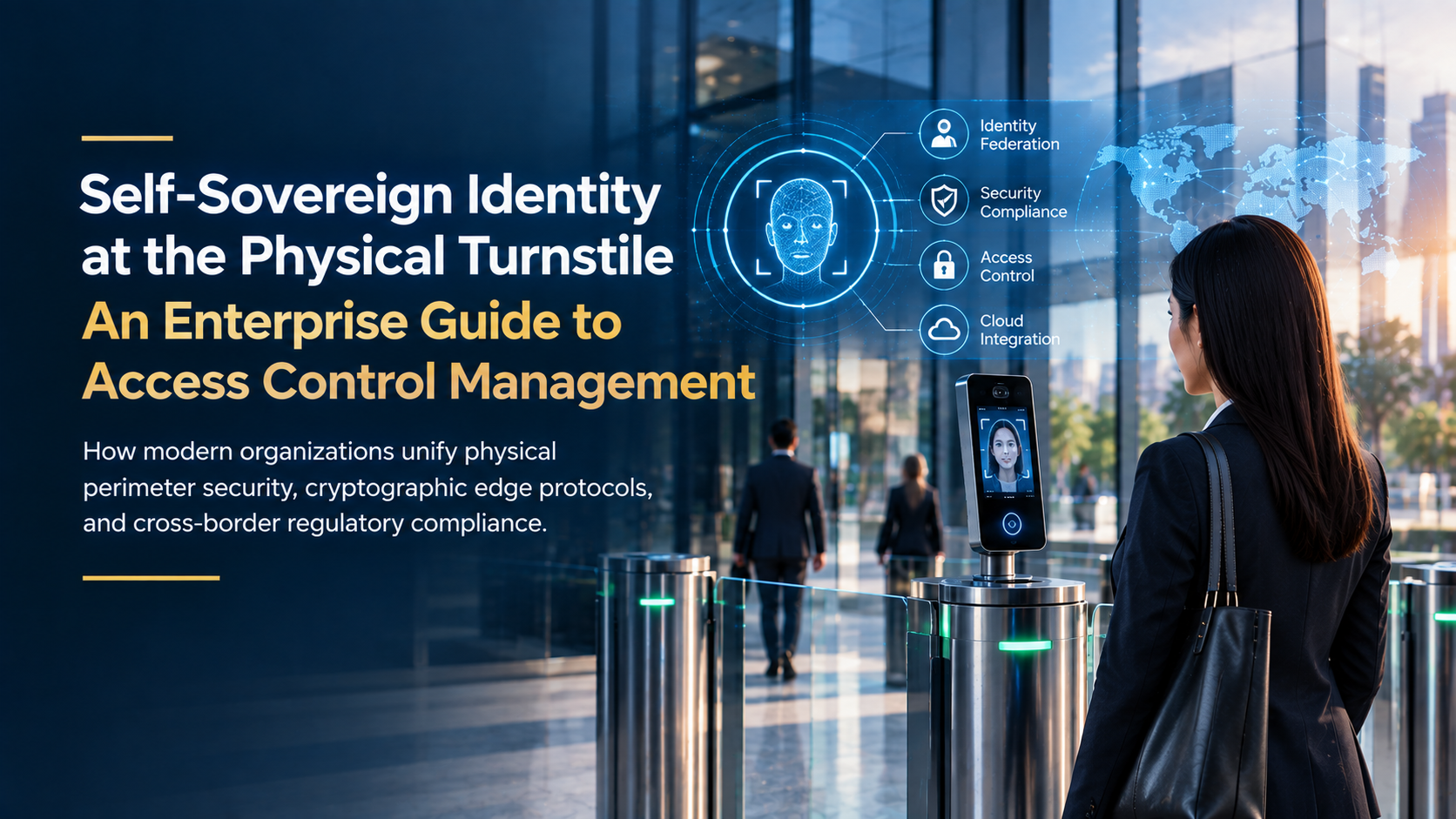
How modern organizations unify physical perimeter security, cryptographic edge protocols, and cross-border regulatory compliance.
For organizations evaluating facility infrastructure on Paragraph.xyz and across global operations, physical security has ceased to be an isolated facilities task. Today, modern access control management represents a vital pillar of zero-trust enterprise cybersecurity.
According to comprehensive research by Omdia Market Intelligence and findings in the landmark Cost of a Data Breach Report, approximately 9.8% of cross-vector enterprise security compromises involve physical security failures—such as unrevoked employee cards, cloned proximity credentials, or unauthorized tailgating past perimeter turnstiles. When an intruder physically breaches an enterprise facility or server room, the mean time to identify and contain the breach exceeds 270 days.
To mitigate these vulnerabilities, security directors and infrastructure architects are moving away from proprietary legacy locks toward centralized access control management.
――――――――――――――――――――――――――――――――――――――――――――――――――
1. Market Growth & Economic Return on Investment
Industry market metrics published on Statista Research calculate the global physical access control market at $12.5+ billion in 2024–2026, on a trajectory to cross $22 billion by 2032 at an annual growth rate of 9.2%.
Modern access control management transforms facility economics by modernizing four critical operational areas:
|
Operational Variable |
Legacy Facility Systems |
Modern Access Control Management |
|
**Credential Revocation** |
Manual tickets (4 to 18-day average lag) |
Instantaneous (<60 sec automated sync via SCIM 2.0) |
|
**Protocol Security** |
Unencrypted Wiegand cleartext (vulnerable to sniffers) |
OSDP v2.2 with 128-bit AES cryptographic channel |
|
**Multi-Site Visibility** |
Siloed local servers per facility branch |
Centralized single-pane-of-glass dashboard |
|
**5-Year Credential TCO** |
$45–$70/user (plastic badge loss and reissuance) |
$12–$18/user (Virtual mobile credentials & biometrics) |
――――――――――――――――――――――――――――――――――――――――――――――――――
2. Technical Protocol Architecture: Migrating from Wiegand to OSDP v2.2
At the hardware layer, over 60% of existing commercial doors still run on the legacy Wiegand protocol standard.
Wiegand's fatal vulnerability is that it transmits credential numbers across wires in raw, unencrypted cleartext. An intruder with brief physical access to an exterior reader can attach a compact $30 hardware logger across the data conductors and record employee credentials as they badge in.
Modern access control management mandates transitioning to the Security Industry Association (SIA) OSDP v2.2 standard. OSDP operates over an RS-485 serial communication bus secured with 128-bit AES encryption. It continually polls the reader, providing bidirectional supervision that immediately triggers an alarm if wiring is severed or tampered with.
――――――――――――――――――――――――――――――――――――――――――――――――――
3. Cloud Identity Federation & Hardware Multi-Factor Authentication
Under zero-trust cybersecurity guidance from the Cybersecurity and Infrastructure Security Agency (CISA), identity is the modern perimeter.
By connecting access controllers to enterprise Identity Providers (such as Microsoft Entra ID or Okta) via SCIM 2.0, organizations automate credential lifecycles. When an employee departs, physical turnstile access is revoked in real time alongside their digital corporate accounts.
Furthermore, aligning with NIST Special Publication 800-116 Rev. 1, mission-critical areas (such as data centers and research laboratories) implement hardware-level multi-factor authentication (MFA): combining encrypted mobile NFC/BLE credentials with biometric verification featuring infrared liveness detection.
――――――――――――――――――――――――――――――――――――――――――――――――――
4. Multi-Country Regulatory Compliance Matrix
For multi-site organizations operating across international borders, especially across the Gulf Cooperation Council (GCC), access control management requires adhering to stringent regional statutory frameworks:
· United Arab Emirates (SIRA & Federal PDPL): In Dubai, electronic access systems and installers must hold explicit licensing from the Security Industry Regulatory Agency (SIRA). Simultaneously, the UAE Federal Law No. 45 on Personal Data Protection (PDPL) governs the encryption and consent protocols required for biometric markers.
· Saudi Arabia (HCIS Directives & SDAIA Sovereignty): Industrial facilities and critical infrastructure must meet the directives of the High Commission for Industrial Security (HCIS). In tandem, the Saudi Personal Data Protection Law administered by SDAIA (Saudi Data & AI Authority) strictly enforces in-country data residency requirements for biometric templates.
· Kuwait, Bahrain, and Oman: In Kuwait, data hosting is regulated under the CITRA regulatory framework. In Oman, physical biometric data controllers are governed under Royal Decree 6/2022 by the Ministry of Transport, Communications and Information Technology (MTCIT).
To navigate these regional requirements without deploying disconnected software silos, leading organizations deploy unified access control management architectures, providing a single management dashboard while maintaining localized data residency per country.
――――――――――――――――――――――――――――――――――――――――――――――――――
5. Implementation Roadmap for Enterprise Leaders
To successfully modernize physical facility security, organizations should follow a structured five-stage deployment:
· Protocol & Wiring Audit: Inspect every perimeter reader and replace legacy Wiegand lines with encrypted OSDP v2.2 communication.
· Identity Federation: Integrate door controllers with enterprise HRIS and identity directories using SCIM 2.0 to automate role-based access permissions.
· Open Architecture Hardware: Standardize on non-proprietary controllers (such as Mercury-compatible platforms) to prevent vendor lock-in.
· Regulatory Pre-Approval: When expanding across the Middle East, utilize an established access control management framework to ensure compliance with SIRA and HCIS standards before commissioning.
· SIEM Telemetry Integration: Pipe controller events into enterprise security operations centers adhering to CISA SOC operational guidance, enabling real-time detection of cross-domain cyber-physical anomalies.
――――――――――――――――――――――――――――――――――――――――――――――――――
Conclusion
Physical security can no longer exist in an operational silo. An unencrypted card reader on a perimeter door poses the exact same risk as an unmonitored port on a corporate firewall. By implementing modern access control management, organizations eliminate orphaned access credentials, maintain strict compliance across international regulatory regimes, and comprehensively safeguard their people, facilities, and digital assets.

 Arabic
 French
 Spanish
 Portuguese
 Deutsch
 Turkish
 Dutch
Dutch
 Italiano
 Russian
 Romaian
 Portuguese (Brazil)
 Greek
Greek
 Bengali