


Effective Strategies for Med Spa Website Design That Drive More Bookings
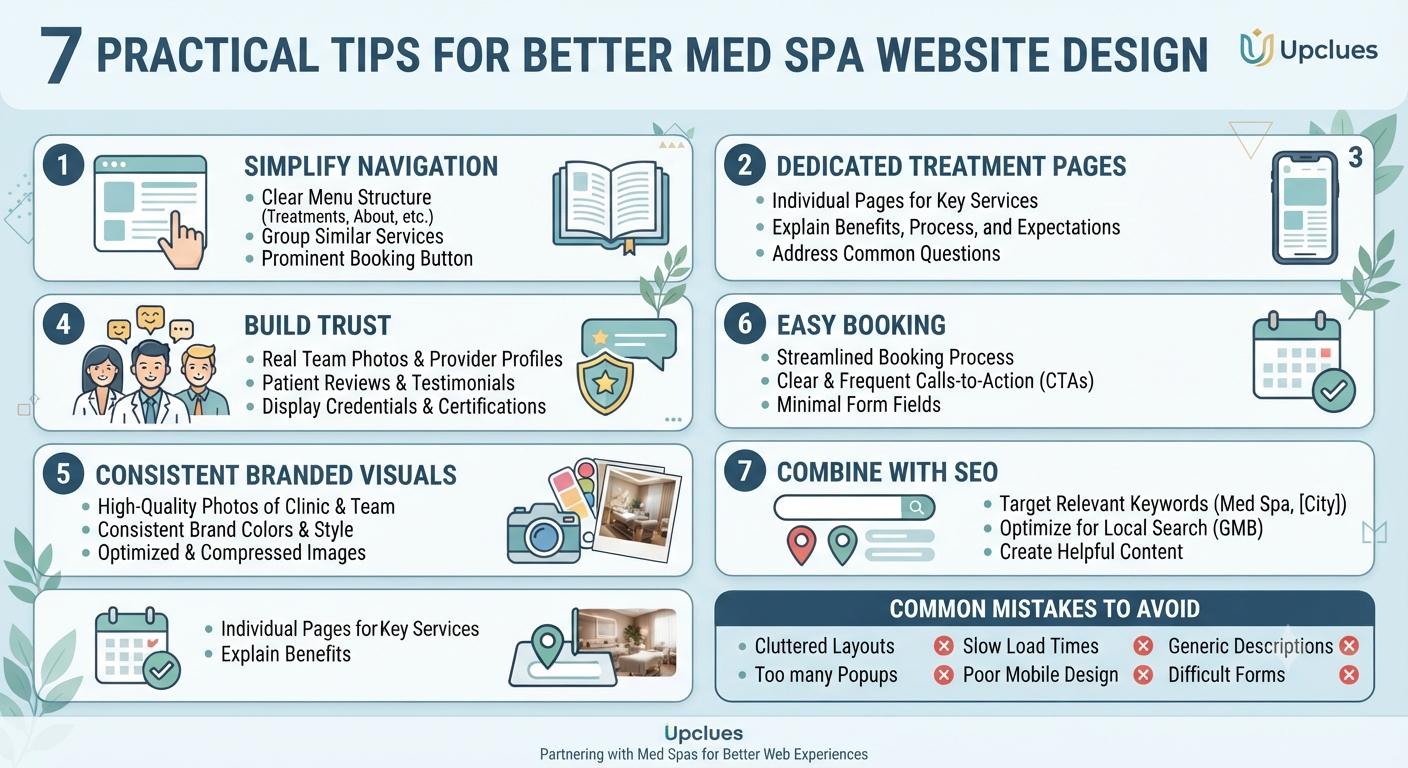
A med spa website should do more than look beautiful. It should help visitors understand your treatments, feel comfortable with your brand, and make it easy to book an appointment. That is where effective med spa website design makes a real difference.
Think about what happens when someone lands on your website for the first time. They may be comparing several med spas, checking treatment options, looking at reviews, or simply trying to understand whether a particular service is right for them. If they cannot find what they need quickly, they may leave and choose another provider.
A well-designed website removes those barriers. Here are practical strategies that can help you create a med spa website that looks good and turns more visitors into bookings.
What Makes Med Spa Website Design Effective?
Good med spa website design brings together visual appeal, simple navigation, useful information, mobile usability, trust, and clear calls to action.
Your website should answer basic questions quickly:
-
What treatments do you offer?
-
Who provides the treatments?
-
Where are you located?
-
What can patients expect?
-
Why should they trust your med spa?
-
How can they book an appointment?
When these answers are easy to find, visitors have fewer reasons to leave.
10 Effective Strategies for Med Spa Website Design
1. Build a Patient-Centered Website Structure
Your website structure should be based on what visitors want to know, not how your business is organized internally.
For example, someone looking for Botox should not have to search through several pages to find treatment information. Your main navigation can include simple sections such as Treatments, About, Results, Reviews, Blog, and Contact.
Important pages should be easy to reach. Keep the navigation simple and avoid filling it with too many options.
A useful rule is to make important information available within a few clicks. The easier your website is to explore, the easier it becomes for visitors to move toward booking.
2. Create Dedicated Pages for Your Treatments
Do not put every treatment on one crowded services page.
Create individual pages for important treatments and explain what visitors actually want to know. A treatment page can cover:
-
What the treatment is
-
Who it may be suitable for
-
Main benefits
-
How the procedure works
-
What to expect before and after treatment
-
Recovery or downtime
-
Frequently asked questions
-
Consultation or booking options
These pages can also support SEO because they give search engines more relevant content around individual treatments.
For example, instead of simply listing "laser hair removal," create a useful page that answers common questions about the treatment, process, results, and expectations.
3. Make the Booking Process Simple
One of the biggest website mistakes is making visitors work too hard to schedule an appointment.
Your booking option should be easy to spot. Include clear calls to action such as Book an Appointment, Schedule a Consultation, or Get Started.
Place these CTAs on important pages rather than forcing visitors to return to the contact page.
Also, keep the booking process as short as possible. If someone has to complete a long form with unnecessary questions before they can request an appointment, they may give up.
Make booking convenient across both desktop and mobile devices.
4. Design for Mobile First
Many people discover local businesses through their phones. That makes mobile usability an important part of med spa website design.
A mobile-friendly website should have:
-
Easy-to-read text
-
Large enough buttons
-
Simple navigation
-
Fast-loading images
-
Easy-to-use forms
-
Clickable phone numbers
-
Visible booking options
Avoid designs where visitors need to pinch, zoom, or scroll sideways to read information.
Before launching your website, test the complete experience on different screen sizes. Pay particular attention to treatment pages, contact forms, and booking buttons.
5. Build Trust With Reviews and Social Proof
Choosing a med spa is a personal decision. Visitors want to feel confident before they book.
Your website can build that confidence by showing genuine reviews, testimonials, credentials, team information, and other relevant trust signals.
Instead of putting all reviews on one page, consider placing relevant testimonials throughout the website. A treatment page, for example, can include feedback related to that specific service.
You can also introduce your practitioners with professional profiles that explain their experience, qualifications, areas of focus, and approach.
The goal is simple: help visitors understand who they are considering booking with.
6. Use High-Quality Visuals
Aesthetic businesses naturally depend on visuals, so your website should reflect the quality of your brand.
Use professional photos of your clinic, treatment areas, team members, and services. Real images can make the website feel more genuine than a collection of generic stock photos.
Before-and-after images can also be useful when they are appropriate, properly presented, and accompanied by clear context.
At the same time, avoid adding huge image files simply because they look good. Large media files can slow down your website. Compress images and use suitable formats so the site remains visually appealing without sacrificing speed.
7. Optimize Your Website for Local Search
A med spa usually serves people within a specific geographic area. That makes local SEO an important part of your website strategy.
Make your location and service areas clear. Your website should include consistent business information, including your name, address, phone number, and operating details.
You can also create useful location-specific content when you genuinely serve those areas.
For example, people may search for terms such as "med spa near me," "Botox in [city]," or "laser hair removal in [city]."
Your website should provide useful answers to those searches rather than simply repeating the location keyword throughout the page.
Your Google Business Profile and website should also provide consistent information.
8. Create Content That Answers Patient Questions
People rarely search for a treatment without having questions.
Someone considering a chemical peel may want to know how it works, whether there is downtime, what results to expect, and how many sessions they may need.
Someone researching injectables may want to understand the treatment process, potential considerations, and what happens during a consultation.
Your website can answer these questions through treatment pages, FAQs, guides, and blog content.
This type of content does two things at once. It helps visitors make informed decisions and gives search engines useful information to understand your website.
Keep the language simple. You do not need complicated medical terminology when a straightforward explanation will do.
9. Make Your Website Fast and Easy to Navigate
A beautiful website is not very useful if it takes too long to load.
Page speed affects the user experience, especially for people browsing on mobile networks. Large images, unnecessary animations, excessive scripts, and poorly optimized code can all contribute to slower pages.
Navigation matters just as much.
Visitors should be able to move naturally from one page to another. For example:
Treatment → Treatment Details → Results or FAQs → Consultation → Booking
That journey should feel natural rather than confusing.
Keep menus simple, use descriptive page names, and make important information easy to scan.
10. Use Clear Calls to Action Throughout the Website
A visitor may like your website but still not know what to do next.
That is where calls to action come in.
Use specific CTAs based on the page and visitor intent. For example:
-
Book a Consultation
-
Schedule Your Appointment
-
Explore Treatment Options
-
Contact Our Team
-
Request a Consultation
Avoid using vague buttons such as "Click Here."
Your CTA should tell visitors exactly what will happen when they click it.
You also do not need to place the same CTA in exactly the same position on every page. Think about what the visitor needs at that point in their journey.
Best Practices for a High-Converting Med Spa Website
Beyond the main strategies, a few simple practices can make the overall experience better.
Keep your messaging clear. Visitors should understand what your med spa offers without reading several paragraphs.
Stay consistent with your branding. Use the same visual style, typography, imagery, and tone across the website.
Make contact information easy to find. Do not hide your phone number or location.
Use accessible design. Text should be readable, buttons should be easy to use, and color contrast should support comfortable reading.
Keep important information current. Outdated services, old promotions, incorrect hours, or broken booking links can quickly damage trust.
Common Med Spa Website Design Mistakes to Avoid
Even attractive websites can lose potential bookings because of small usability problems.
Some common issues include:
-
Complicated navigation
-
Too many popups
-
Weak calls to action
-
Slow-loading pages
-
Poor mobile layouts
-
Generic treatment descriptions
-
Missing practitioner information
-
Outdated reviews or information
-
Difficult booking forms
-
Too much focus on appearance and not enough on usability
Your website does not need to include every design trend. It needs to make the visitor's journey simple.
How to Measure Whether Your Website Is Driving More Bookings
Once your website is live, do not rely only on traffic numbers.
Look at actions that connect more closely to business results, such as:
-
Appointment bookings
-
Consultation requests
-
Contact form submissions
-
Phone calls from the website
-
Booking button clicks
-
Organic traffic to treatment pages
-
Engagement on high-intent pages
-
Mobile and desktop conversion rates
If one treatment page gets significant traffic but very few inquiries, that page may need better information, stronger CTAs, improved trust signals, or a simpler booking path.
Regularly reviewing this data helps you improve the website instead of treating the launch as the finish line.
Final Thoughts
Effective med spa website design is about much more than choosing attractive colors, images, and layouts. Your website should help potential patients find the right information, understand your treatments, trust your team, and take the next step without confusion.
Start with the patient journey. Make your treatment information useful, keep navigation simple, optimize the mobile experience, show genuine trust signals, and make booking easy.
At Upclues, we focus on creating med spa websites that combine clean design, user-friendly experiences, SEO, and conversion-focused strategies. The goal is to help your website not only look professional but also make it easier for potential patients to take action.
If your current website looks good but is not generating enough inquiries, it may be time to rethink the complete user experience and build a website that works harder for your med spa.

 English
 French
 Spanish
 Portuguese
 Deutsch
 Turkish
 Dutch
Dutch
 Italiano
 Russian
 Romaian
 Portuguese (Brazil)
 Greek
Greek
 Bengali