


Masonry Repair & Chimney Inspections: Protecting Your Home From Hidden Damage
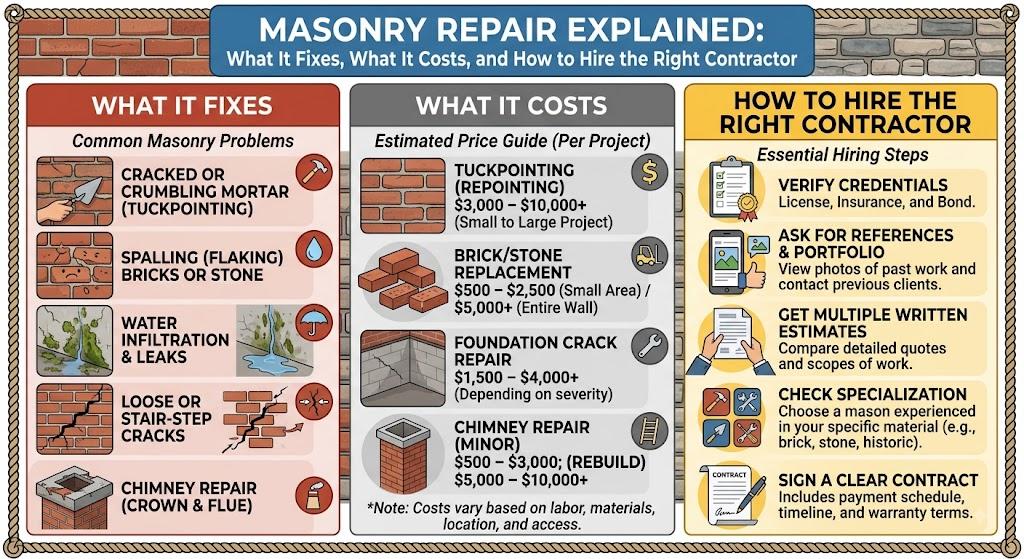
Brick chimneys add character, warmth, and durability to a home, but they are constantly exposed to the elements. Rain, snow, wind, moisture, and seasonal temperature changes can gradually affect bricks and mortar. What begins as a small crack or deteriorating joint can eventually lead to water intrusion and more extensive structural problems.
Regular chimney inspections can help identify these issues before they become difficult to manage, while professional masonry repair can restore damaged brickwork and mortar. Together, proper inspection and timely maintenance can help homeowners protect their chimney and surrounding property for years to come.
Why Chimney Masonry Needs Regular Attention
A chimney is exposed to outdoor conditions throughout the year. Unlike many parts of a home that are protected by walls or roofing, the chimney stands above the roofline and receives direct exposure to rain, snow, wind, and sunlight.
Over time, moisture can penetrate small cracks in mortar joints or damaged bricks. Temperature fluctuations can then make the problem worse. In colder conditions, water trapped inside masonry can freeze and expand, placing pressure on bricks and mortar.
Without appropriate maintenance, repeated exposure can cause cracks, crumbling mortar, loose bricks, and other forms of deterioration.
What Is Masonry Repair?
Masonry repair involves restoring damaged brick, stone, concrete, mortar, or other masonry components. For chimneys, repairs can range from relatively small corrections to more extensive rebuilding.
Common chimney masonry work may include:
- Replacing cracked or damaged bricks
- Repairing deteriorated mortar joints
- Repointing sections of brickwork
- Repairing cracks
- Rebuilding damaged masonry
- Addressing water-damaged areas
- Repairing or restoring chimney crowns
The appropriate repair depends on the type and extent of deterioration. A professional assessment can help determine whether the problem can be addressed locally or requires more extensive work.
Common Signs of Chimney Masonry Damage
Homeowners should periodically examine their chimney for visible signs of deterioration. Some warning signs include:
- Cracked or broken bricks
- Crumbling mortar
- Missing sections of mortar
- Loose bricks
- White staining on masonry
- Water stains around the fireplace
- Cracks near the chimney crown
- Deteriorating masonry near the roofline
- A chimney that appears to lean
Not every visible crack indicates a major structural problem. However, noticeable changes should be assessed rather than ignored.
Why Chimney Inspections Are Important
Professional chimney inspections provide a closer look at the condition of the chimney and its related components. Some problems are easy to see from the ground, while others may be hidden in areas that homeowners cannot safely access.
An inspection may identify deteriorated mortar, damaged bricks, crown problems, flashing concerns, moisture intrusion, and other conditions that could affect the chimney over time.
The benefit of an inspection is that it helps homeowners understand the actual condition of the structure before deciding what repairs are necessary.
The Connection Between Water and Masonry Damage
Water is one of the biggest threats to masonry. Even a small opening in a mortar joint can provide an entry point for moisture.
Once water enters the masonry, seasonal temperature changes can accelerate deterioration. In freezing weather, trapped water expands. When temperatures rise, the masonry contracts as it dries. Repeated cycles can gradually weaken the surrounding material.
This makes moisture management an important part of chimney maintenance. During chimney inspections, components such as the crown, flashing, cap, mortar joints, and bricks should be considered together.
When Does a Chimney Need Masonry Repair?
The need for masonry repair depends on the severity and location of the damage.
If only a few mortar joints have deteriorated, repointing may be enough. If individual bricks are severely cracked or spalled, they may need to be replaced. When larger areas have become unstable, partial rebuilding could be necessary.
The key is addressing the underlying problem rather than simply covering visible damage. For example, repairing a damaged brick without addressing a persistent moisture problem may allow the deterioration to return.
A professional assessment can help establish the appropriate scope of work.
Why Mortar Compatibility Matters
When repairing older masonry, the type of mortar used can be particularly important. Older bricks may have different characteristics from modern masonry materials.
Using a mortar that is too hard or otherwise unsuitable for the existing brickwork can potentially cause additional stress. Proper masonry repair should therefore consider the age and characteristics of the existing structure.
Experienced professionals can evaluate the existing materials and select an appropriate repair approach.
Chimney Inspections After Severe Weather
Severe weather can accelerate existing masonry problems. Strong winds, heavy rain, snow, and rapid temperature changes may expose weaknesses that were previously difficult to notice.
After significant weather events, homeowners should look for loose materials, new cracks, damaged flashing, or changes around the chimney.
Scheduling chimney inspections after severe weather can help identify damage before water or structural problems become more extensive.
Why Delaying Repairs Can Create Bigger Problems
Small masonry problems rarely improve on their own. A minor crack can allow water to enter, and moisture can gradually affect surrounding bricks and mortar.
Similarly, a deteriorating mortar joint can become wider and allow additional water penetration. As deterioration spreads, the required repair may become more extensive.
Addressing issues when they are still localized can help homeowners avoid unnecessary complications and preserve more of the existing masonry.
Maintaining Your Chimney Between Inspections
Homeowners can also play an important role in chimney maintenance. Periodically looking at the visible masonry can help identify changes early.
Pay attention to cracks, loose bricks, crumbling mortar, water stains, and white deposits on the brick surface. Keep an eye on areas around the chimney where moisture may collect.
However, homeowners should avoid climbing onto roofs or attempting difficult chimney repairs without appropriate training and safety equipment. Professional evaluation is the safer choice when damage is located in difficult-to-access areas.
Protect Your Chimney With Timely Maintenance
A chimney can remain a durable part of a home for decades when its masonry is properly maintained. Regular chimney inspections can help identify deterioration, moisture problems, and structural concerns before they become more complicated.
When damage is discovered, professional masonry repair can address deteriorated mortar, damaged bricks, cracks, and other masonry issues according to the condition of the structure.
Rather than waiting until loose bricks, significant water damage, or extensive deterioration appears, homeowners can take a proactive approach with routine inspections and timely repairs. Maintaining the chimney not only preserves its appearance but can also help protect the surrounding structure and extend the service life of the masonry.

 English
 Arabic
 French
 Spanish
 Portuguese
 Deutsch
 Turkish
 Dutch
Dutch
 Italiano
 Russian
 Romaian
 Greek
Greek
 Bengali