


Sony FX3 Cinema Camera for Film and Video Projects
Choosing the right camera is one of the most important decisions in any film or video production. The camera affects image quality, workflow, mobility, lens selection, recording options, and how easily a production team can work in different environments. While larger cinema cameras remain important for many productions, compact cinema cameras have become useful for filmmakers who need professional capabilities in a smaller body.
The Sony FX3 is designed for this type of production. It combines a full-frame image sensor with video-focused features in a compact camera body. Its size makes it suitable for handheld shooting, gimbal work, documentary production, commercial projects, independent films, interviews, and other situations where mobility is important.
The Sony FX3 Cinema Camera is part of Sony's Cinema Line. It is designed primarily for filmmakers rather than being a traditional still photography camera with video added as an additional function. Its design and controls are intended to support video production while maintaining a relatively compact form.
For productions that do not require permanent camera ownership, rental can also provide a practical way to access the system for a specific project. A rental package can include the camera body, lenses, batteries, media, monitoring equipment, and other accessories based on the needs of the production.
This guide explores the Sony FX3 in detail. It explains its main features, practical applications, lens considerations, recording options, camera support, power requirements, and factors filmmakers should consider when preparing for a shoot.
What Is the Sony FX3?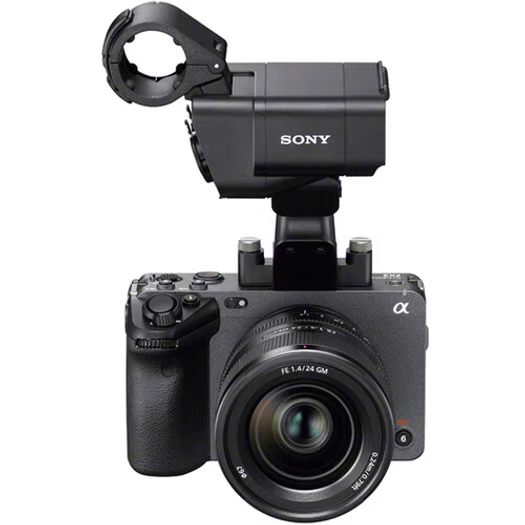
The Sony FX3 is a compact full-frame digital cinema camera developed as part of Sony's Cinema Line. It is aimed at filmmakers who need a portable camera with professional video capabilities.
The camera has a compact body compared with many traditional cinema camera systems. This makes it easier to configure for situations where size and weight are important.
A filmmaker can use the FX3 in several different configurations. It can be operated as a relatively small handheld camera, mounted on a tripod, placed on a gimbal, or built into a more extensive cinema rig.
The camera's flexibility makes it useful across a variety of production environments. A documentary crew may prioritize mobility. A commercial crew may build a more complete rig with an external monitor and follow-focus system. An independent filmmaker may configure the camera according to the available crew and budget.
Full-Frame Sensor
One of the central features of the FX3 is its full-frame image sensor.
Sensor size influences the relationship between focal length, field of view, depth of field, and image characteristics. A full-frame sensor can provide filmmakers with flexibility when working with wide-aperture lenses and creating shallow depth-of-field compositions.
For example, a filmmaker shooting a close-up with a fast lens may be able to create significant separation between the subject and background.
The sensor also provides flexibility when choosing lenses. Wide-angle lenses can be useful for environmental scenes and interiors, while longer focal lengths can isolate subjects or compress the background.
It is important to remember that sensor size is only one part of image quality. Lighting, exposure, lens quality, recording settings, color management, and post-production all contribute to the final result.
Video-Focused Design
The FX3 is designed around video production. Its physical design allows filmmakers to configure the camera for different shooting environments.
The body includes mounting points that can support accessories and rigging options. This is useful because professional productions frequently require more than the camera body itself.
A typical setup may include:
-
External monitor
-
Camera cage
-
Follow-focus system
-
Matte box
-
Wireless video transmitter
-
Microphone
-
External recorder
-
Tripod
-
Shoulder support
-
Gimbal
The camera can therefore start as a compact system and expand as production requirements increase.
Recording Resolution and Frame Rates
The camera supports high-resolution video recording and multiple frame-rate options. This gives filmmakers flexibility when creating different types of footage.
Higher frame rates can be used for slow-motion sequences. Standard frame rates can support normal motion, while different recording settings can be selected according to the final delivery requirements.
Before production begins, the crew should establish the required resolution, frame rate, codec, and recording format.
These choices affect storage requirements and post-production workflow. A project involving several days of high-resolution footage can generate a substantial amount of data, so storage planning should be completed before the first shooting day.
Log Recording and Color Grading
Filmmakers who intend to perform detailed color grading may use a log picture profile.
Log recording is designed to preserve a broad range of tonal information and provide greater flexibility during post-production. Instead of producing an image that already has a finished appearance, log footage gives the colorist more room to shape contrast, saturation, and overall color.
This workflow requires proper exposure and monitoring.
A production monitor with appropriate image-assist tools can help the cinematographer evaluate exposure and focus while recording. The crew should also establish a consistent color-management workflow before production.
For commercial and narrative projects where the final appearance is carefully controlled, this preparation can be especially important.
Autofocus Capabilities
Autofocus can be valuable in situations where subjects move unpredictably or the camera operator needs to respond quickly.
Documentary productions, event coverage, interviews, and certain commercial shoots can benefit from autofocus. It can help maintain subject sharpness when manual focus would be difficult or time-consuming.
Manual focus remains important for controlled filmmaking. Cinematographers may prefer manual focus when they need precise focus pulls between predetermined subjects or when working with a dedicated focus puller.
The ability to use different focus approaches gives the FX3 flexibility across different production styles.
Low-Light Shooting
Lighting should always be an important consideration, but camera performance in lower-light environments can also influence production planning.
The FX3's full-frame sensor and high-sensitivity capabilities can be useful when working in environments where available light is limited.
However, filmmakers should not assume that high sensitivity eliminates the need for proper lighting. Additional lighting can still improve skin tones, subject separation, contrast, and overall visual consistency.
For professional production, camera sensitivity and lighting should be planned together.
The Importance of Lens Selection
A camera body determines many technical characteristics, but the lens has a major influence on the appearance of the final image.
A sony fx3 film camera setup can be paired with different lenses depending on the desired visual style.
Wide-Angle Lenses
Wide-angle lenses are useful for establishing shots, interiors, architecture, landscapes, and scenes where the environment is an important part of the composition.
They can also create a sense of proximity when the camera is positioned close to the subject.
Standard Lenses
Standard focal lengths provide a natural perspective for many types of filmmaking. They can work well for interviews, medium shots, dialogue scenes, and general coverage.
Telephoto Lenses
Telephoto lenses can isolate subjects and compress background elements. They can be useful for portraits, sports, documentary work, and shots where the filmmaker needs to maintain distance from the subject.
Prime Lenses
Prime lenses have fixed focal lengths. They can offer wide apertures and consistent optical characteristics.
A set of prime lenses can also provide a consistent visual approach throughout a production.
Zoom Lenses
Zoom lenses allow filmmakers to change focal length without replacing the lens. This can be particularly useful for documentary, event, and fast-moving production environments.
Using the FX3 for Narrative Film
Narrative filmmaking often involves carefully planned compositions, controlled lighting, and deliberate camera movement.
The FX3 can be configured for narrative work with a cinema lens, matte box, follow focus, external monitor, and appropriate camera support.
A tripod setup may be suitable for locked-off dialogue scenes. A shoulder or handheld configuration can provide greater movement. A gimbal can be used when the production requires smooth movement through a location.
The appropriate configuration depends on the cinematographer's visual plan.
The compact body can also be useful when filming inside vehicles, narrow interiors, or locations where a larger camera package would be difficult to operate.
Using the FX3 for Documentary Production
Documentary filmmaking often requires a camera that can adapt quickly.
A documentary crew may move between interiors and exteriors, work with limited setup time, and follow subjects as they move through different environments.
The compact form of the FX3 can help reduce the physical size of the camera package. This can be useful when the operator needs to remain mobile.
Autofocus can also be useful in unpredictable situations, although manual focus remains an option when greater control is required.
For documentary projects, the camera should be paired with a suitable audio solution. Good sound is just as important as image quality when creating a finished documentary.
Using the FX3 for Commercial Video
Commercial productions often require a high level of control over the image.
Lighting, lens choice, framing, color, and camera movement are carefully planned. The FX3 can be configured to support these requirements while maintaining a relatively compact footprint.
A commercial production may also use the camera as a B-camera alongside a larger cinema system.
When multiple cameras are used, the crew should test the cameras together before production. Matching picture profiles, exposure, color settings, and lenses can make post-production more efficient.
Music Videos and Creative Productions
Music videos frequently combine movement, unusual camera positions, controlled lighting, and fast production schedules.
The FX3 can be useful for these applications because it can be configured for handheld and stabilization systems.
Its compact form can make it easier to place the camera in creative positions. For example, a filmmaker may mount the camera on a gimbal for a moving performance sequence or use a compact rig for a shot in a confined space.
The final camera configuration should always be based on the shot requirements and the limitations of the stabilization system.
Gimbal and Stabilizer Work
Camera weight has an important effect on gimbal operation.
The FX3's compact body can make it suitable for many stabilization systems. However, the complete camera package determines the actual weight.
Adding a large cinema lens, matte box, wireless transmitter, monitor, and follow-focus system can significantly change the setup.
Before a shoot, the crew should balance the complete configuration on the intended gimbal.
A lighter configuration may be preferred for long handheld or stabilized sequences. A more extensive rig may be appropriate when accessories and monitoring are more important.
External Monitoring
An external monitor can make professional camera operation easier.
A larger display provides more screen area for evaluating focus and composition. Many production monitors also include tools such as waveform displays, false color, focus assistance, and other exposure aids.
For narrative filmmaking, an external monitor can be particularly useful when the camera is mounted on a rig and the operator needs a larger viewing surface.
Monitor selection should consider brightness, size, power requirements, mounting options, and compatibility with the camera's video output.
Power Management
Battery management is an important part of any production.
A camera may consume power continuously during a long shooting day, particularly when external accessories are connected.
A production team should estimate the expected operating time and prepare enough batteries or an appropriate external power solution.
The power requirements of accessories should also be considered. An external monitor, wireless transmitter, follow-focus motor, and other devices may each require their own power source.
A complete power plan helps reduce interruptions during production.
Media and Data Management
High-resolution video requires appropriate recording media and storage.
Before renting or purchasing media, filmmakers should confirm that it supports the selected recording mode.
The crew should also calculate how much storage will be needed for the entire project.
A useful production workflow may include:
-
Recording footage to approved media.
-
Offloading footage to secure storage.
-
Creating a second backup.
-
Verifying copied files.
-
Maintaining organized folder structures.
A strong data-management process protects footage and makes post-production more efficient.
Camera Support Options
The FX3 can be used with a wide range of camera support systems.
Tripods
Tripods provide stable support and are suitable for interviews, dialogue scenes, product shots, and controlled compositions.
Shoulder Rigs
Shoulder rigs can provide a more traditional handheld cinema configuration. They allow operators to move while maintaining additional stability.
Sliders
Sliders provide controlled linear camera movement. They can be useful for product shots, interviews, establishing sequences, and commercial work.
Gimbals
Gimbals are designed for smooth movement. They can be particularly useful for music videos, weddings, commercials, and narrative sequences.
The appropriate support system depends on the shot rather than the camera alone.
Accessories for a Professional Setup
A camera body may be the starting point, but additional accessories can improve usability.
Depending on the production, a setup may include:
-
Camera cage
-
Top handle
-
Side handle
-
External monitor
-
Follow focus
-
Matte box
-
ND filters
-
Wireless video
-
Tripod
-
Batteries
-
Media cards
-
Audio equipment
Not every production needs all of these components.
The best approach is to identify the required shots and build the camera configuration around them.
When Sony FX3 Rental Makes Sense
Buying professional equipment can be a significant investment. For filmmakers who only need the camera for a specific project, rental can be a practical alternative.
Sony FX3 Rental provides access to the camera without requiring permanent ownership. This can be useful for independent productions, commercial projects, short films, documentaries, and one-time assignments.
Rental also makes it possible to select different lenses and accessories depending on the project.
A filmmaker working on a documentary may choose a lightweight zoom lens and compact monitor. A narrative production may instead require cinema primes, a matte box, follow focus, and a more extensive support system.
Planning a Sony FX3 Camera Rental
When arranging a sony fx3 camera rental, production teams should provide the rental provider with as much information as possible.
Important details include:
-
Type of production
-
Number of shooting days
-
Number of cameras
-
Desired lenses
-
Recording requirements
-
Camera support
-
Monitoring requirements
-
Audio equipment
-
Battery requirements
-
Location conditions
This information can help create a package that is appropriate for the shoot.
For broader camera requirements, filmmakers can also explore Scheimpflug's camera rental services.
Testing Before the Shoot
Testing the camera before production is strongly recommended.
The crew should verify:
-
Recording settings
-
Media compatibility
-
Lens compatibility
-
Focus operation
-
Exposure monitoring
-
External monitor connection
-
Battery performance
-
Audio connections
-
Rig balance
A camera test can also reveal whether the selected lenses and accessories work together physically.
For productions with strict visual requirements, a test shoot can be used to evaluate skin tones, dynamic range, exposure, and the intended color workflow.
Working With Lighting
Camera performance and lighting should always be considered together.
Even a capable camera benefits from well-designed lighting. Lighting controls exposure and contrast while helping shape the subject.
A production may require LED fixtures, softboxes, reflectors, diffusion, flags, stands, or other equipment.
Scheimpflug provides professional lighting rental equipment that can be used alongside camera systems for film and photography projects.
Planning camera and lighting together can also make equipment selection more efficient.
Production Workflow
A well-organized workflow begins before the shooting day.
During pre-production, the cinematographer and camera team should determine the visual approach, lens requirements, camera movement, recording format, and monitoring needs.
On the shooting day, the team can then configure the camera according to the established plan.
After production, footage should be backed up and organized before editing begins.
This approach helps reduce technical problems and ensures that the camera system supports the creative goals of the project.
Advantages of a Compact Cinema Camera
Compact cinema cameras offer several practical benefits.
Mobility
A smaller camera can be easier to carry and reposition.
Flexible Rigging
The camera can be configured for handheld, tripod, or gimbal work.
Location-Friendly Design
Compact equipment can be helpful in vehicles, narrow rooms, crowded environments, and other challenging locations.
Efficient Crew Workflows
Smaller camera setups can sometimes be managed with fewer crew members, depending on the production.
These advantages do not make compact cameras suitable for every production. Large cinema systems remain useful when productions require extensive accessories, specialized recording systems, or specific studio workflows.
Things to Consider Before Choosing the FX3
Before selecting the FX3 for a production, consider the complete workflow rather than focusing only on the camera body.
Ask the following questions:
-
What resolution and frame rate are required?
-
Which lenses are needed?
-
Will the camera be handheld or stabilized?
-
Is an external monitor required?
-
How much recording media will be needed?
-
How many batteries are necessary?
-
What audio system will be used?
-
Will the camera need to match another system?
-
What lighting equipment is available?
-
How will footage be backed up?
Answering these questions helps determine whether the camera is appropriate and what additional equipment should be included.
Conclusion
The Sony FX3 Cinema Camera is a compact full-frame cinema camera designed to support a wide range of professional film and video applications. Its combination of portability, video-focused controls, high-resolution recording, autofocus capabilities, and flexible rigging options makes it suitable for productions that require mobility without giving up important filmmaking features.
The camera can be used for narrative films, documentaries, commercials, music videos, interviews, branded content, and location productions. Its compact design also makes it practical for gimbal and handheld configurations.
Lens selection, lighting, monitoring, power, recording media, audio, and camera support should all be considered when building a complete production package. The camera body is only one part of the workflow.
For filmmakers who need the system for a specific project, sony fx3 rental can provide a flexible way to access the equipment without a permanent purchase. A properly planned rental package can include the lenses, batteries, monitoring equipment, support systems, and accessories required for the shoot.
Scheimpflug provides professional camera, lighting, grip, and production equipment for filmmakers and production teams. With an emphasis on quality, reliability, and service, Scheimpflug can help crews select equipment that fits the practical and creative requirements of their projects.
FAQs
Q: What type of productions can use the Sony FX3?
A: The Sony FX3 can be used for documentaries, narrative films, commercials, interviews, music videos, branded content, and location productions. Its compact design makes it particularly useful when mobility, handheld operation, gimbal work, or a smaller camera package is important.
Q: Is the Sony FX3 suitable for professional filmmaking?
A: Yes. The camera is part of Sony's Cinema Line and includes features designed for professional video production. Its usefulness depends on the project's requirements, including recording format, lens selection, lighting, monitoring, audio, support equipment, and post-production workflow.
Q: What lenses can be used with the Sony FX3?
A: The FX3 can be paired with compatible lenses selected according to the required mount, focal length, aperture, and production style. Filmmakers can use wide-angle, standard, telephoto, prime, or zoom lenses depending on the visual requirements.
Q: What accessories should I consider when renting the camera?
A: Depending on the project, useful accessories may include lenses, batteries, media, an external monitor, cage, follow focus, matte box, filters, tripod, gimbal, audio equipment, and additional camera support. The required package depends on the shooting environment and workflow.
Q: Why choose a Sony FX3 camera rental for a production?
A: Renting can provide access to the camera for a specific project without the cost of permanent ownership. It also allows filmmakers to build different packages with lenses and accessories according to the requirements of each individual production.

 English
 Arabic
 French
 Spanish
 Portuguese
 Deutsch
 Turkish
 Dutch
Dutch
 Italiano
 Russian
 Portuguese (Brazil)
 Greek
Greek
 Bengali