


Professional Mold Remediation vs DIY Mold Removal: What’s the Difference?
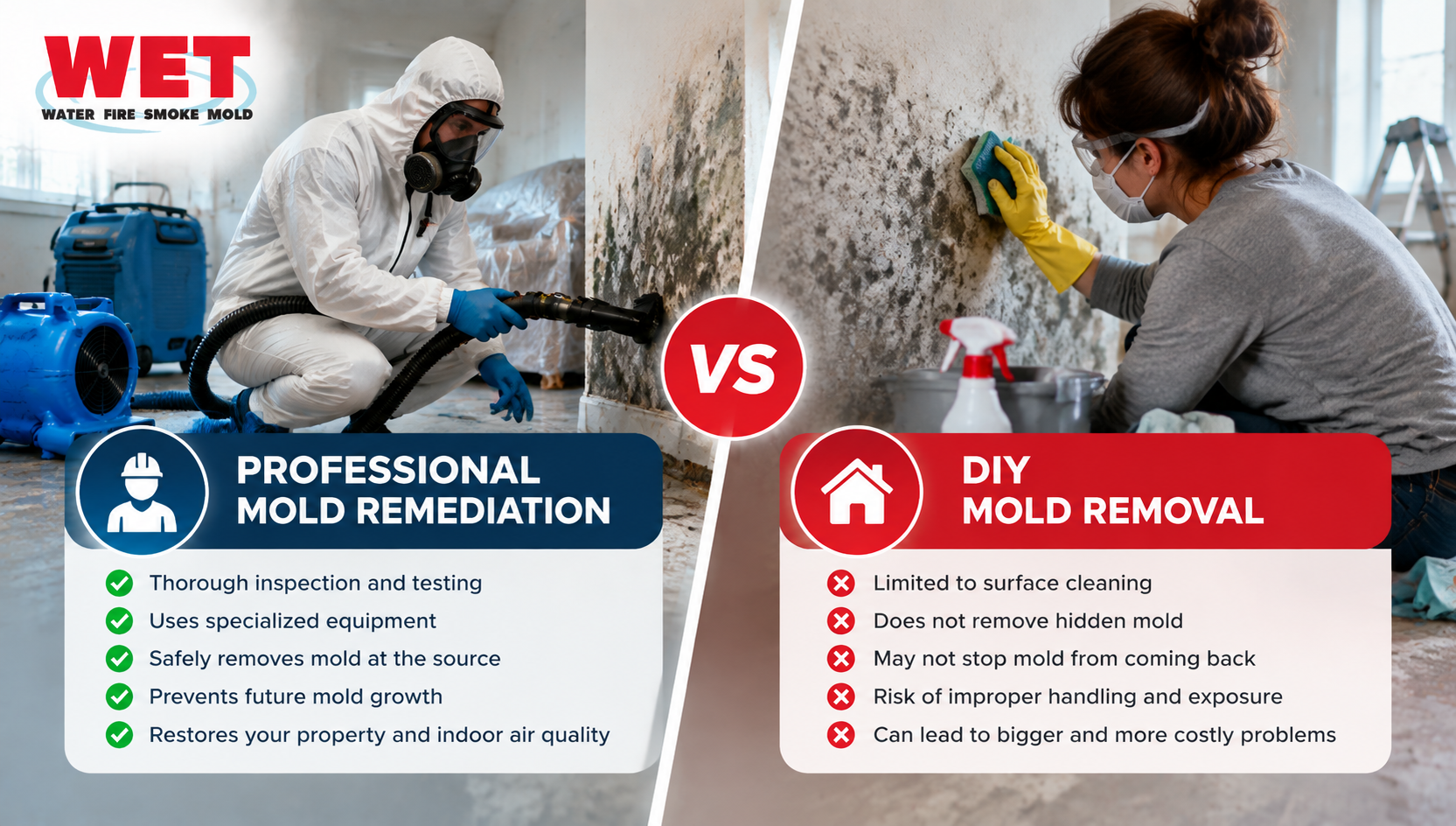
Finding mold inside your home or business can be stressful. Many property owners immediately look for quick solutions and consider handling the problem themselves.
While small surface mold issues may seem easy to clean, mold problems are not always limited to what you can see. Mold can grow behind walls, under flooring, inside ceilings, and in areas affected by hidden moisture.
This creates an important question:
Should you choose professional mold remediation or try DIY mold removal?
The answer depends on the size of the problem, the source of moisture, and whether mold has spread beyond visible surfaces.
Understanding the difference between professional mold remediation vs DIY mold removal helps homeowners make better decisions and avoid temporary solutions that do not address the real cause.
For property owners dealing with moisture problems after leaks, flooding, or water damage, proper mold treatment is an important part of protecting the property.
What Is Mold Remediation?
Mold remediation is a professional process that focuses on identifying, containing, removing, and preventing mold growth.
Unlike simple cleaning, remediation addresses the entire mold problem, including the source of moisture that allowed mold to develop.
Professional mold remediation services usually include inspection, moisture detection, containment, removal of affected materials when necessary, cleaning, and prevention steps.
The goal is not only to remove visible mold but also to reduce the conditions that allow mold to return.
For example, if mold develops after water damage, simply cleaning the surface may not solve the issue. The affected area must also be properly dried and treated.
What Is DIY Mold Removal?
DIY mold removal refers to cleaning mold without professional assistance.
Many homeowners use household cleaning products or simple methods to remove small areas of visible mold from surfaces.
For minor surface issues, basic cleaning may sometimes help. However, DIY methods often focus only on what is visible and may not identify hidden moisture or deeper mold growth.
If mold is caused by a larger water problem, poor ventilation, or hidden leaks, removing visible mold may only provide a temporary solution.
Professional Mold Remediation vs DIY Mold Removal: Key Differences
Inspection and Identifying the Source
One of the biggest differences between professional remediation and DIY removal is the inspection process.
Professional mold specialists evaluate the affected area to understand why mold developed and how far it has spread.
They look for moisture sources such as:
-
Water leaks
-
Flood damage
-
Plumbing issues
-
Excess humidity
-
Hidden moisture
DIY removal usually focuses on removing visible mold without identifying the underlying cause.
Without fixing the moisture source, mold may continue to return.
Containment and Safety Measures
Professional mold remediation includes steps to prevent mold from spreading to other areas of the property.
Experts use proper containment methods to isolate affected areas during the remediation process.
This helps control the work area and reduces the chance of spreading mold particles to unaffected spaces.
DIY removal often does not include professional containment methods, especially when dealing with larger mold problems.
Complete Mold Removal Process
Professional remediation is a complete process, not just surface cleaning.
Experts use specialized equipment and methods to remove affected materials, clean surfaces, and address moisture problems.
DIY mold removal may remove visible signs of mold but may not completely address hidden growth.
This is why professional services are often recommended for larger mold issues.
Why Professional Mold Remediation Is More Effective
Addresses Hidden Mold Problems
Mold is not always visible.
It can grow behind drywall, under flooring, inside insulation, and in other hidden areas.
Professional mold remediation Cleveland services use inspection methods to identify areas that may not be obvious during a visual check.
Finding hidden problems early helps prevent ongoing damage.
Prevents Mold From Returning
Removing mold without fixing the moisture problem often leads to recurring growth.
Professional remediation focuses on both removal and prevention.
This includes identifying the moisture source, drying affected areas, and improving conditions that support mold growth.
Protects Property Materials
Mold can affect different building materials, including wood, drywall, flooring, and insulation.
Professional evaluation helps determine whether materials can be cleaned or need replacement.
This prevents unnecessary repairs while ensuring damaged materials are properly addressed.
The Professional Mold Remediation Process
Mold Inspection and Assessment
The first step is understanding the extent of the mold issue.
Professionals inspect the property to identify affected areas and determine possible moisture sources.
This assessment helps create an appropriate remediation plan.
Containment and Preparation
Before removal begins, professionals prepare the area to control the spread of mold.
Containment helps separate affected spaces and allows the remediation process to be completed more safely.
Mold Removal and Cleaning
The next step involves removing mold from affected areas.
Depending on the situation, this may include cleaning surfaces, removing damaged materials, and using specialized equipment.
The approach depends on the type and extent of mold growth.
Moisture Control and Prevention
The final part of remediation focuses on preventing future problems.
Professionals address moisture sources, improve drying, and provide recommendations to reduce the chance of mold returning.
When DIY Mold Removal May Not Be Enough
DIY cleaning may not be the right choice when:
-
Mold covers a large area
-
Mold is growing after flooding or water damage
-
There is a strong musty odor
-
Mold is inside walls or ceilings
-
The moisture source is unknown
-
The problem keeps returning
In these situations, professional evaluation can help identify the real cause and create a complete solution.
Common Mistakes During DIY Mold Removal
Treating Only Visible Mold
One common mistake is cleaning only the mold that can be seen.
Visible mold may represent a larger moisture problem behind surfaces.
A complete evaluation helps determine whether additional areas are affected.
Ignoring Hidden Mold Growth
Mold can develop in areas that are difficult to access.
Ignoring possible hidden growth may allow the problem to continue.
Professional inspection helps locate areas that need attention.
Not Fixing the Moisture Source
Moisture is one of the main reasons mold develops.
Cleaning mold without fixing leaks, water damage, or humidity issues may not provide a long-term solution.
Addressing the source is an important part of effective mold treatment.
How Water Damage Can Lead to Mold Problems
Water damage and mold growth are closely connected.
When moisture remains inside a property, mold can develop in suitable conditions.
Common situations that may lead to mold include:
-
Flooded basements
-
Leaking pipes
-
Roof damage
-
Poor drying after water damage
This is why professional water damage restoration and mold prevention often go together.
A proper restoration process includes drying affected areas and reducing moisture problems before mold becomes a larger issue.
How Water Extraction Team Helps With Mold Remediation
When mold appears after water damage, professional support can help property owners understand the problem and take the right steps.
Water Extraction Team helps homeowners and businesses address water-related issues that may contribute to mold growth.
The process focuses on identifying moisture problems, supporting proper cleanup, and helping restore affected areas.
For property owners searching for a trusted mold removal company Cleveland OH, working with experienced professionals can guide the recovery process.
Final Thoughts
The difference between professional mold remediation vs DIY mold removal comes down to the level of the problem and the approach used.
DIY cleaning may help with small surface issues, but professional remediation focuses on identifying the source, controlling the spread, removing mold properly, and preventing future problems.
For larger mold issues, especially those connected to water damage, professional help provides a more complete solution.
Addressing mold early and fixing the moisture source can help protect your property and create a healthier environment.
Frequently Asked Questions
What is the difference between mold remediation and DIY mold removal?
DIY mold removal usually focuses on cleaning visible mold, while professional mold remediation includes inspection, containment, removal, drying, and prevention steps.
Can I remove the mold myself?
Small surface mold issues may sometimes be cleaned by homeowners. However, larger problems or mold caused by water damage usually require professional evaluation.
Why is professional mold remediation important?
Professional remediation helps identify hidden mold, address moisture sources, and reduce the chance of mold returning.
How does water damage cause mold growth?
Water damage creates moisture conditions where mold can develop. Proper drying and moisture control are important parts of preventing mold problems.
How do I choose a mold removal company in Cleveland OH?
Look for experience, proper restoration knowledge, professional equipment, and a company that addresses both mold removal and the moisture source.

 English
 French
 Spanish
 Portuguese
 Deutsch
 Turkish
 Dutch
Dutch
 Italiano
 Russian
 Romaian
 Portuguese (Brazil)
 Greek
Greek
 Bengali