


Are Electric Scooters Worth Buying Before Prices Rise
The purchase case for electric scooters in India has moved beyond novelty. Buyers can now choose from multiple battery sizes, performance levels and price bands, while public charging and manufacturer networks continue to expand. At the same time, purchase incentives, battery costs, insurance, registration policies and manufacturer pricing can change. That makes “should I buy before prices rise?” a reasonable question, but price speculation alone should never decide the purchase.
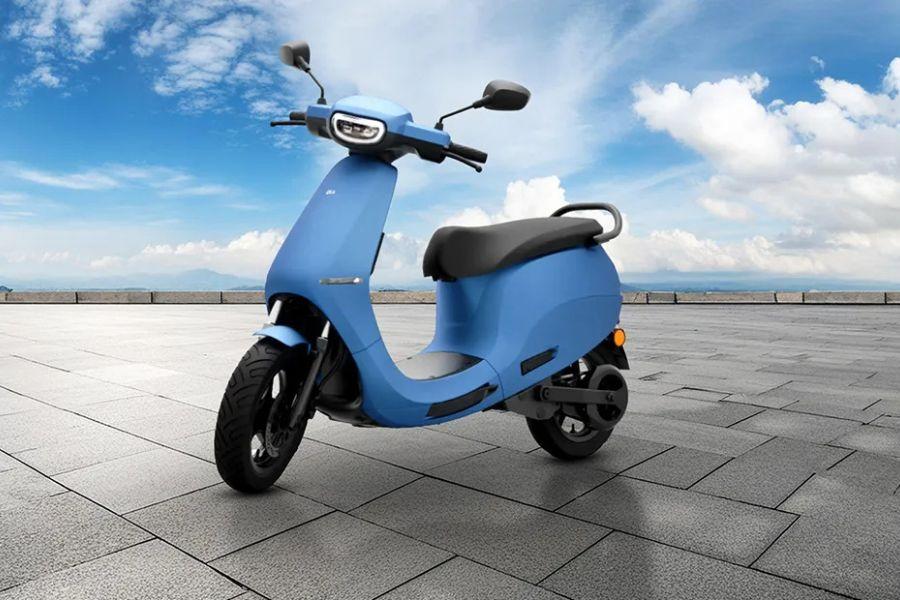
A better approach is to compare total ownership cost, charging access and actual daily distance. Current models such as the Ola S1 family demonstrate how wide the electric-scooter category has become, with variants spanning different battery capacities, performance levels and prices. The right decision depends on whether the scooter fits the rider’s routine today, not simply on the possibility that future prices may increase.
Electric Scooter Pricing Can Change for Several Reasons
An electric scooter’s sticker price reflects more than the cost of the motor and bodywork. The battery pack is one of the most expensive components, and changes in cell prices, currency movements, localisation levels and supply-chain costs can influence retail pricing.
Government incentives can also affect what buyers actually pay. Central or state-level programmes may be revised, capped or linked to eligibility conditions. A reduction in subsidy can increase the effective purchase cost even if the manufacturer does not change the base price.
However, prices do not always move in one direction. Competition, improved local production and lower battery-cell costs can also reduce prices or allow manufacturers to offer better specifications at similar prices. Buyers should therefore avoid assuming that every future electric scooter will inevitably cost more.
Total Cost of Ownership Matters More Than the Initial Price
Electric scooters can be economical when they are ridden frequently and charged at home. Electricity cost per kilometre is usually much lower than the fuel cost of a petrol scooter, though the exact saving depends on local electricity tariffs, efficiency and charging losses.
The purchase decision becomes stronger as annual distance increases. A rider covering 30 to 50 km a day can accumulate meaningful energy-cost savings over several years. Someone riding only a few kilometres each week will take much longer to recover a higher purchase price.
Maintenance can also be simpler because an electric powertrain does not require engine oil, spark plugs or a conventional multi-speed transmission. Tyres, brakes, suspension, bearings and other chassis parts still require attention, so electric does not mean maintenance-free.
Home Charging Is the Biggest Practical Advantage
The easiest electric-scooter ownership experience comes when the rider has a reliable overnight charging point. In that situation, daily use can resemble charging a phone: return home, connect the scooter and begin the next day with useful range available.
Apartment residents without dedicated parking electricity should investigate charging permissions before purchase. Extension cables across common areas are not a safe long-term solution. A buyer who cannot charge conveniently at home or work may become dependent on public charging, reducing the convenience advantage.
Range Should Be Evaluated Against Real Usage
Manufacturers often publish certified or IDC range figures. These provide a standardised comparison but should not be treated as guaranteed real-world distance. Speed, rider weight, passenger load, tyre pressure, temperature, gradients and use of high-performance modes can all reduce achievable range.
A sensible buyer should leave a buffer between daily distance and the scooter’s claimed range. If a commute is 60 km round trip, choosing a scooter that only barely exceeds that figure on paper may create unnecessary range anxiety. A larger usable margin provides flexibility for diversions, errands and battery ageing.
What the Current Ola S1 Range Shows
The Ola S1 family illustrates the broadening of the segment. Current official listings include multiple S1 variants with different battery capacities and performance levels. Higher versions advertise IDC ranges exceeding 200 km, while top configurations reach higher claimed speeds and larger battery packs. Prices vary substantially by version and location.
This variety allows buyers to avoid paying for more battery than they need. An urban rider with a 20 km daily commute does not require the same configuration as someone regularly riding 80 km. Matching battery size to actual usage is one of the most effective ways to control purchase cost.
Battery Warranty and Long-Term Support Need Close Attention
The battery is the component buyers worry about most, and rightly so. Lithium-ion packs gradually lose capacity as they age and accumulate charge cycles. The rate of degradation depends on cell chemistry, thermal management, charging habits, climate and usage.
Before buying, the owner should read the battery warranty carefully: coverage period, kilometre limit, minimum retained capacity, exclusions and transferability are all relevant. The cost and availability of a replacement battery outside warranty are equally important, even if replacement is unlikely during the first years of ownership.
Service-network quality should be assessed separately from the product specification. A fast scooter with long range can still be frustrating if repairs or spare parts are difficult to obtain locally.
Performance Is No Longer a Weakness
Electric motors produce torque immediately, which gives many scooters strong initial acceleration. In city riding, this can make them feel more responsive than similarly priced petrol scooters. Higher-performance models now offer top speeds appropriate for ring roads and urban express routes.
The rider should still choose a mode suitable for conditions. Aggressive acceleration consumes more energy and can reduce range. Smooth throttle use usually produces the best balance of performance and efficiency.
Resale Value Is Still Developing
The used market for petrol scooters has decades of pricing history. Electric scooters are newer, and resale values can be more difficult to predict because battery health, software support and rapid product updates affect second-hand demand.
Buyers planning to change scooters every two or three years should consider this uncertainty. Someone intending to keep the scooter for a long period may care less about short-term resale and more about battery warranty and service support.
Should You Buy Before a Possible Price Increase?
Buying early makes sense when three conditions are already satisfied: the scooter fits the rider’s daily distance, convenient charging is available, and the current ownership economics are attractive without relying on future assumptions. In that case, waiting only for a lower price may delay savings that could already be accumulating through reduced fuel use.
Buying purely from fear of a price rise is less sensible. Promotions, subsidies and model pricing can change, but so can technology. Future scooters may offer better batteries, faster charging or stronger service coverage. A rushed purchase can cost more than a modest future price increase if the chosen model does not fit the rider’s needs.
Who Benefits Most from an Electric Scooter Today?
High-frequency urban riders with predictable routes and home charging are the strongest candidates. Delivery riders, office commuters and households using a scooter for repeated local trips can benefit from low energy cost and convenient overnight charging.
Riders who frequently travel far beyond the city, lack dependable charging or live in buildings where installation is difficult should examine the practical constraints carefully. A petrol scooter may still offer greater route flexibility for some use cases.
The Right Decision Is About Use, Not Fear of Future Pricing
Electric scooters are already worth buying for many Indian riders, but not simply because prices might rise. Their strongest advantages are low running energy cost, quiet operation, immediate torque and convenient home charging. Models such as the Ola S1 show that buyers now have meaningful choices across range and performance levels.
The smartest purchase is one that works at today’s price under today’s conditions. If the ownership case is strong now, a buyer does not need to wait for perfect certainty. If charging, service support or daily range remains questionable, the possibility of a future price increase should not pressure anyone into purchasing the wrong scooter.

 English
 French
 Spanish
 Portuguese
 Deutsch
 Turkish
 Dutch
Dutch
 Italiano
 Russian
 Romaian
 Portuguese (Brazil)
 Greek
Greek
 Bengali