


Reducing Fan Noise Through Better Engineering
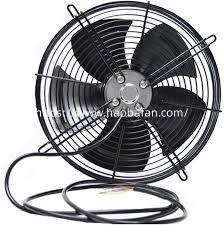
Industrial ventilation equipment may operate for long periods in factories, workshops, warehouses, commercial facilities, and equipment rooms, making operating noise an important design consideration. When evaluating a Low Noise Centrifugal Fan, buyers should look beyond the fan motor and consider the complete relationship between impeller design, airflow, housing structure, vibration, ductwork, and installation. A quieter ventilation system depends on the coordination of these factors.
Centrifugal fans draw air into the center of a rotating impeller and redirect it outward before guiding the air through a housing. This arrangement is widely used where air must travel through ducts, filters, equipment, or other structured pathways. Because airflow changes direction within the fan, the design of the impeller and housing can influence turbulence and the resulting operating sound.
The impeller is one of the most important components in noise management. Blade geometry, spacing, curvature, surface quality, and structural consistency can influence how smoothly air passes through the rotating assembly. If individual blades differ significantly in shape or weight, the resulting airflow and rotational balance may become less consistent. Accurate manufacturing can therefore contribute to smoother operation.
Material selection also has a role in the overall acoustic behavior of the equipment. The housing and impeller need sufficient structural strength while maintaining suitable weight and rigidity. A poorly supported panel may resonate during operation, adding sound that does not originate directly from the impeller. Appropriate materials and secure assembly can help limit unnecessary structural vibration.
Motor integration is another consideration. Mechanical vibration can originate from the motor and travel through mounting components into the fan housing or surrounding structure. Proper alignment and secure mounting can reduce unwanted movement. Heat management is also relevant because motors operating under unfavorable conditions may experience additional stress during extended ventilation cycles.
Balancing is particularly important for rotating equipment. An impeller with uneven mass distribution can create vibration as it rotates. This vibration may affect bearings, fasteners, mounting structures, and duct connections. Manufacturing procedures that include balancing and inspection can help maintain smoother rotation and reduce mechanical sources of noise.
The airflow system itself can also influence sound. Sharp duct transitions, restrictive passages, poorly aligned connections, and abrupt changes in direction may increase turbulence. Even a well-balanced fan can produce additional noise when installed in an unsuitable airflow pathway. For this reason, equipment selection and duct design should be considered together during system planning.
Installation quality is equally important. Loose fasteners, unstable mounting surfaces, poor alignment, and direct transmission into lightweight structures can increase vibration. Depending on the application, suitable mounting methods or vibration-isolation measures may help reduce structural noise. Installation should be performed according to the equipment's intended procedures and applicable workplace safety requirements.
Maintenance helps preserve operating conditions. Dust can accumulate on impeller blades and gradually alter airflow characteristics or rotational balance. Worn bearings, loose components, damaged guards, and obstructed air passages may also create unusual sounds. Regular inspection provides an opportunity to identify these conditions and address them before they develop into larger mechanical problems.
Applications for quieter centrifugal ventilation equipment include production areas, workshops, commercial buildings, equipment rooms, laboratories, warehouses, and facilities where workers remain close to operating ventilation systems. The appropriate design depends on the building environment, airflow pathway, operating schedule, and acoustic requirements. Noise should be considered together with ventilation performance rather than treated as a separate issue.
A Low Noise Centrifugal Fan should therefore be assessed through its complete engineering and installation context. Buyers can examine impeller manufacturing, motor integration, housing construction, balancing procedures, duct compatibility, maintenance requirements, and supplier quality control when comparing equipment. Taizhou Haoba Electromechanical Co Ltd. provides ventilation equipment for different industrial air movement applications, with further information available at https://www.haobafan.com/product/mixed-flow-fan/ for customers evaluating ventilation and noise-control requirements.

 English
 Arabic
 French
 Spanish
 Portuguese
 Deutsch
 Dutch
Dutch
 Italiano
 Russian
 Romaian
 Portuguese (Brazil)
 Greek
Greek
 Bengali