


Engineering Reliable Components for Smart Washrooms
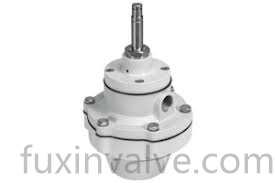
Automated urinal systems need a compact fluid-control component that can respond to an electronic signal and regulate water flow within a sanitary fixture. A Urinal Solenoid Valve provides this connection between the electrical controller and hydraulic circuit, using electromagnetic force to change the position of an internal sealing mechanism. Zhejiang Fuxin Electrical Technology Co., Ltd. develops solenoid valve solutions with attention to magnetic materials, sealing structures, machining precision, and assembly consistency.
The actuator typically consists of a coil, magnetic core, movable armature, and supporting components. When electrical current passes through the coil, a magnetic field is generated and produces force on the armature. The resulting movement changes the condition of the internal water passage. Depending on the valve structure, the actuator may operate a diaphragm, plunger, or another sealing element. Consistent movement requires accurate relationships between the electromagnetic and mechanical components.
Coil construction has a direct influence on actuator behavior. Copper wire needs to be wound with controlled tension and positioning, while insulation separates the conductive turns and helps protect the electrical assembly. The bobbin provides structural support for the winding, and the connection terminals must be assembled accurately. Production controls can reduce variation in electrical resistance and coil geometry between individual valves.
The magnetic circuit also requires suitable engineering. Core and armature materials should have appropriate magnetic characteristics and dimensional stability. The air gap between magnetic components affects the force generated by the electromagnetic field, so dimensional accuracy is important. Guide surfaces must also permit smooth armature movement without unnecessary friction. Precision machining and inspection can help maintain these relationships during production.
Water-facing components introduce additional material requirements. Valve bodies, diaphragms, seals, and other internal parts need to be suitable for the intended water environment. Elastomeric sealing components should provide appropriate flexibility and compression recovery while maintaining their geometry during repeated actuation. Material selection should consider temperature, pressure, water compatibility, and expected operating conditions rather than relying on a single generic material specification.
The internal flow path should be designed together with the sealing mechanism. Inlet and outlet passages, orifices, valve seats, and diaphragm structures influence the movement of water through the valve. Appropriate passage geometry can support controlled flow while avoiding unnecessary hydraulic restrictions. The valve should also be evaluated as part of the complete plumbing system because supply pressure and downstream conditions can influence its operating behavior.
Automated sanitary fixtures often depend on electronic sensors. A sensor detects the user's presence and sends information to a controller, which then activates the valve according to its control logic. This sequence requires coordination between sensing, signal processing, electrical switching, electromagnetic actuation, and hydraulic response. Stable electrical connections and repeatable mechanical movement help maintain the expected relationship between these stages.
Clean manufacturing is another consideration for water-control components. Small particles or machining residue may affect narrow passages, sealing surfaces, or moving components. Production procedures can therefore include suitable cleaning and inspection stages before final assembly. Maintaining controlled assembly conditions can help reduce the possibility of contamination entering the finished valve.
The physical structure also needs to suit sanitary fixture installation. Space around the valve may be limited, requiring an efficient arrangement of the body, coil, connector, and water connections. Engineers need to balance compact dimensions with adequate sealing surfaces, assembly access, and internal mechanical clearance. Compatibility with the fixture's plumbing layout can simplify integration during equipment production.
Quality assurance should cover both components and finished assemblies. Incoming materials can be inspected for conformity, while machining processes can be monitored for critical dimensions. Coil assemblies may undergo electrical testing, and seals can be checked during installation. Finished valves can then be evaluated through leakage tests, actuation checks, and other functional inspections appropriate to their intended use.
For sanitary equipment manufacturers, selecting a Urinal Solenoid Valve requires consideration of electromagnetic design, sealing materials, hydraulic geometry, sensor integration, and production consistency. Zhejiang Fuxin Electrical Technology Co., Ltd. applies these engineering principles to solenoid valve manufacturing for sanitary water-control applications. Its related product solutions can be explored at https://www.fuxinvalve.com/product/sanitary-ware-solenoid-valves/.

 English
 Arabic
 French
 Portuguese
 Deutsch
 Turkish
 Dutch
Dutch
 Italiano
 Russian
 Romaian
 Portuguese (Brazil)
 Greek
Greek
 Bengali