


Engineering Reliable Supported Ball Mechanisms
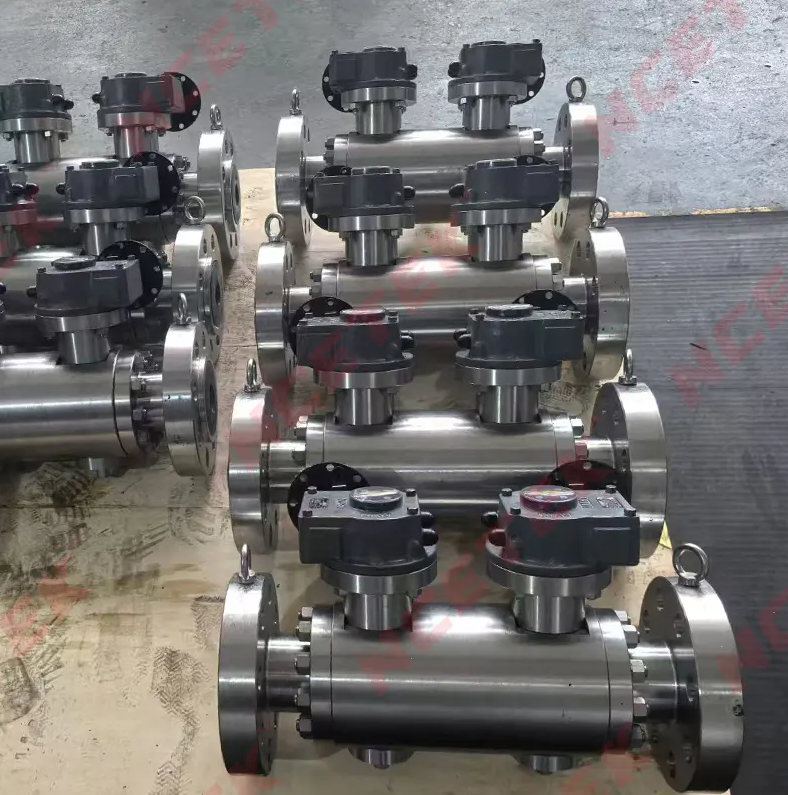
Industrial pipeline systems require valve equipment that can accommodate pressure, mechanical loads, temperature changes, and repeated operating cycles. A Forged Steel Trunnion Mounted Ball Valve combines a forged steel body with a supported ball mechanism, creating a structural configuration used in oil and gas, petrochemical, power, industrial processing, and infrastructure applications. Its performance depends on coordinated control of material selection, forging, machining, sealing, assembly, and testing.
Forging is an important manufacturing method for producing valve components with controlled material characteristics. During the process, metal is shaped through mechanical deformation under controlled conditions. The forged component can then be machined to achieve the dimensions required for assembly. Carbon steel, stainless steel, and alloy steel may be selected according to pressure, temperature, corrosion exposure, and process medium.
The trunnion-mounted structure provides fixed support for the ball. Instead of relying primarily on the valve seats to support the ball, the trunnion components hold it within the valve body. This arrangement can distribute mechanical loads through the internal structure and influence the torque required to rotate the ball. It can also provide a suitable foundation for integrating manual gear mechanisms or automated actuators.
Forging quality directly affects subsequent production stages. The forged body and other components require appropriate dimensional and surface inspection before machining. Manufacturing control during heating, deformation, cooling, and finishing helps establish consistent component characteristics. Material documentation can also support traceability throughout production and future maintenance.
Precision machining is essential because the body, ball, trunnion components, stem, and seats must operate as an integrated assembly. Critical surfaces and connection areas require controlled dimensions, while sealing interfaces need appropriate surface conditions. Accurate machining can help maintain alignment between the supported ball and surrounding components during repeated operation.
Sealing technology must be selected according to the service environment. Seat materials can vary according to temperature, pressure, chemical exposure, and operating frequency. Soft sealing arrangements may be appropriate for certain applications, while metal-seated structures can be considered for services with elevated temperatures or other demanding conditions. Material compatibility should always be evaluated against the actual process medium.
The stem transfers rotational movement from the operating mechanism to the ball. Its connection with the ball and trunnion-supported assembly requires accurate manufacturing and alignment. Stem sealing components should also be compatible with the expected operating environment. For automated systems, actuator selection should account for operating torque, cycling frequency, control requirements, and available installation space.
Connection design is another important factor in pipeline integration. Flanged and welded connections may be used for different installation strategies. Engineers should consider pipeline alignment, support conditions, valve orientation, actuator access, and future maintenance when determining the appropriate arrangement. Large valves may also require specific lifting and handling procedures during installation.
Quality control should continue throughout the production process. Material verification, dimensional inspection, machining checks, assembly inspection, pressure testing, leakage testing, and operational verification can all contribute to manufacturing consistency. Test documentation provides useful traceability and can support project quality records.
External protection may be required when valves are exposed to moisture, chemicals, or changing outdoor conditions. Protective coatings and surface treatments should be selected according to the body material and installation environment. For buried or difficult-to-access applications, corrosion protection and installation planning should be considered before the valve is placed into service.
Maintenance planning should reflect the valve's operating environment and system importance. Inspection can include external surfaces, operating mechanisms, connections, and accessible sealing areas. Recording operating conditions, inspection results, and maintenance activities can provide useful information for future service planning.
When evaluating a Forged Steel Trunnion Mounted Ball Valve, engineering and procurement teams should consider forging quality, body material, supported ball structure, seat technology, stem configuration, actuator requirements, connection design, testing, corrosion protection, and maintenance access together. Industrial ball valve products and related flow-control solutions can be reviewed through https://www.ncevalve.com/product/ when matching valve construction with different pipeline and process applications.

 English
 Arabic
 French
 Spanish
 Portuguese
 Deutsch
 Turkish
 Dutch
Dutch
 Italiano
 Russian
 Romaian
 Portuguese (Brazil)
 Bengali