


How Office Name Boards Improve Workplace Signage
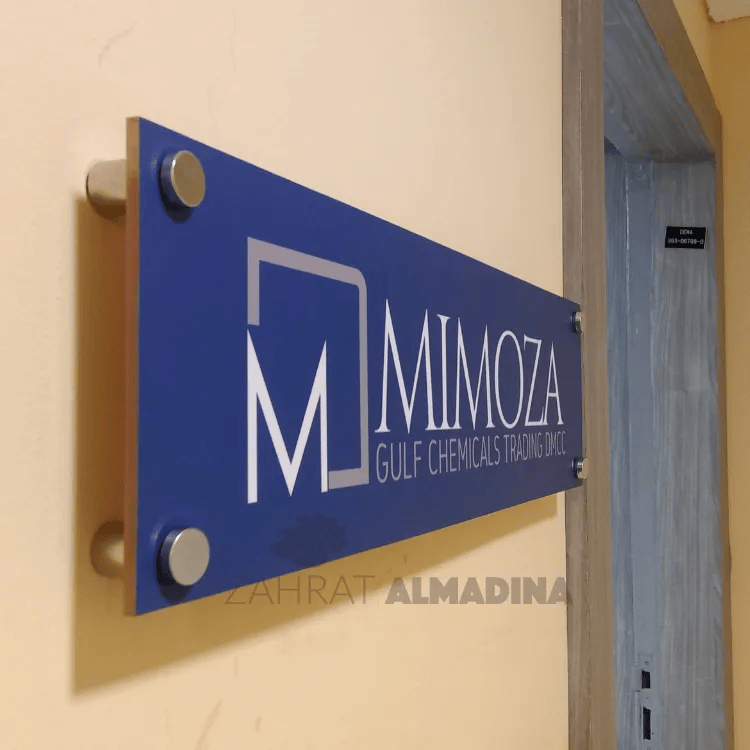
Office entrances and internal spaces need clear signs so employees, visitors, and clients can find the right place without confusion. Office name boards help identify rooms, departments, cabins, reception areas, and meeting spaces while keeping the workplace organised. Their design can also support the overall appearance of a professional environment.
A well-designed office sign does not need to be large or complicated. Clear lettering, suitable material, proper sizing, and the right placement are often enough to make a noticeable difference. As office layouts continue to change, businesses also have more options for creating signs that fit their space and working style.
1. Understanding the Purpose of Office Name Boards
Office name boards are used mainly for identification and navigation. They can display the name of a company, department, manager, meeting room, or specific work area. In larger workplaces, these signs make it easier for visitors to locate the correct destination.
They are also useful for maintaining a consistent visual system throughout an office. When signs follow a similar style, the workplace can appear more organised and easier to understand.
2. Choosing Materials for Office Signs
Material selection affects the appearance, weight, durability, and maintenance of a sign. Acrylic is commonly used for clean and modern designs because of its smooth surface and range of finishes. Aluminium and stainless steel can provide a more solid and formal appearance.
PVC is another option for certain indoor applications, especially when a lightweight sign is required. Wood can be considered for offices that use a warmer or more traditional interior style.
The material should match the location and purpose of the sign rather than being selected only for appearance.
3. Using Custom Name Plates for Different Areas
Custom name plates are useful when standard sizes or ready-made designs do not suit an office. They can be prepared according to the available wall space, required text, preferred shape, and interior design.
For example, a private cabin may need only a person's name and designation, while a conference room might require the room name and a small symbol. Custom sizing makes it easier to create signs that fit different doors, walls, partitions, and reception areas.
Personalised layouts can also help maintain consistency when an office has several types of signs.
4. Selecting Clear and Readable Fonts
A sign should be easy to read at the distance from which it is normally viewed. Decorative lettering can be attractive, but excessive styling may reduce clarity.
Simple fonts are usually suitable for office signs because they keep names and directions understandable. Letter spacing, font size, and line spacing also matter. When several words are placed too closely together, the sign can become difficult to read.
The text should have enough contrast against the background so that it remains visible under normal indoor lighting.
5. Matching Signs With Office Interiors
Office signage should work with the surrounding interior rather than compete with it. Colour, finish, shape, and mounting style can all be selected according to the office environment.
For a minimalist workplace, a simple sign with clean lettering may fit naturally. A creative office may use brighter finishes or unusual shapes, while a corporate environment may prefer restrained colours and formal layouts.
Consistency becomes particularly important when signs are installed across several floors or departments. Using similar design elements creates a connected appearance.
6. Planning Signs for Reception Areas
Reception is often the first area visitors see, so identification should be especially clear there. A company name sign can be placed behind the reception desk, on a feature wall, or near the entrance.
The size of the sign should match the wall and furniture around it. A large board can become overwhelming in a small reception area, while a very small sign may lose visibility in a large space.
Reception signage may also include department information, floor details, or directional instructions where required.
7. Improving Wayfinding Inside Offices
Signs are not limited to names. They can also help people move through the building. Directional signs may point towards meeting rooms, restrooms, waiting areas, lifts, workstations, or emergency exits.
In larger offices, combining room identification with directional signage can reduce confusion for first-time visitors. Each sign should use consistent terms so that people are not given different names for the same area.
Placement is also important. A directional sign should appear before a decision point, giving visitors enough time to understand where they need to go.
8. Considering Installation and Maintenance
Even a well-designed office sign can become ineffective if it is installed in the wrong position. The mounting method should be appropriate for the wall, door, glass partition, or other surface.
Signs should be positioned where they remain visible and are not blocked by furniture, decorations, or open doors. For frequently used areas, the fixing should also be strong enough to handle regular contact.
Cleaning requirements depend on the material. Smooth surfaces are generally easy to wipe, while textured finishes may require more care to keep lettering and edges clean.
9. Updating Signs When Offices Change
Businesses often move departments, change room functions, or hire new managers. Fixed signage can become outdated when these changes are not reflected.
Modular or replaceable designs can make updates easier. For example, a door plate with a replaceable insert may be more practical for a room where occupants change regularly.
When several signs are used throughout an office, maintaining a record of names, room numbers, and locations can also make future updates more efficient.
Zahrat Al Madina Printing is an example of a printing business that handles customised signage formats, illustrating how office identification boards can be prepared in different materials and sizes for varied workplace requirements.
10. Balancing Design With Practical Information
The main purpose of office signage is communication, so design should support the information rather than hide it. A sign should contain only the details needed for identification or navigation.
A useful office sign usually has a clear hierarchy. The most important information should be the easiest to notice, while secondary details can be smaller. Symbols, numbers, and short labels can help visitors understand information quickly.
A consistent system also makes the office easier to navigate. When all room signs, department boards, and directional signs follow similar design principles, people can recognise them more easily.
Frequently Asked Questions
What are office name boards used for?
They identify offices, cabins, departments, meeting rooms, reception areas, and other workplace spaces. They can also support internal navigation.
Which material is suitable for office name boards?
Acrylic, aluminium, stainless steel, PVC, and wood can all be used, depending on the required appearance, location, and durability.
Can custom name plates be made for individual office doors?
Yes. Custom name plates can be produced with specific names, job titles, room numbers, dimensions, and design details.
Should office signs include employee names?
They can, especially for private cabins and designated workspaces. However, the information should be reviewed when staff or room assignments change.
How can office signs improve navigation?
Clear room labels and directional signs help employees and visitors identify destinations and make decisions at important points within the building.
What makes an office sign easy to read?
Readable fonts, suitable letter size, good contrast, adequate spacing, and a simple layout all contribute to clear communication.
Conclusion
Well-planned office name boards provide more than simple identification. They help visitors understand the layout, support workplace organisation, and give different areas a consistent visual identity. Choosing the right material, size, font, placement, and information can make each sign more useful.
Custom designs are especially practical for offices with different room sizes or changing requirements. When signage is planned as part of the wider office environment, it can improve both navigation and visual consistency without making the space feel crowded.

 English
 Arabic
 French
 Spanish
 Portuguese
 Deutsch
 Dutch
Dutch
 Italiano
 Russian
 Romaian
 Portuguese (Brazil)
 Greek
Greek
 Bengali