A successful interior does not always depend on bold colours, elaborate decoration or expensive furniture. Often, the character of a space comes from the way a few carefully selected materials work together. Texture, colour, grain and surface finish can influence whether a room feels warm, balanced, contemporary or practical.
For designers and architects, understanding these relationships can make material selection more purposeful. Instead of choosing finishes individually, looking at the entire interior as a connected composition can produce a more cohesive result.
Build the Design Around a Clear Material Direction
Before selecting individual finishes, it helps to establish the overall character of the space. A residential project might call for warmth and natural textures, while a workplace may require a more refined combination of durability and simplicity.
Once the direction is established, materials can be selected to support it. This prevents the interior from becoming a collection of unrelated finishes and makes it easier to maintain consistency between different rooms or functional areas.
Introduce Timber for Warmth and Texture
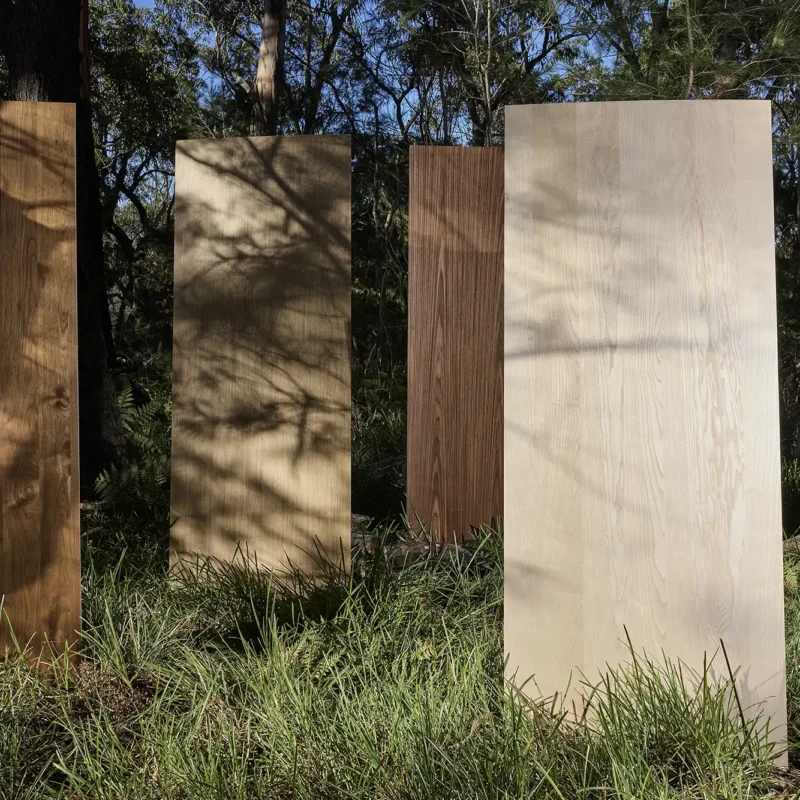
Timber can add a natural quality to interiors through its grain, colour variation and tactile appearance. It can work particularly well in spaces that contain large areas of glass, concrete, metal or neutral colours.
For cabinetry, wall features and furniture, natural timber surfaces for interior design can introduce warmth while maintaining a contemporary appearance. The material can be used as a subtle accent or as a stronger visual element depending on the scale of the project.
Using timber selectively can also create focal points without making the entire interior feel visually heavy.
Combine Timber With More Uniform Surfaces
Natural grain can become more effective when it is paired with simpler finishes. A plain surface provides visual breathing room and allows the texture of timber to stand out.
For example, timber-look cabinetry can be combined with neutral walls and flooring, while a commercial reception area might use timber alongside understated architectural surfaces. These combinations can create contrast without relying on excessive colour.
The objective is to create relationships between materials rather than making every surface compete for attention.
Think About Areas That Experience Heavy Use
Visual appeal is only one consideration when selecting interior materials. Surfaces also need to be appropriate for their intended environment.
In commercial spaces, schools, healthcare environments and busy workplaces, surfaces may experience frequent contact and cleaning. For these applications, durable compact laminate solutions can provide a practical option for applications such as partitions, cabinetry and other high-use areas.
Selecting materials according to their expected conditions can help the finished interior remain functional as well as visually consistent.
Use Texture to Add Depth
Texture can make a significant difference to how an interior is perceived. Smooth surfaces can create a clean and contemporary feeling, while visible grain and subtle texture can make a space feel more layered.
However, too many competing textures can make a room feel cluttered. A better approach is to establish a hierarchy, allowing one or two materials to provide the strongest visual texture while surrounding finishes remain relatively restrained.
Lighting should also be considered because directional light can emphasise grain, shadows and surface variation.
Consider the Interior as a Complete Composition
Materials should be considered alongside furniture, flooring, lighting and architectural details. A finish that looks attractive on its own may produce a very different effect when placed next to other colours and textures.
Creating physical samples or a material board can help designers evaluate these relationships before installation. It also provides a clearer understanding of how different finishes will work together throughout the space.
Choose Materials That Can Adapt
Interior design trends change, but the underlying surfaces of a room often remain for many years. Selecting adaptable materials can therefore help an interior remain relevant even when furniture, artwork or decorative elements are changed.
Neutral backgrounds combined with natural textures can provide this flexibility. They create a foundation that can accommodate different furniture styles and colour schemes without requiring a complete redesign.
Final Thoughts
Creating an inviting interior is often about achieving balance rather than adding more elements. Natural textures can bring warmth, uniform surfaces can provide visual calm, and durable materials can support areas that experience everyday use.
When these factors are considered together, surface selection becomes an important part of the design process. The result can be an interior that feels cohesive, practical and comfortable while still offering enough flexibility to evolve over time.



 English
 Arabic
 French
 Spanish
 Portuguese
 Deutsch
 Dutch
Dutch
 Italiano
 Russian
 Romaian
 Portuguese (Brazil)
 Greek
Greek
 Bengali