


Precision Parts Manufacturing for High-Quality Industrial Parts
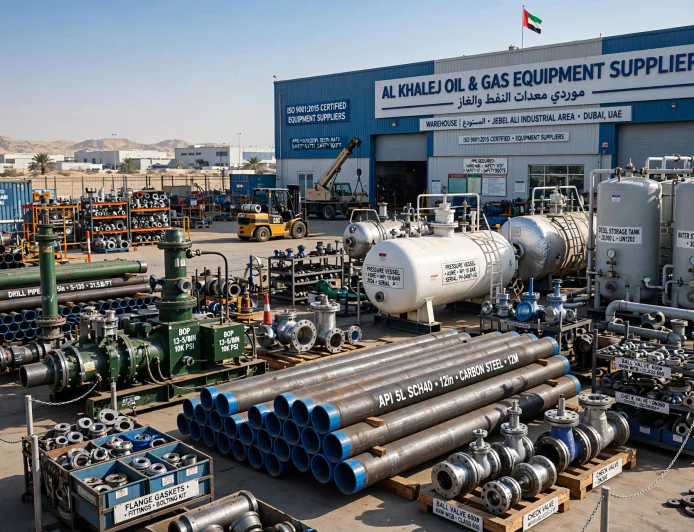
Precision part manufacturing is often described in terms of tolerances and equipment lists, but for the person ordering the part, it really comes down to one question: will every unit in this batch actually match the drawing? That consistency is harder to achieve than it sounds. Precision parts manufacturing requires careful process control, accurate machining, and consistent inspection to maintain the required standards. This is what separates a manufacturer worth building a long-term relationship with from one that's fine for a one-off job. This article breaks down what actually goes into producing parts precisely and repeatedly.
What Defines Precision Parts Manufacturing
Precision manufacturing refers to producing parts to tight, specified tolerances — often within thousandths of an inch — using processes like CNC machining, EDM, and grinding rather than looser methods such as standard casting or basic fabrication. What makes it precision, though, isn't just the tolerance written on the drawing; it's the ability to hit that tolerance consistently across a full production run, not only on the first sample piece. A shop can produce one perfect part relatively easily — producing the fiftieth part to the same specification is the real test of capability.
The Role of Tolerances, Tooling, and Equipment
-
Machine rigidity and calibration directly affect how tightly a shop can hold tolerance run after run
-
Tool wear monitoring prevents gradual dimensional drift across a production batch
-
Fixturing design controls part positioning accuracy more than most buyers realize
-
Environmental control, such as a temperature-stable shop floor, matters for the tightest tolerance work
Tolerance specification also affects cost directly — tightening a tolerance from plus or minus 0.005 inches to plus or minus 0.0005 inches can significantly increase machining time, tooling wear, and inspection requirements, so it's worth specifying only what a part actually needs rather than defaulting to the tightest tolerance available on the quote sheet.
Quality Control Steps That Separate Reliable Suppliers From the Rest
Reliable precision part manufacturing depends on inspection steps built into the process, not added on at the end. First-article inspection confirms the initial part matches the drawing before a full batch runs, and in-process checks catch dimensional drift partway through production rather than after it's finished. Coordinate measuring machines provide objective, documented verification, which matters for industries where a supplier needs to prove conformance rather than simply claim it. ISO 9001 certification is a reasonable proxy for whether a shop has these processes formalized rather than left to individual operators' judgment on any given day.
Industries That Depend Most on Precision Manufacturing
Oil and gas relies on precision part manufacturing for valve components and fittings that have to hold exact pressure ratings under demanding field conditions. Aerospace depends on it for structural and mechanical components where a dimensional error can compromise safety. Medical device manufacturing needs it for parts that interface directly with the human body, and industrial equipment manufacturers rely on precision replacement parts to keep aging machinery running when original components are no longer available. Across all of these, the common thread is that a part's function depends on holding an exact dimension, not an approximate one.
It's also worth noting that precision requirements often extend beyond the part itself to the assembly it fits into. A shaft machined to the correct diameter but paired with a bearing housing that wasn't held to the same standard will still produce a poor fit, even though each part individually passed inspection. This is why manufacturers who handle multiple mating components on the same job tend to deliver better real-world results than one that only sees a single part in isolation.
Questions Worth Asking Before You Commit to a Supplier
Before placing a first order with a new supplier, it helps to ask how they document inspection results, whether they retain records for repeat orders, and what happens if a part fails inspection internally before it ships. The answers tend to reveal more about day-to-day reliability than a shop's equipment list or marketing material ever will. A supplier confident in their process will usually answer these questions specifically and without hesitation.
Conclusion
Consistent precision part manufacturing comes down to equipment, process discipline, and inspection working together, not any single factor on its own. A shop with excellent machines but no documented inspection process will still produce inconsistent results, just as a shop with strong quality control but outdated equipment will struggle to hold tighter tolerances economically. The combination is what actually matters. When you're evaluating custom manufacturing services ask about in-process quality checks and inspection documentation rather than just the tightest tolerance a shop can quote, since that tells you far more about whether the tenth part will match the drawing as well as the first one did. If you have a part that needs consistent, repeatable precision, it's worth starting the conversation with a shop that can show you their quality control process, not just their equipment list.
FAQs
1. What tolerance counts as "precision" in manufacturing?
There's no single cutoff, but tolerances tighter than plus or minus 0.005 inches are generally considered precision work, with many aerospace and medical components requiring tolerances of plus or minus 0.001 inches or tighter.
2. Does tighter tolerance always mean better quality?
Not necessarily — specifying a tolerance tighter than a part actually needs increases cost and lead time without adding functional value, so the right tolerance is the one the application requires, not the tightest one available.
3. How do manufacturers verify precision parts meet specification?
Through measurement tools like coordinate measuring machines, first-article inspection reports, and in-process dimensional checks throughout a production run, rather than relying on a single check at the end.
4. Why does precision manufacturing cost more than standard fabrication?
Tighter tolerances require more accurate equipment, slower cutting speeds, more careful fixturing, and more thorough inspection, all of which add time and cost compared with looser-tolerance standard fabrication.

 English
 Arabic
 French
 Spanish
 Portuguese
 Turkish
 Dutch
Dutch
 Italiano
 Russian
 Romaian
 Portuguese (Brazil)
 Greek
Greek
 Bengali