


How Businesses Can Clear Unused Industrial Inventory
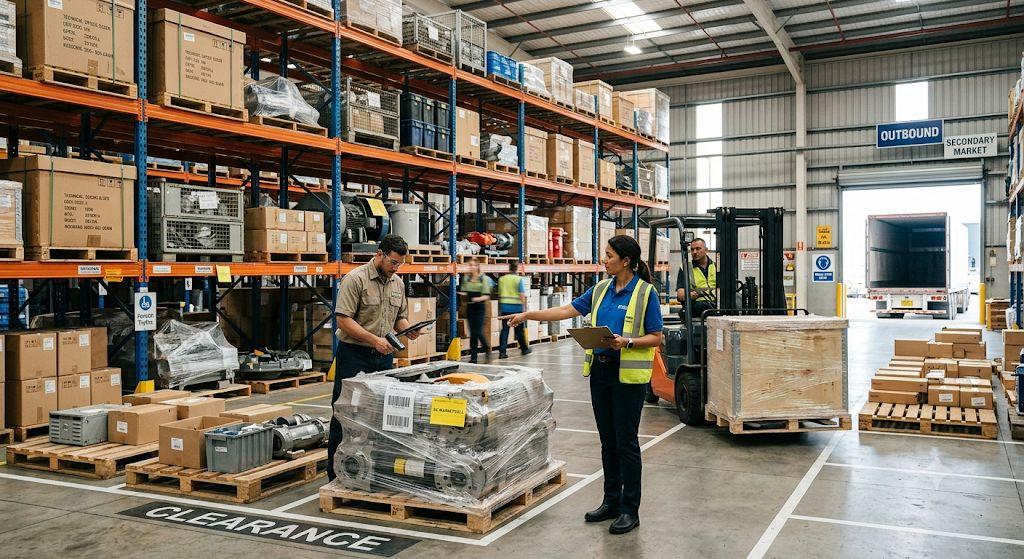
Industrial businesses often have extra parts sitting in warehouses after equipment upgrades, plant changes, overstock, or facility closures. Keeping these items for too long can take up useful space and make inventory harder to manage.
Selling unused inventory can be a practical way to clear space and recover value from parts that are no longer needed.
Find the Right Buyer for Your Extra Parts
Businesses looking for surplus parts buyers may have everything from PLCs and electrical components to motors, sensors, valves, and MRO parts. Finding a buyer who handles different types of industrial inventory can make the selling process easier.
Companies with surplus industrial supply can also have excess, obsolete, or unused equipment that is still useful to other businesses. VB Industrial Supply buys new, used, surplus, and refurbished industrial equipment from businesses, including automation equipment, PLCs, drives, motors, electrical components, and MRO inventory.
What Industrial Parts Can You Sell?
Surplus inventory can include many different types of industrial parts, such as:
- PLCs and automation equipment
- Electrical components
- Motors and pumps
- Sensors and encoders
- Circuit breakers and relays
- Drives and VFDs
- Valves and actuators
- Bearings and power transmission parts
- MRO equipment
- Machinist and milling tooling
VB Industrial Supply works with both individual components and larger inventory projects, including warehouse cleanouts and plant liquidations.
Why Sell Unused Industrial Parts?
Unused parts can take up warehouse space and tie up money that could be used elsewhere. Older or obsolete inventory can also become harder to manage over time.
Selling surplus inventory can help businesses:
- Free up warehouse space
- Reduce excess inventory
- Recover value from unused parts
- Clear aging or obsolete stock
- Simplify inventory management
VB Industrial Supply notes that selling surplus equipment can help businesses convert unused assets into working capital while reducing storage costs.
Prepare Your Inventory Before Selling
Before contacting a buyer, gather basic information about the parts you want to sell. This can help the buyer understand your inventory and prepare an offer.
Useful details include:
- Manufacturer or brand
- Part or model number
- Quantity
- Condition
- Photos
- Available specifications
- Location of the inventory
For larger inventories, you can also provide a parts list, spreadsheet, or inventory export. VB Industrial Supply says it can review everything from targeted parts lists to complete facility inventories.
Consider Selling Larger Lots
Businesses do not always need to sell every part separately. If a warehouse has a large amount of excess inventory, selling the equipment as a lot may make the process simpler.
VB Industrial Supply handles projects ranging from single components to full plant liquidations and surplus MRO inventory buybacks. The company also states that it handles shipping and logistics for these projects.
Final Thoughts
Unused industrial parts do not have to remain on warehouse shelves indefinitely. Selling surplus inventory can help businesses free up space, reduce excess stock, and recover value from equipment they no longer need.
For businesses with surplus automation, electrical, MRO, tooling, or other industrial parts, working with an experienced industrial buyer can provide a straightforward way to clear unwanted inventory.

 English
 Arabic
 Spanish
 Portuguese
 Deutsch
 Turkish
 Dutch
Dutch
 Italiano
 Russian
 Romaian
 Portuguese (Brazil)
 Greek
Greek
 Bengali