


Quality Control in Mechanical Valve Manufacturing
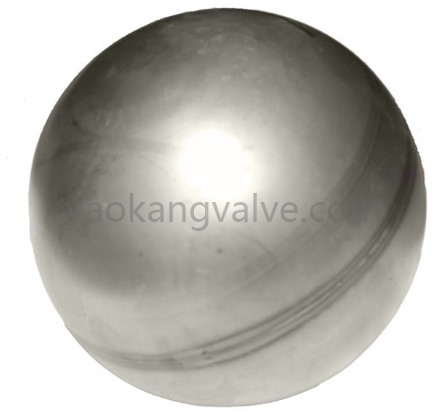
A Float Ball Manufacturer needs to combine engineering knowledge, material control, production technology, and inspection procedures to create components that integrate effectively with mechanical liquid-level systems. While buoyancy provides the basic operating principle, the finished component also depends on geometry, balance, connection accuracy, surface condition, and the characteristics of the surrounding fluid.
Application analysis should be completed before production begins. A component intended for a water storage tank may face different conditions from one used in industrial processing equipment. Fluid composition, temperature, exposure time, cleaning requirements, and mechanical movement can all influence material and design decisions. Understanding these conditions helps establish appropriate production requirements from the beginning.
Material selection is closely connected with manufacturing performance. The material should provide suitable strength and environmental compatibility while also behaving predictably during forming or machining. Manufacturers may evaluate corrosion resistance, dimensional stability, surface characteristics, and fabrication requirements before confirming the material for a particular application.
Geometry is another important factor. The floating component must have a suitable shape and volume to respond to changes in liquid level. Variations introduced during production can affect balance or movement and may influence the behavior of the connected valve mechanism. Controlled tooling and stable production conditions help reduce unnecessary differences between individual components.
Connection dimensions require particular attention because the floating element may work with an arm, pivot, fastener, or valve interface. If these interfaces are not produced according to the intended dimensions, assembly may become more difficult or mechanical movement may become less consistent. Identifying critical dimensions during engineering review allows inspection procedures to focus on the features most relevant to final assembly.
Surface condition should also be considered according to the operating environment. Components exposed to moisture or cleaning procedures may require suitable material and finishing practices. Cleaning, polishing, or other surface treatments can be selected according to the application's requirements. These processes should be controlled so that they establish the desired surface without affecting critical dimensions.
A structured production workflow can include incoming material verification, forming or machining, finishing, dimensional inspection, and final checking. In-process inspection is useful because it can identify deviations before additional processing is completed. This helps production teams respond to variation earlier and maintain more consistent results.
Manufacturing repeatability is especially relevant to OEM customers. Industrial equipment may use the same component across multiple units or require replacement parts over time. Consistent dimensions and connection structures make it easier to maintain compatibility. Standardized drawings, controlled tooling, documented processes, and inspection records can support repeatable production across different batches.
Customization is another area where engineering coordination matters. Customers may request specific dimensions, materials, connection configurations, or surface requirements. Before production, these specifications can be reviewed to determine whether they are technically practical and suitable for consistent manufacturing. Early evaluation can also help identify potential assembly problems before production resources are committed.
Quality control should extend to final handling. Even correctly manufactured components can be affected by scratches, deformation, or contamination during transportation. Appropriate packaging and product identification help preserve the finished condition and make it easier to manage components after delivery.
Communication between manufacturers and customers is equally important in B2B projects. Technical drawings, samples, operating information, and installation details can provide useful references for production planning. Clear specifications reduce ambiguity and allow manufacturing teams to focus on the characteristics that matter most to the final application.
The role of a Float Ball Manufacturer therefore involves much more than producing a basic floating component. Material compatibility, geometry, forming accuracy, surface condition, dimensional control, inspection, and application requirements must be considered together. Buyers evaluating mechanical liquid-level components can review related products and technical information at https://www.yaokangvalve.com/product/ for industrial sourcing and equipment development.

 English
 Arabic
 French
 Spanish
 Portuguese
 Turkish
 Dutch
Dutch
 Italiano
 Russian
 Romaian
 Portuguese (Brazil)
 Greek
Greek
 Bengali