


How Does a Hand Held Welder Machine Improve Modern Metal Fabrication
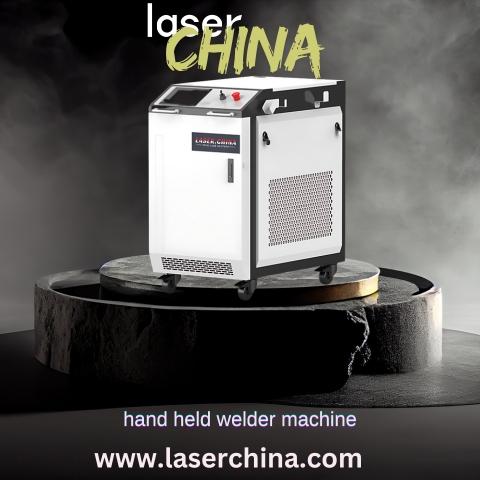
Metal fabrication has changed significantly with the development of compact and practical welding equipment. Among the tools used in modern workshops, a hand held welder machine has become an increasingly useful solution for professionals who need flexibility, precision, and convenient operation. Unlike large stationary welding systems that require a dedicated workspace, handheld equipment can be moved easily between different work areas and used for a variety of metalworking applications.
A hand held welder machine is designed to provide controlled welding performance while allowing operators to work on components of different shapes and sizes. It can be particularly useful for fabrication shops, repair businesses, manufacturing facilities, construction projects, automotive applications, and maintenance departments.
Understanding how this type of welding equipment works, where it can be used, and how to select an appropriate model can help businesses make better decisions when upgrading their welding processes.
What Is a Hand Held Welder Machine?
A hand held welder machine is a compact welding system designed to allow an operator to guide the welding tool manually across the joint or surface being welded. Depending on the technology and configuration, handheld welders can be used with different metals and welding applications.
Modern handheld welding equipment commonly incorporates advanced control systems that allow operators to adjust welding parameters according to the material, thickness, and application. This makes the equipment suitable for both routine fabrication and specialized repair work.
The handheld design also provides greater mobility. Instead of moving large metal components toward a fixed welding station, workers can often take the welding equipment directly to the workpiece.
How Does a Hand Held Welder Machine Work?
The basic purpose of welding is to join two pieces of material by applying controlled energy to the joint. In laser welding systems, concentrated laser energy is directed toward the area where the materials need to be joined.
The energy creates localized heat, causing the metal at the joint to melt. As the material cools, it forms a strong connection between the components.
A typical handheld laser welding setup may include a main welding unit, handheld welding head, control interface, cooling system, protective components, and other accessories depending on the configuration.
The operator positions the welding head over the joint and moves it along the required path. Welding parameters can be adjusted according to the specific application to maintain consistent results.
Materials Suitable for Handheld Welding
The choice of welding equipment should always correspond to the material being processed. Handheld welding systems can be used in many metalworking environments, particularly when working with commonly fabricated metals.
Typical applications may involve:
- Stainless steel
- Carbon steel
- Mild steel
- Aluminum
- Galvanized materials
- Certain alloy metals
Different materials have different thermal and physical characteristics. Aluminum, for example, behaves differently during welding than stainless steel. Operators therefore need to select suitable settings and techniques for each material.
Applications in Metal Fabrication
Metal fabrication is one of the most common areas where handheld welding equipment can be useful. Fabricators regularly work with sheets, tubes, frames, cabinets, brackets, panels, and other metal components.
Fabrication businesses can use handheld welding equipment for assembling metal frames, joining sheet-metal sections, manufacturing equipment housings, and completing various custom fabrication projects.
Use in Automotive Manufacturing and Repair
The automotive sector involves numerous metal components that require accurate joining. Handheld welding equipment can be used in suitable automotive applications involving body panels, structural components, exhaust-related parts, and fabricated assemblies.
The compact design can also be useful for repair environments where the workpiece may not be conveniently positioned near a conventional welding station.
Before welding automotive components, operators must identify the material, thickness, joint design, and safety requirements. Certain structural or safety-critical components may require specialized welding procedures and qualified personnel.
Applications in Stainless Steel Products
Stainless steel is widely used for kitchen equipment, commercial fixtures, industrial equipment, architectural products, and many other applications.
A hand held welder machine can be used for suitable stainless-steel fabrication tasks where controlled and clean welding is required.
Common examples include:
- Stainless-steel cabinets
- Kitchen equipment
- Railings
- Metal enclosures
- Industrial frames
- Decorative metal products
- Custom stainless-steel structures
The correct settings and technique are important because excessive heat can affect the appearance and properties of stainless steel.
Aluminum Welding Applications
Aluminum is lightweight and widely used in transportation, manufacturing, machinery, and industrial fabrication. However, its thermal characteristics can make welding more demanding.
Modern handheld welding systems designed for aluminum applications can provide controlled energy delivery that helps operators create consistent joints when the appropriate settings and preparation methods are used.
Surface preparation is particularly important when welding aluminum. Oxide layers, oil, dust, moisture, and other contaminants can affect welding quality.
Handheld Welding for Custom Fabrication
Not every fabrication project involves standardized components. Many workshops produce custom products according to individual customer requirements.
A handheld welding machine can be convenient in such environments because operators may need to work on different shapes, dimensions, and joint configurations throughout the day.
Custom fabrication may include furniture frames, metal gates, machine components, equipment stands, decorative products, and specialized industrial structures.
The ability to move the welding head around the workpiece can make the workflow more adaptable for these projects.
Preparing Metal Before Welding
Proper preparation is an important part of achieving reliable welding results. Even advanced welding equipment cannot compensate for poorly prepared surfaces.
Before starting a welding operation, the metal should be inspected for:
- Oil
- Grease
- Rust
- Paint
- Dust
- Moisture
- Oxide contamination
The joint should also be properly aligned. Uneven gaps, poor positioning, or contaminated surfaces can affect the final weld.
Cleaning the workpiece with an appropriate method helps create a more controlled welding environment.
Choosing the Appropriate Welding Equipment
Selecting a welding system should begin with the actual requirements of the workshop. Instead of choosing equipment solely according to appearance or price, businesses should consider the applications for which the machine will be used.
Important factors include the materials being welded, material thickness, expected workload, available electrical supply, workspace, operator experience, and required production volume.
For a workshop that regularly handles different metal products, a versatile configuration may be more appropriate than equipment designed for only one specialized task.
Understanding Welding Parameters
Welding parameters influence the final result. Depending on the equipment, operators may have control over settings such as power, welding speed, frequency, pulse characteristics, and other operating parameters.
The correct combination depends on the material and application.
For example, thin sheet metal generally requires different treatment from thicker metal components. Operators should follow the machine manufacturer's recommended settings and perform test welds before beginning important production work.
Keeping documented settings for frequently used materials can also help workshops maintain greater consistency between different jobs.
Importance of Operator Training
Although modern welding equipment can simplify many tasks, proper training remains essential.
Operators should understand how the machine works, how to prepare materials, how to select appropriate settings, and how to recognize welding problems.
Training should also cover workplace safety, protective equipment, machine inspection, and emergency procedures.
Experienced operators can identify issues such as inconsistent penetration, excessive heat, poor joint preparation, contamination, or incorrect parameter selection before these problems affect a large production batch.
Maintenance and Daily Inspection
Regular maintenance helps keep welding equipment operating reliably. Operators should inspect the equipment before use and follow the manufacturer's maintenance schedule.
Depending on the system, routine checks may include examining cables, welding heads, protective components, cooling systems, connections, and ventilation areas.
Dust and debris should not be allowed to accumulate around equipment where they could interfere with normal operation.
Manufacturers may also specify particular maintenance intervals for consumable components and cooling systems. Following those instructions can help extend the usable life of the equipment.
Safety When Using a Hand Held Welder Machine
Welding equipment requires appropriate safety procedures. Laser welding systems can produce intense radiation and heat, so operators must use equipment specifically designed for the application.
A suitable controlled work area is important. Depending on the system, laser safety enclosures, protective barriers, warning signs, and appropriate personal protective equipment may be required.
Operators should never look directly at a laser beam or expose themselves or others to reflected laser radiation. Eye and skin protection must comply with the requirements of the specific welding system.
Fire safety is also important because welding generates significant heat. Flammable materials should be kept away from the work area, and suitable fire-prevention procedures should be followed.
Improving Workshop Productivity
For businesses handling frequent welding jobs, workflow organization can have a major impact on production.
A handheld welding system can be integrated into a structured fabrication process where material preparation, cutting, positioning, welding, inspection, and finishing are organized efficiently.
Keeping commonly used materials and tools close to the welding station can reduce unnecessary movement. Standardized welding procedures can also help operators maintain consistency across repeated jobs.
For production environments, businesses should evaluate the entire workflow rather than considering the welding machine separately.
Quality Inspection After Welding
Finished welds should be inspected according to the requirements of the application. Visual inspection can identify issues such as cracks, excessive spatter, uneven weld appearance, gaps, or incomplete joining.
For critical applications, additional inspection methods may be required.
The inspection process should be appropriate for the product and industry. Components used in ordinary fabrication may have different quality requirements from components used in structural, pressure, automotive, or industrial equipment.
Maintaining inspection records can also help businesses monitor production quality over time.
Selecting a Supplier
Choosing the right supplier is another important step when purchasing welding equipment. A reliable supplier should provide clear technical specifications and information about machine configuration, supported materials, operating requirements, installation, and maintenance.
After-sales service is also important for businesses that depend on welding equipment for regular production.
Before purchasing, buyers should ask about warranty coverage, spare parts availability, technical support, training, and machine servicing.
Comparing suppliers based on the complete service package can provide a clearer picture of the long-term purchasing decision.
Future of Handheld Welding Technology
Welding technology continues to develop as manufacturers focus on greater control, automation, portability, and ease of operation.
As manufacturing requirements continue to evolve, handheld welding technology is expected to remain relevant for businesses looking for flexible metal joining solutions.
Final Thoughts
A hand held welder machine provides a practical approach to many modern metal fabrication requirements. Its compact working format allows operators to work with different components and positions while maintaining controlled welding processes.

 English
 Arabic
 French
 Spanish
 Portuguese
 Deutsch
 Dutch
Dutch
 Italiano
 Russian
 Romaian
 Portuguese (Brazil)
 Greek
Greek
 Bengali