


Can Kaixin Electro Permanent Magnetic Chuck Simplify Workpiece Clamping
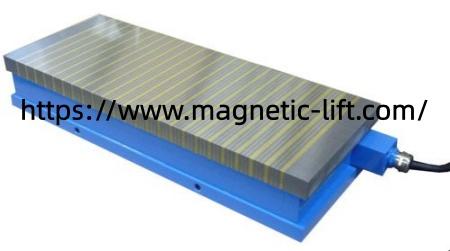
Electro Permanent Magnetic Chuck technology can support modern machining work by combining magnetic clamping with an electrically controlled operating process. Instead of relying on continuous electrical power to maintain the magnetic holding condition, this type of equipment uses an electrical pulse to activate or release the magnetic circuit. That operating principle can be useful for workshops seeking stable workpiece positioning while keeping the working area around a component relatively clear. Manufacturers and machining teams can evaluate the technology according to their specific production requirements, component characteristics, and machine configuration.
One practical advantage is setup flexibility. Traditional mechanical fixtures often require clamps, bolts, supports, or other components to secure a workpiece. These fixtures can occupy valuable space around the part and may restrict tool access. Magnetic workholding places the holding force through the contact surface, which can leave more room for cutting tools and allow operators to approach several sides of a component. This can be useful during milling, grinding, drilling, and other machining operations where accessibility has an influence on setup planning.
Workpiece preparation remains important. Magnetic systems generally require suitable ferromagnetic materials to create an effective magnetic circuit. Steel components are commonly associated with this type of workholding, while nonmagnetic materials require a different clamping approach. Surface condition also deserves attention because excessive scale, dirt, coatings, or gaps between the workpiece and contact surface can affect magnetic coupling. Before purchasing equipment, buyers should provide information about material type, surface condition, component dimensions, and typical production conditions.
The shape and size of the component can also influence equipment selection. A broad flat workpiece may provide a different contact condition from a narrow bar or irregularly shaped component. Buyers should consider the available contact area and how the part will sit on the working surface. When machining larger components, the arrangement of magnetic poles and the distribution of holding force can become important factors in maintaining suitable positioning throughout the operation.
Another consideration is the machining process itself. Milling can generate cutting forces in several directions, while grinding involves repeated contact between the abrasive tool and the workpiece. The clamping arrangement therefore needs to suit the forces generated during the intended operation. Operators should also consider workpiece thickness, dimensions, machining allowance, and the amount of material that will be removed. Providing these details to the equipment manufacturer can help determine whether a particular configuration matches the application.
Control and operating procedures are also part of the purchasing decision. Modern workshops often look for equipment that can integrate smoothly into established production routines. Depending on the model, users may need to consider control interfaces, activation procedures, installation space, machine connections, and operator access. Clear operating instructions and appropriate inspection routines are valuable because workholding equipment is directly connected with the stability of the machining process.
Maintenance planning should not be overlooked. Buyers can ask about inspection intervals, contact surface care, electrical components, storage requirements, and replacement parts before placing an order. Keeping the working surface clean and maintaining suitable contact conditions can contribute to consistent operation. Workshops that handle different materials or production volumes may also benefit from discussing usage patterns with the manufacturer before deciding on a specific configuration.
For manufacturers, production flexibility is another area worth considering. A workshop may process several component sizes during the same week, making quick setup changes valuable for daily operations. Magnetic workholding can provide a different approach to fixture management by reducing the need for individually positioned mechanical clamps around every component. This does not eliminate the need for correct setup planning, but it can give machining teams another option when designing their production workflow.
Kaixin focuses on magnetic workholding equipment for industrial applications and can provide product information for buyers assessing different machining requirements. When discussing a project, buyers can prepare component drawings, material details, dimensions, weight, machining process, and expected operating conditions. These details create a useful technical foundation for selecting a suitable product and discussing customization where needed.
As machining requirements continue to change, workholding decisions increasingly involve accessibility, setup efficiency, machine compatibility, and reliable positioning. A suitable magnetic solution should be selected according to the actual component and process rather than based only on a single specification. Buyers interested in magnetic workholding products can review the Kaixin website at https://www.magnetic-lift.com/ and compare available solutions according to their production needs.

 English
 Arabic
 French
 Spanish
 Deutsch
 Turkish
 Dutch
Dutch
 Italiano
 Russian
 Romaian
 Portuguese (Brazil)
 Greek
Greek
 Bengali