In ecommerce, getting visitors to your Shopify store is only half the battle. The bigger challenge is turning those visitors into paying customers. A shopper may discover a product, read its details, compare options, and still leave without purchasing simply because the buying process feels inconvenient. This is where a sticky cart can become an effective conversion-focused marketing tool.
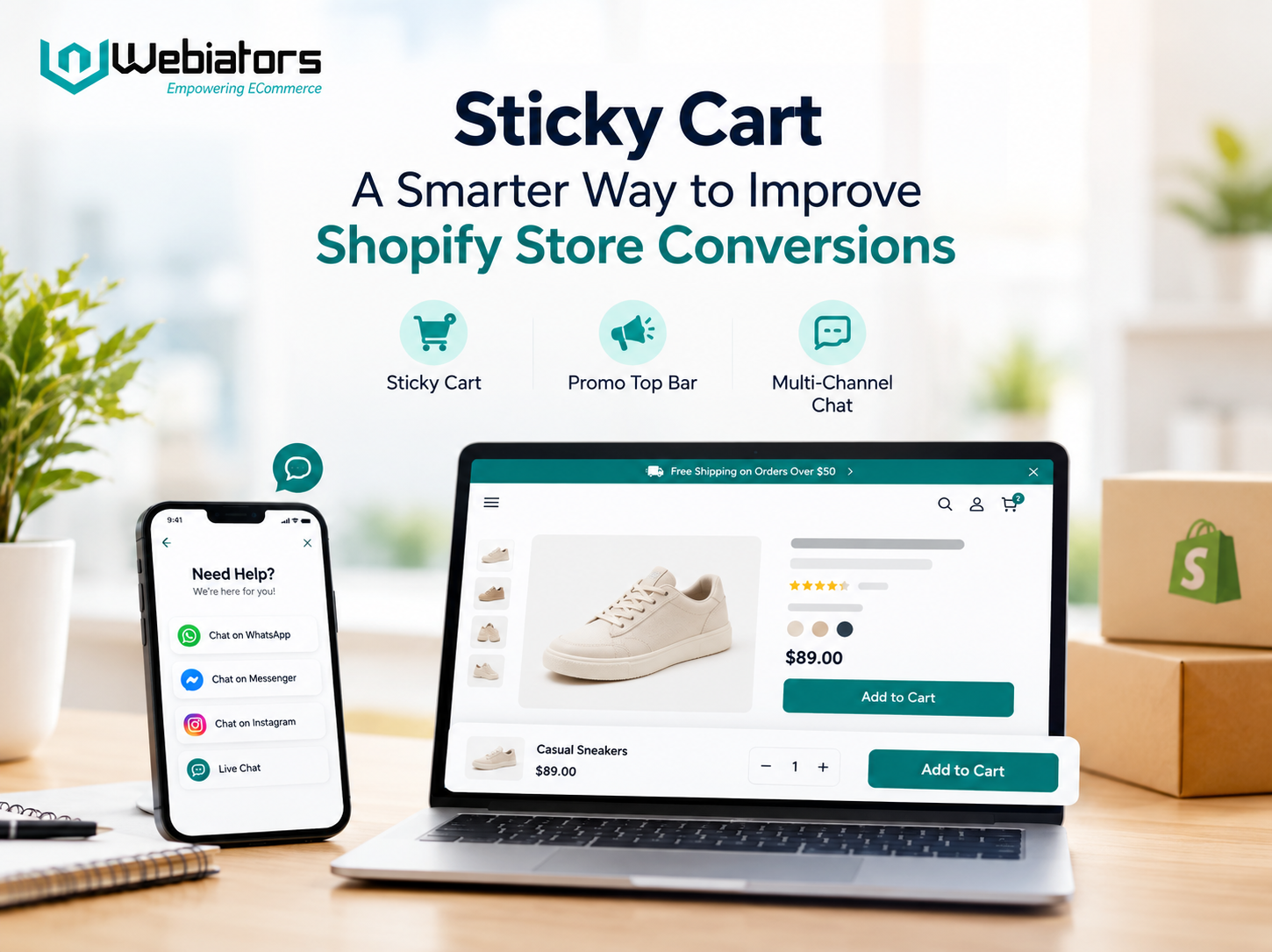
When combined with a promo top bar and multi-channel chat, a sticky cart can create a smoother customer journey while keeping important purchase opportunities visible throughout the shopping experience.
Why Sticky Cart Matters for Ecommerce Marketing
Modern shoppers expect convenience. They do not want to repeatedly scroll through a long product page just to find the Add to Cart button.
A sticky cart keeps the purchase action visible while customers explore product information. Whether they are checking reviews, viewing images, reading specifications, or comparing product options, they can quickly add the item to their cart when they are ready.
From a marketing perspective, this helps reduce friction between product interest and purchase action.
Instead of relying only on persuasive content, brands can make the actual purchasing process easier.
Key marketing benefits include:
- Keeping the purchase action continuously visible
- Reducing unnecessary scrolling
- Supporting mobile shoppers
- Improving product-page usability
- Encouraging faster purchase decisions
- Creating a smoother path toward checkout
The goal is not to force customers to buy. It is to ensure that the opportunity to purchase is always available.
Turn Promotions Into Purchase Opportunities
A promo top bar can work alongside a sticky cart to make promotional campaigns more visible.
For example, an ecommerce brand might use its top bar to communicate:
Free Shipping on Orders Over $50
20% Off Selected Products
Limited-Time Holiday Sale
Buy More, Save More
This type of message immediately communicates an incentive while the sticky cart keeps the purchase action accessible.
The combination creates a simple marketing journey:
Promotion → Product Interest → Add to Cart → Checkout
For campaigns with limited-time offers, clear messaging can also help shoppers understand why purchasing now may be more valuable than waiting.
However, promotional messaging should remain concise. Too many offers, banners, and popups can create visual clutter and reduce the quality of the shopping experience.
Use Multi-Channel Chat to Remove Purchase Objections
Marketing does not end when a customer reaches a product page. Shoppers often have questions before they commit.
They may want to know:
- How quickly will the product arrive?
- Is the product available in their size?
- What is the return policy?
- Is the product compatible with another item?
- Are there additional delivery charges?
Multi-channel chat can help businesses respond to these questions through convenient communication channels.
When customers can quickly reach a business through channels they already use, potential objections can be addressed before they result in cart abandonment.
This makes multi-channel communication particularly useful for stores selling higher-value, technical, or customizable products.
Create a Connected Conversion Strategy
The real marketing advantage comes from combining these features instead of using them independently.
Imagine a shopper landing on a Shopify product page.
At the top, a promo bar highlights free shipping. The shopper explores the product and reads its benefits. As they scroll, the sticky cart remains available. They then have a question about delivery and use multi-channel chat to contact the business.
After receiving an answer, the customer can immediately return to the purchase action.
This creates a connected experience:
Attract → Inform → Engage → Assist → Convert
Every element has a specific marketing purpose.
Sticky Cart for Mobile-First Marketing
Mobile ecommerce continues to make convenience increasingly important. Smaller screens mean customers often need to scroll significantly more than desktop users.
A sticky cart can reduce this friction by keeping the purchase option accessible without requiring shoppers to return to the top or bottom of a product page.
For mobile-focused marketing campaigns, this can be particularly useful when traffic comes from:
- Social media campaigns
- Google Ads
- Email marketing
- Influencer promotions
- Retargeting campaigns
- Shopping campaigns
A visitor arriving from a marketing campaign should be able to move from product discovery to purchase with as few unnecessary steps as possible.
Make Your Shopify Store More Conversion-Focused
A strong ecommerce marketing strategy is not simply about driving more traffic. It is also about getting greater value from the traffic a store already receives.
Businesses should regularly examine where shoppers drop off and identify opportunities to simplify the buying process.
A practical approach includes:
- Make the Add to Cart action highly accessible.
- Use the promo top bar for one clear message at a time.
- Provide fast customer support through relevant channels.
- Optimize the experience for mobile devices.
- Test different messages and layouts.
- Monitor conversion rates and cart activity.
- Remove unnecessary distractions from product pages.
These improvements can make marketing campaigns more effective because visitors have a clearer path toward conversion.
How Webiators Supports Shopify Store Growth
For Shopify merchants focused on improving ecommerce performance, Webiators provides solutions designed around important areas of the customer journey, including sticky cart functionality, promotional messaging, and customer communication.
Instead of treating conversion optimization as a single feature, merchants can build a storefront experience where marketing messages, purchasing actions, and customer support work together.
That approach can be especially valuable for stores competing in crowded ecommerce markets where small improvements in usability can influence purchasing decisions.
FAQs
Does a sticky cart help Shopify marketing?
Yes. A sticky cart can support marketing efforts by keeping the purchase action visible after visitors arrive through campaigns, search, social media, or other traffic sources.
Can a sticky cart increase conversions?
It can reduce friction and make purchasing more convenient. Actual conversion improvements depend on factors such as product quality, pricing, traffic, website design, and customer intent.
How does a promo top bar support sales?
A promo top bar can immediately communicate offers, shipping incentives, seasonal campaigns, or important announcements to visitors.
Why combine sticky cart with multi-channel chat?
The sticky cart makes purchasing easier, while multi-channel chat helps answer questions that could otherwise prevent customers from completing their purchase.
Is sticky cart useful for mobile Shopify stores?
Yes. Because mobile users often need to scroll through long product pages, keeping the purchase action accessible can create a more convenient shopping experience.
Conclusion
Successful Shopify marketing requires more than attracting visitors. Stores must also make it easy for customers to understand products, get assistance, and complete purchases.
A sticky cart keeps the buying action accessible, a promo top bar communicates timely incentives, and multi-channel chat helps remove customer doubts. Together, these features can support a more streamlined conversion strategy.
For ecommerce brands looking to turn more product-page visitors into customers, improving the path from interest to action can be one of the most practical marketing opportunities available.



 English
 Arabic
 French
 Portuguese
 Deutsch
 Turkish
 Dutch
Dutch
 Italiano
 Russian
 Romaian
 Portuguese (Brazil)
 Greek
Greek
 Bengali