


When Should Contractors Use Geocells for Ground Stabilization?
A Practical Guide for Contractors Working With Weak or Unstable Ground
Ground conditions can make or break a construction project. Soft soil, poor drainage, slopes, and repeated heavy traffic can create expensive problems if they are not addressed early. Commercial geocell ground stabilization can provide a practical way to improve soil performance by confining fill material and helping distribute loads across the ground. But when should contractors consider using geocells?
What Are Geocells?
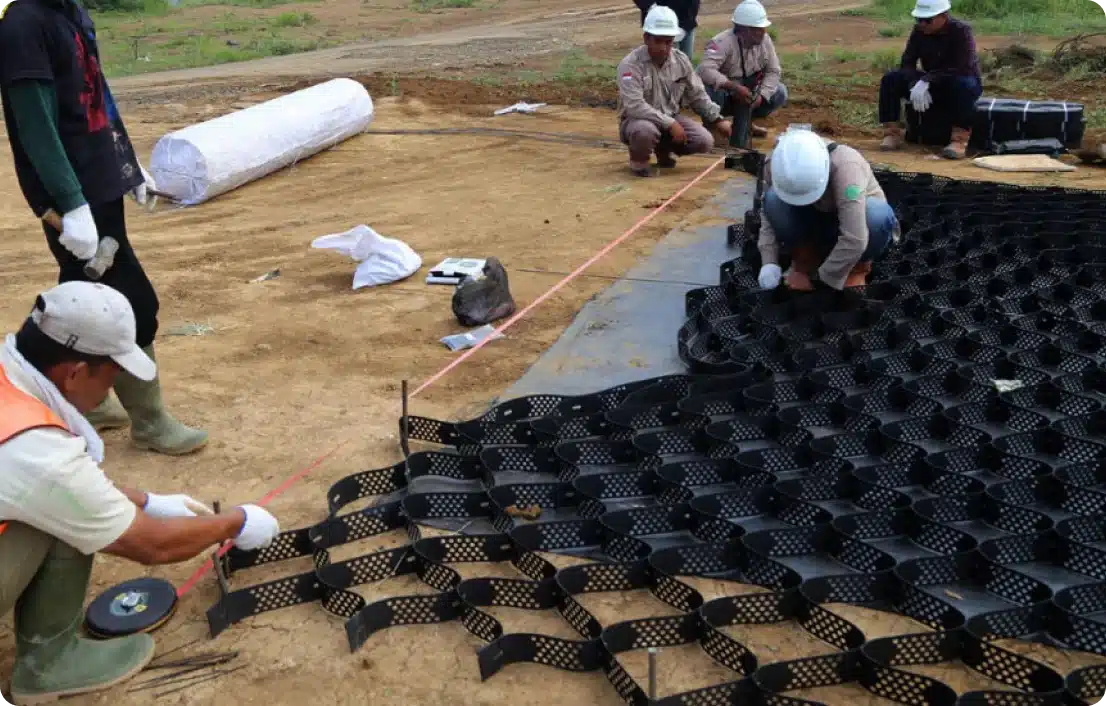
Geocells are three-dimensional cellular systems typically made from durable polymer materials such as high-density polyethylene (HDPE). The interconnected cells hold soil, sand, or aggregate in place and create a confined layer within the ground structure.
Instead of allowing aggregate to spread or move easily under pressure, the cellular structure helps keep the fill contained. This can improve load distribution and reduce lateral movement.
For contractors, the main advantage is that geocells can be incorporated into different ground improvement designs depending on the site conditions, expected loads, drainage requirements, and project goals.
When Should Contractors Consider Geocells?
Not every construction site requires a geocell system. However, several conditions can make this approach worth considering.
1. When the Existing Soil Is Weak
Weak or soft subgrade can create challenges for roads, access paths, parking areas, and equipment yards. Heavy traffic can cause rutting, settlement, or deformation when the underlying soil cannot adequately support the surface.
Geocells can help create a reinforced layer above weak ground. The confined aggregate works as a more stable load-bearing layer, helping spread pressure over a larger area.
Contractor tip: Before selecting a stabilization method, evaluate the existing subgrade and understand the expected traffic and loading conditions.
2. When Heavy Equipment Will Use the Site
Construction sites often need temporary or permanent access for loaders, cranes, trucks, and other heavy equipment. Repeated wheel loads can quickly damage an untreated or poorly prepared surface.
A geocell-reinforced aggregate layer can help improve load distribution and reduce movement of the fill material. This makes geocell systems useful for access roads, equipment staging areas, work platforms, and other heavy-duty applications.
The design should still account for the actual equipment loads, soil conditions, aggregate type, drainage, and required performance.
3. When Building Roads or Access Routes
Road construction can become difficult when the subgrade is soft or variable. Adding more aggregate may solve the problem temporarily, but excessive aggregate thickness can increase material and hauling requirements.
Geocell reinforcement can help improve the performance of the aggregate layer by confining the fill. Depending on the engineering design, this may allow contractors to develop a stable road structure while working with challenging soil conditions.
This approach can be especially useful on construction access roads and other areas that experience repeated vehicle traffic.
4. When Parking Areas Need Better Ground Support
Commercial parking lots can experience significant loads from cars, delivery trucks, service vehicles, and other traffic.
If the underlying soil is unstable, surface deformation can become a maintenance issue. Geocell reinforcement can be considered as part of the base structure to help improve confinement and load distribution.
For larger commercial or industrial parking areas, contractors should evaluate drainage, traffic frequency, expected loads, subgrade strength, and the intended surface material before finalizing the design.
5. When Working on Slopes
Sloped sites present another challenge because gravity and water can contribute to soil movement and erosion.
Geocells can help hold fill material in place and create a more stable surface layer. When combined with appropriate drainage, vegetation, or other erosion-control measures, geocell systems can become part of a broader slope stabilization strategy.
Important: A slope project should be evaluated based on its specific geometry, soil conditions, groundwater, drainage, and loading. Geocells are a construction solution, not a replacement for proper site engineering.
6. When Erosion Is a Concern
Water runoff can wash away loose soil and aggregate from exposed areas. This is particularly important around slopes, drainage channels, road edges, and construction sites.
Because geocells confine the infill material, they can help reduce movement caused by surface runoff. Contractors can combine the system with suitable drainage and erosion-control practices to address the site's specific water conditions.
A Simple Project Checklist
Before choosing geocell reinforcement, contractors should consider:
- What type of soil is present?
- How strong is the existing subgrade?
- What loads will the area carry?
- How often will vehicles use the site?
- Is water or poor drainage contributing to the problem?
- Is the project flat or sloped?
- What fill material will be placed inside the cells?
- Will the system be temporary or permanent?
- What surface will be installed above it?
- Does the project require an engineer's design?
Answering these questions helps determine whether geocells are appropriate and what type of system may be required.
Why Proper Installation Matters
Choosing the right product is only part of a successful stabilization project. Site preparation and installation also matter.
The subgrade should be prepared according to the project design. The geocell sections need to be properly positioned and secured, and the selected infill should be placed and compacted correctly.
Contractors should follow the manufacturer's installation recommendations and project specifications. On larger or technically demanding projects, working with an experienced geotechnical or civil engineer can help ensure the system is designed for the actual site conditions.
How Geocells Fit Into Commercial Ground Improvement
One reason contractors consider commercial geocell ground stabilization is its flexibility across different applications. The same basic cellular confinement concept can be adapted for roads, parking areas, equipment access routes, slopes, and other ground improvement projects.
However, the goal should not simply be to install geocells. The goal is to create a ground system that matches the site's soil, loading, drainage, and long-term performance requirements.
That means proper assessment and design should come before installation.
Conclusion
Knowing when to use geocells starts with understanding the site. Weak soil, heavy traffic, slopes, erosion, and unstable aggregate layers can all create opportunities for geocell reinforcement. Contractors should evaluate the project conditions and use an appropriate engineering design before installation. For commercial ground stabilization solutions, contact BaseCore in Scottsdale, Arizona to discuss your project requirements.
Frequently Asked Questions
Are geocells suitable for heavy equipment?
They can be used in systems designed for heavy equipment and repeated vehicle loading. The required configuration depends on soil conditions, loads, aggregate, and the overall project design.
Can geocells be used on weak soil?
Yes. Geocell reinforcement can be incorporated into ground stabilization systems for weak or soft subgrades. The design should be based on actual site conditions.
Are geocells useful for commercial parking areas?
They can be used in parking and access areas where improved load distribution and aggregate confinement are needed. Contractors should consider traffic, soil, drainage, and surface requirements.
Do geocells prevent erosion?
Geocells can help limit movement of confined fill material caused by runoff. They are often used as part of a broader erosion-control approach rather than as a standalone solution for every erosion problem.
Should contractors use geocells on every project?
No. Geocells are one ground improvement option. Contractors should compare the site's requirements, engineering design, materials, installation conditions, and project budget before selecting a stabilization method.

 English
 Arabic
 French
 Spanish
 Portuguese
 Deutsch
 Turkish
 Dutch
Dutch
 Italiano
 Russian
 Romaian
 Portuguese (Brazil)
 Bengali