


E-Waste Recycling Plant Setup: License, Cost, Machinery and Compliance
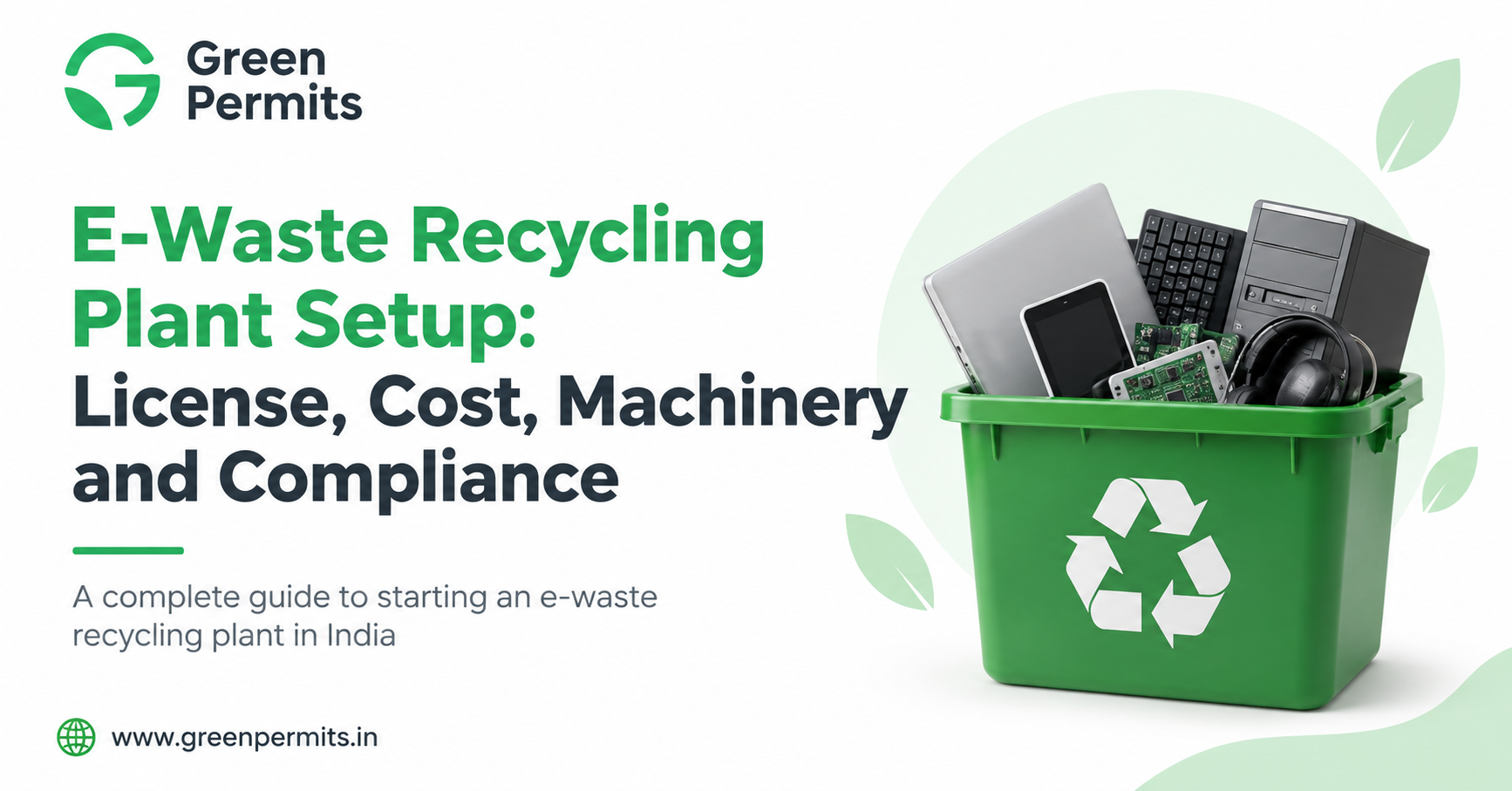
India's growing use of computers, mobile phones, telecom equipment, appliances, electrical products and electronic devices is creating a large stream of end-of-life electrical and electronic equipment.
For entrepreneurs, this creates an opportunity to build an organised e-waste recycling plant in India. However, the business is different from ordinary scrap trading. E-waste may contain valuable materials such as copper, aluminium, iron, plastics and precious-metal-bearing components, but it can also contain hazardous substances that require controlled handling.
A recycling project therefore needs the right land, machinery, environmental approvals, CPCB registration, pollution-control systems, trained manpower and a reliable e-waste sourcing network.
India's current framework is primarily governed by the E-Waste (Management) Rules, 2022, which came into force on 1 April 2023. Under these rules, Manufacturers, Producers, Recyclers and Refurbishers covered by the rules are required to register through the E-Waste EPR system.
This guide explains the major requirements for setting up an e-waste recycling facility, including licences, machinery, approximate investment areas and ongoing compliance.
What Is an E-Waste Recycling Plant?
An e-waste recycling plant is a facility designed to receive discarded electrical and electronic equipment and recover useful materials from it through authorised recycling operations.
Depending on the technology, the process may include:
E-waste receipt → segregation → dismantling → shredding → mechanical separation → material recovery → residue management
Some facilities focus mainly on mechanical processing and segregation, while more advanced recycling plants may carry out additional metal-recovery operations.
The technology selected determines the plant's machinery, investment, pollution-control requirements and technical capability.
This is why an entrepreneur should clearly decide what type of e-waste will be processed and what final products will be produced before ordering equipment.
Why Is Proper E-Waste Plant Compliance Important?
E-waste is not simply another source of industrial scrap.
Electronic equipment can contain plastics, metals, printed circuit boards, cables, batteries and other components that require controlled processing.
Improper dismantling, open burning or unsafe chemical recovery can create environmental and occupational risks.
The E-Waste Management Rules therefore operate through a formal system of registered recyclers. Under India's EPR framework, producers meet applicable recycling obligations through EPR certificates generated from recycling carried out by registered e-waste recyclers.
For a recycling business, proper registration is therefore important not only for regulatory compliance but also for participating in the formal EPR market.
Who Can Set Up an E-Waste Recycling Plant?
A recycling plant may be established by a company, LLP, partnership, proprietorship or another legally recognised business structure, subject to applicable approvals.
The opportunity may be relevant for:
- Existing scrap and recycling companies
- Waste-management businesses
- Electronics and electrical industry entrepreneurs
- Metal recovery companies
- Environmental service providers
- Investors entering the circular economy sector
However, experience in scrap trading alone is not enough. The facility must be capable of processing e-waste in accordance with the applicable environmental requirements.
Main Licences and Approvals for an E-Waste Recycling Plant
Businesses often search for an "e-waste recycling licence," but setting up the plant usually involves several approvals rather than a single licence.
1. Consent to Establish - CTE
Before establishing the industrial facility, the project should assess whether Consent to Establish is required from the concerned State Pollution Control Board or Pollution Control Committee.
The CTE application generally covers the proposed process, plant capacity, machinery, water requirement, emissions, wastewater and pollution-control arrangements.
The requirements and fee structure can vary from state to state.
2. Consent to Operate - CTO
After the facility and pollution-control systems are installed, the business generally needs to obtain applicable Consent to Operate before starting commercial operations.
The installed machinery and actual plant capacity should be consistent with the capacity approved during the establishment stage.
Significant capacity expansion later may require amendment or additional consent.
3. CPCB E-Waste Recycler Registration
Recycler registration is one of the most important requirements.
CPCB's current guidance confirms that Manufacturers, Producers, Recyclers and Refurbishers are the entities required to register under the E-Waste Management Rules, 2022.
Registration connects the recycling facility with the EPR system.
Registered recyclers can generate eligible EPR certificates based on quantities actually recycled and subject to CPCB's portal and verification requirements. CPCB has specifically stated that EPR certificates are generated in favour of registered recyclers based on the quantity of e-waste recycled.
4. Other Applicable Approvals
Depending on the project's technology and location, additional requirements may include factory registration, fire approvals, electricity-related permissions, local authority permissions and hazardous-waste compliance.
These should be evaluated individually rather than assuming that every recycling plant needs exactly the same approvals.
Step-by-Step E-Waste Recycling Plant Setup Process
Step 1: Decide the E-Waste Category
First decide what material you intend to process.
For example, the proposed feedstock may include computers, IT equipment, consumer electronics, electrical appliances or other equipment covered under the applicable rules.
Different waste streams have different material compositions and recovery values.
A clear feedstock strategy helps determine machinery and project economics.
Step 2: Conduct a Feasibility Study
Before purchasing machinery, prepare a basic feasibility study or DPR.
The study should examine:
- Proposed tonnes per day or tonnes per annum
- Expected e-waste sourcing
- Material recovery percentage
- Technology
- Machinery cost
- Electricity requirement
- Land and building
- Labour
- Pollution-control systems
- Working capital
- Recovered-material sales
- Compliance cost
A 1-tonne-per-day project and a 20-tonne-per-day project will have very different investment and sourcing requirements.
Step 3: Choose Suitable Land
Land selection should be done before finalising the plant investment.
An industrial location with suitable access, electricity, water and transport connectivity is generally more practical.
The site should also provide adequate space for separate areas for incoming e-waste, dismantling, processing, recovered materials and residues.
Step 4: Prepare Process Flow and Layout
The proposed recycling process should be clearly documented.
For example:
Collection → weighing → segregation → dismantling → shredding → magnetic separation → non-ferrous separation → recovered material storage
The exact flow depends on the technology.
The layout should also include safe storage, worker movement, fire safety, utilities and pollution-control equipment.
Machinery Required for an E-Waste Recycling Plant
Machinery depends heavily on capacity and recovery technology.
A typical mechanical recycling facility may use equipment such as:
- Weighing system
- Dismantling workstations
- Conveyors
- Industrial shredder
- Crusher or granulator
- Magnetic separator
- Eddy-current or non-ferrous separation equipment
- Air-density separation system
- Dust extraction system
- Material collection systems
- Pollution-control equipment
More advanced facilities may add specialised systems for PCB processing, cable processing, precious-metal-bearing fractions or other recovery operations.
Machinery should be selected according to the actual input waste rather than buying a generic "complete recycling line" based only on advertised throughput.
E-Waste Recycling Plant Cost in India
There is no single fixed project cost for an e-waste recycling plant.
Investment depends on:
Capacity + technology + automation + land + civil work + pollution controls + recovery process + working capital
A relatively basic dismantling and mechanical separation facility may require investment in the range of tens of lakhs of rupees, while an automated recycling plant with advanced separation and material-recovery technology can require several crores of rupees.
Plants involving sophisticated metallurgical or precious-metal recovery can cost substantially more.
When preparing the project budget, do not calculate only the machinery price.
Total project investment may include:
Land or lease deposit + civil work + machinery + electrical systems + pollution controls + laboratory/testing + approvals + pre-operative expenses + working capital
Waste procurement can also consume significant working capital because scrap suppliers may expect fast payment while recovered-material buyers may offer longer credit periods.
Documents Commonly Required
The exact document list depends on the portal, state and project structure, but an e-waste recycler should generally prepare a strong legal and technical documentation file.
Documents may include:
- PAN and GST details
- Certificate of Incorporation or business-registration documents
- Authorized person details
- Land ownership or lease documents
- Site and plant layout
- Process flow diagram
- Machinery list
- Installed recycling capacity
- CTE and CTO, as applicable
- Pollution-control details
- Electricity and utility information
- E-waste storage arrangements
- Worker-health and safety information
- Material recovery and residue-management plan
- Supporting photographs and technical information
Portal requirements should always be checked at the time of application because procedures can be updated.
EPR Certificates and the Recycler's Role
One reason formal e-waste recycling has become commercially important is the EPR mechanism.
Under the 2022 Rules, producers have defined recycling obligations. CPCB's FAQ states that the general recycling target is 70% for FY 2025-26 and FY 2026-27, increasing to 80% from FY 2027-28 onward, subject to the specific calculation provisions applicable to the producer.
Producers fulfil applicable obligations by purchasing eligible EPR certificates generated through registered recyclers.
CPCB requires recyclers to upload supporting documents and invoices for EPR certificate generation, and the eligible certificate quantity is linked to actual e-waste recycling.
This means a recycler cannot simply generate certificates based on the theoretical installed capacity of the machinery.
Proper procurement and processing records are essential.
Importance of E-Waste Sourcing
Machinery does not generate revenue unless the plant has adequate feedstock.
This is one of the biggest commercial risks in recycling.
Potential e-waste sources can include manufacturers, electronics companies, corporate offices, institutional users, collection partners, authorised aggregators and other legitimate channels.
Before establishing a large facility, businesses should understand:
How many tonnes can realistically be sourced each month?
If a plant has capacity for 1,000 tonnes annually but receives only 350 tonnes, fixed costs are spread over much lower production.
For this reason, feedstock mapping should ideally be completed before finalising plant capacity.
Common Challenges in Setting Up an E-Waste Recycling Plant
A frequent mistake is buying machinery before checking environmental requirements.
Another is selecting an unrealistically large capacity without securing adequate e-waste.
Businesses may also face difficulties due to inconsistencies between CTE, CTO, installed machinery and CPCB registration information.
Other common challenges include poor storage arrangements, incomplete purchase and sales records, inadequate dust and emission controls, difficulty sourcing high-quality e-waste and uncertainty about buyers for recovered fractions.
EPR certificate generation also requires strong records. CPCB has directed recyclers to maintain and upload documents relating to procurement, processing and certificate generation.
Good documentation should therefore be treated as part of plant operations, not only as a compliance exercise.
Benefits of Setting Up a Compliant E-Waste Recycling Plant
A properly planned recycling facility can participate in India's organised circular-economy ecosystem.
It can recover valuable secondary materials, reduce the amount of e-waste reaching informal processing channels and work with producers that require registered recyclers for EPR compliance.
A compliant facility can also create stronger credibility with corporate customers because its waste-processing activity is documented and traceable.
As producer EPR obligations continue, registered recycling capacity remains an important part of the formal e-waste management system.
How Can an E-Waste Recycling Plant Consultant Help?
Setting up a recycling plant involves both technical and regulatory decisions.
An E-Waste Recycling Plant Consultant in India can first assess the proposed capacity, process, site and compliance requirements before major investment is made.
Consultancy support may include DPR preparation, site assessment, machinery and process review, CTE and CTO support, CPCB recycler registration, documentation, application filing and regulatory query handling.
A consultant can also review whether the plant capacity mentioned across different approvals is consistent.
This can prevent a common situation where machinery is already installed but the environmental approval allows a lower capacity or different activity.
Conclusion
Setting up an e-waste recycling plant in India requires a combination of commercial planning, environmental compliance and suitable recycling technology.
The project should begin with a clear waste stream and realistic feedstock assessment. This should be followed by site selection, feasibility analysis, machinery planning, CTE/CTO requirements and CPCB Recycler Registration.
The E-Waste Management Rules, 2022 have created a structured EPR system in which registered recyclers play a central role in recycling e-waste and generating eligible EPR certificates.
For entrepreneurs, the best approach is to plan feedstock, technology, approvals and market demand together rather than purchasing machinery first and addressing compliance later.
Green Permits assists businesses with E-Waste Recycling Plant Setup, DPR preparation, CTE/CTO approvals, CPCB Recycler Registration and environmental compliance across India.
Website: https://www.greenpermits.in
Phone: +91 78350 06182
Email: wecare@greenpermits.in

 English
 Arabic
 French
 Spanish
 Portuguese
 Turkish
 Dutch
Dutch
 Italiano
 Russian
 Romaian
 Portuguese (Brazil)
 Greek
Greek
 Bengali