


How Custom Molded Rubber Improves Product Performance and Durability
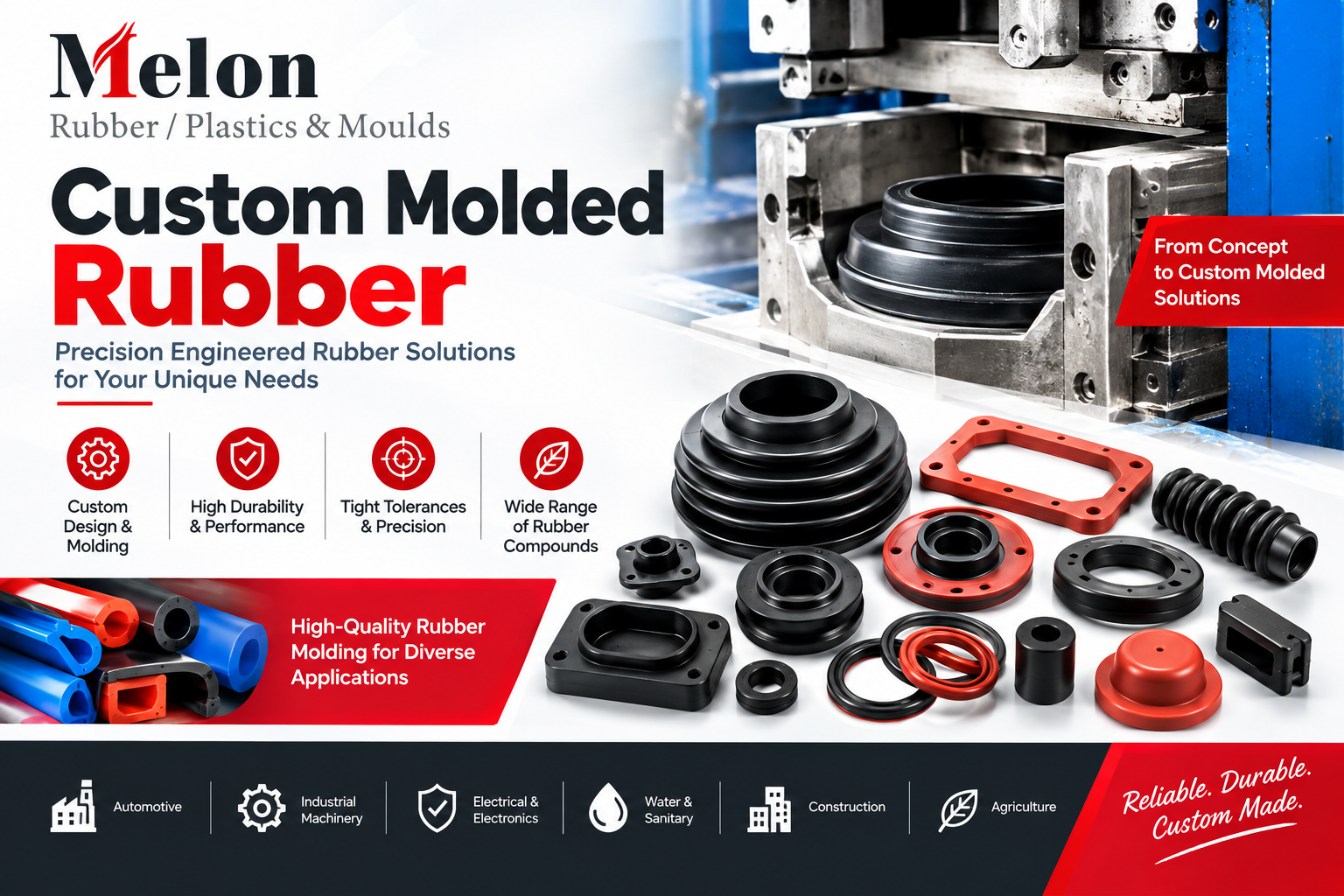
Rubber components play an important role in protecting machinery, creating reliable seals, reducing vibration, and improving product functionality. When standard rubber parts are not suitable for a particular design, Custom Molded Rubber offers a flexible manufacturing approach.
Understanding the Custom Molding Process
Custom rubber molding begins with understanding the requirements of the finished component. Engineers consider dimensions, operating temperature, pressure, chemical exposure, flexibility, hardness, and expected service life.
A mold is then developed based on the approved design. Rubber material is placed into the mold and processed under controlled conditions to achieve the required shape and properties.
Depending on the component and production requirements, manufacturers may use compression molding, transfer molding, or injection molding.
Improved Design Flexibility
One of the key advantages of custom molding is the ability to create complex geometries. A rubber component can be designed to fit around other parts, provide specialized sealing surfaces, or incorporate mounting features.
This design flexibility can help engineers create more compact and efficient assemblies.
Better Sealing Performance
Rubber is widely used for sealing because of its elasticity and ability to conform to mating surfaces. Custom molded seals can be manufactured according to the exact dimensions of a particular assembly.
This can help minimize unwanted leakage and provide dependable protection against dust, moisture, fluids, and other contaminants when the appropriate material is selected.
Vibration and Noise Reduction
Certain rubber compounds are highly effective at absorbing vibration. Custom molded mounts, pads, and bushings can be designed to isolate mechanical components from unwanted movement and vibration.
This is particularly useful in machinery, automotive systems, pumps, motors, and industrial equipment.
Material Selection Matters
The performance of a molded rubber component depends heavily on material selection. Factors such as exposure to sunlight, ozone, oils, chemicals, heat, and moisture should be evaluated before selecting a compound.
Common materials include silicone, EPDM, nitrile, neoprene, natural rubber, and fluorocarbon-based compounds.
Quality Control During Production
Consistent production is important for custom components because parts often need to fit directly into an existing assembly. Manufacturers may inspect dimensions, surface finish, hardness, and other characteristics to ensure the components meet defined specifications.
FAQ
Why use Custom Molded Rubber instead of standard parts?
Custom molding allows a component to be manufactured according to specific design and performance requirements.
Can molded rubber withstand harsh environments?
Yes, depending on the selected rubber compound and formulation. Material selection should be based on the actual operating environment.
Are custom molded rubber parts suitable for high-volume production?
Yes. Certain molding processes are particularly suitable for producing large quantities of consistent components.
Conclusion
From sealing and vibration isolation to protection and cushioning, Custom Molded Rubber can support many product-performance requirements. Careful design, material selection, tooling, and quality control are essential for producing reliable rubber components.

 English
 Arabic
 French
 Spanish
 Portuguese
 Deutsch
 Dutch
Dutch
 Italiano
 Russian
 Romaian
 Portuguese (Brazil)
 Greek
Greek
 Bengali