


Which Details Matter When Choosing compositemould?
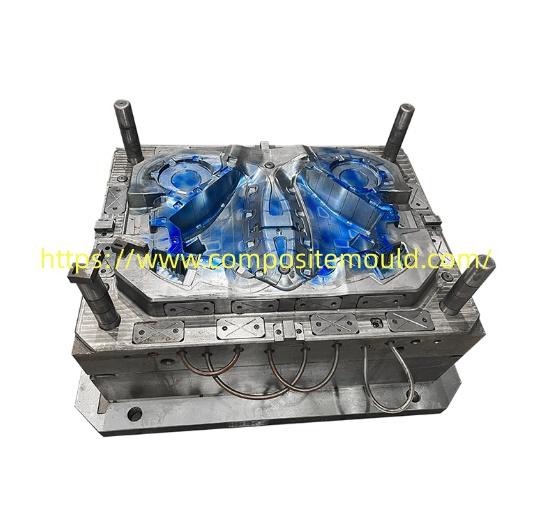
Prepreg Mould selection should begin with a clear review of the product, production process, and tooling requirements. Buyers need to consider product geometry, dimensional tolerances, surface expectations, material characteristics, production volume, and processing conditions before confirming a tooling plan. A detailed review at this stage can help both the buyer and manufacturer establish practical requirements and reduce unnecessary changes during development.
Start With Complete Product Information
A detailed product drawing gives the tooling team a clear starting point. Buyers should provide dimensions, wall thicknesses, corner areas, holes, mounting points, ribs, inserts, and other functional features.
Special areas should be identified clearly. For example, visible surfaces may have different appearance requirements from hidden or functional areas. Tight dimensional areas should also be marked so they can receive appropriate attention during design.
If the product has complex geometry, buyers can discuss potential forming challenges before production begins. Early communication can help the manufacturer evaluate parting lines, draft requirements, release conditions, and other structural considerations.
Consider Material and Processing Conditions
Different composite materials can require different processing conditions. Buyers should provide information about the intended material, curing requirements, temperature range, pressure conditions, and production cycle.
This information can influence decisions about tooling construction and temperature management. Rather than discussing the tooling separately from the production process, buyers can ask the manufacturer to explain how the proposed structure relates to actual manufacturing conditions.
A clear understanding of these requirements can make technical discussions more practical and help avoid specifications that do not match the intended application.
Review Temperature Control
Temperature management deserves careful attention during composite forming. Buyers can ask where heating elements will be positioned, how temperature will be monitored, and how different areas of the tool will be controlled.
For components with complicated shapes or different wall sections, temperature distribution can require additional consideration. Sensor locations and heating zones should therefore be discussed during the design stage.
Buyers can also ask how temperature performance will be checked during trial production. Having an agreed testing approach provides a clearer reference when samples are evaluated.
Check Surface and Dimensional Requirements
Surface quality and dimensional control should be defined before machining begins. Buyers should identify important dimensions and explain which surfaces require particular treatment or appearance standards.
If the finished component needs a certain texture, polish, or surface pattern, this information should be included in the technical documentation.
Inspection methods are also worth discussing. Buyers can ask which dimensions will be measured, what equipment will be used, and how sample results will be recorded. This creates a more consistent basis for reviewing trial parts.
Ask About Cavity Structure and Release
Cavity design can affect how the finished component is formed and removed. Buyers should discuss parting lines, release areas, inserts, and other structural elements with the tooling manufacturer.
Complex geometries may require special attention to release conditions. If the component includes deep sections, narrow areas, or unusual angles, these features should be reviewed before manufacturing starts.
The goal is to establish a structure that fits the product and production process while keeping future maintenance practical.
Review Trial Production Arrangements
Trial production is an important opportunity to check whether the finished tooling matches the agreed requirements. Buyers should ask about the trial schedule, sample quantity, production material, inspection items, and adjustment process.
A clear approval procedure can make communication easier if trial samples require changes. Buyers and manufacturers can agree in advance on how technical issues will be documented and how modifications will be reviewed.
This approach also gives both sides a practical reference based on actual samples rather than relying entirely on drawings.
Consider Maintenance and Future Changes
Tooling should be considered as part of a longer production cycle. Buyers can ask about cleaning, storage, inspection, maintenance intervals, and replacement of serviceable components.
Future product revisions should also be discussed where relevant. If mounting points, dimensions, or other features may change later, buyers can ask whether certain inserts or structural arrangements can accommodate reasonable modifications.
This type of planning can be useful for projects where the product may continue through several production stages.
Evaluate Technical Communication
Good technical communication helps keep a tooling project organized. Buyers should confirm how drawings will be reviewed, how revisions will be recorded, and how questions will be handled during manufacturing.
compositemould provides tooling-related project support covering design discussion, structural requirements, manufacturing coordination, and sample evaluation. Buyers can also review available composite tooling products and project information through https://www.compositemould.com/product/ Before confirming an order, buyers can prepare a checklist covering product drawings, material specifications, production conditions, cavity structure, temperature control, surface requirements, inspection methods, trial arrangements, maintenance, and delivery planning. Comparing different suppliers against the same checklist can make technical discussions easier and provide a clearer basis for evaluating whether a proposed tooling solution matches the intended production process. For projects that may involve future product revisions, discussing possible adjustments during the initial design stage can also help both sides plan the tooling structure more effectively.

 Arabic
 French
 Spanish
 Portuguese
 Deutsch
 Turkish
 Dutch
Dutch
 Italiano
 Russian
 Romaian
 Portuguese (Brazil)
 Greek
Greek
 Bengali