


How to Build a Punch List That Gets Closed Out Faster
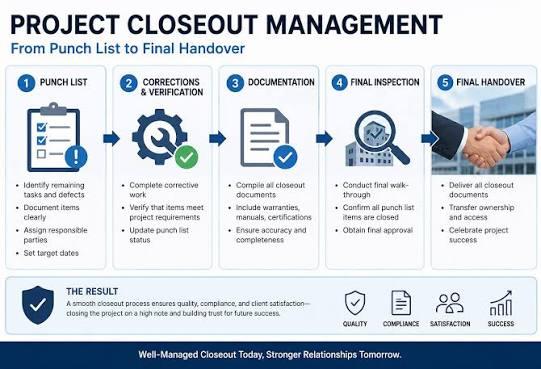
Punch lists often grow rapidly near the end of construction because everyone begins inspecting the project at the same time. Small defects, incomplete finishes, missing hardware, labels, adjustments, and cleaning items can easily turn into hundreds of open tasks. The problem is rarely creating the list. The challenge is closing it efficiently while subcontractors are demobilizing and the project team is also handling commissioning, documentation, and handover. A better punch process begins before final inspection and gives every item a clear location, owner, deadline, and definition of completion.
Start Punching Before the Final Week
Waiting until the project is nearly complete to identify every issue creates an unnecessary rush. Supervisors should review areas as trades finish them and record obvious defects earlier.
Using construction industry software can allow punch items to be created throughout construction rather than only during one final inspection. Early correction is usually easier because the responsible crew and materials are still on site. This also reduces the number of items presented to clients or consultants during formal handover inspections.
Describe the Exact Problem
A punch item such as “fix paint” is too vague. The description should explain the location, defect, and expected correction clearly enough that the subcontractor can act without calling for clarification.
Photographs and drawing locations can make the instruction much clearer. If several rooms contain similar issues, each item should still be traceable to the correct area. Clear descriptions save time because workers can move directly to correction instead of searching for what the inspector meant.
Assign One Responsible Trade
Every punch item should have an owner. If responsibility is unclear between two subcontractors, the general contractor should resolve that internally rather than sending the task to both and hoping somebody handles it.
A construction company project management software workflow can group items by subcontractor and location. Trades can then plan one return visit efficiently rather than receiving isolated messages throughout the week. Clear ownership also makes accountability during closeout much easier.
Set Realistic Closure Dates
Punch list dates should support the handover schedule. The team can prioritize items that affect inspections, occupancy, client use, or another trade.
Not every cosmetic touch up needs the same urgency as a life safety correction. Grouping items by priority helps subcontractors direct limited closeout crews where they matter most. Deadlines should still be firm enough that minor items do not remain open indefinitely.
Verify Completion Instead of Accepting Status
Subcontractors may mark items complete when they believe the work is finished, but the general contractor should verify important corrections before closing them permanently.
Photos can support remote verification for simple items, while others require physical inspection. The process should prevent an item from bouncing repeatedly between open and complete because the expected standard was never clear. Good descriptions and completion criteria reduce this cycle.
Track Repeated Defects
If the same subcontractor or work type produces many similar punch items, the project team should address the pattern rather than correcting each item individually.
A repeated finish defect may indicate workmanship or quality control problems that should be fixed across the area proactively. This approach can eliminate dozens of future punch items. Closeout becomes faster when teams solve the source of recurring defects instead of treating every symptom separately.
Keep Client Items Separate Where Useful
Internal contractor punch items and client or consultant punch items may follow different approval processes. Keeping the source visible can help the team understand which items require external confirmation before final closure.
The project should still avoid duplicate entries when the same issue appears on several lists. One controlled item with clear history is easier to manage than three separate copies showing different statuses. Consolidation reduces confusion during final handover.
Make Closeout a Controlled Production Process
Punch work should be planned like any other construction activity. It needs scope, owners, priorities, sequence, verification, and reporting. Treating it as a miscellaneous list encourages delays because subcontractors focus naturally on larger active work elsewhere.
When teams begin early and manage punch items consistently, closeout becomes much more predictable. Fewer defects remain for the final week, subcontractors can group their corrections efficiently, and management can see exactly what stands between the project and handover. A punch list becomes faster to close when it is treated as planned work rather than a collection of last minute complaints.

 English
 Arabic
 French
 Spanish
 Portuguese
 Deutsch
 Turkish
 Italiano
 Russian
 Romaian
 Portuguese (Brazil)
 Greek
Greek
 Bengali