


How Eco-Friendly Paper Bags Can Support Sustainable Packaging Goals for Growing Businesses
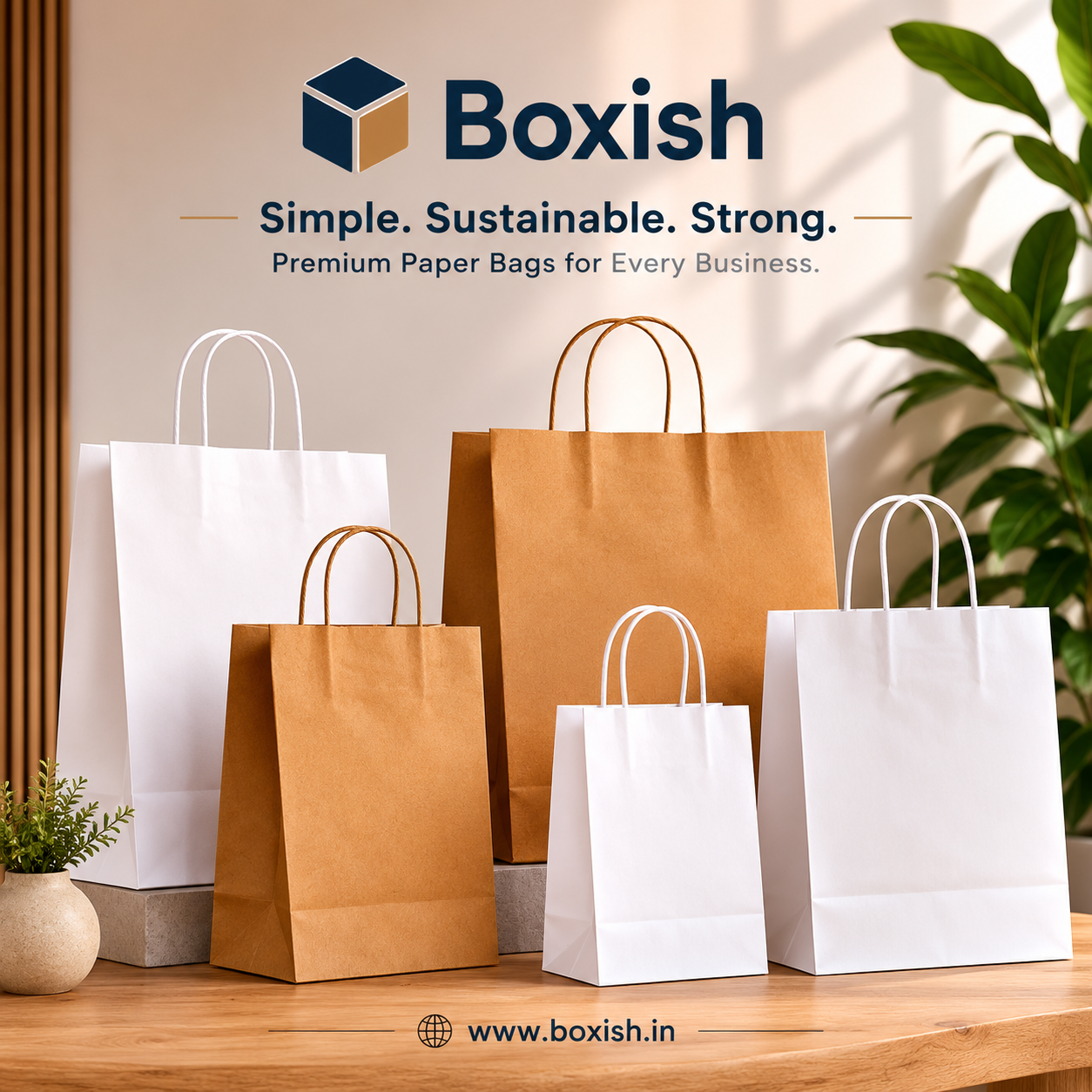
Packaging has become an important consideration for businesses that want to reduce unnecessary material use while maintaining practical product protection and presentation. As businesses grow, their packaging requirements also increase, making it useful to evaluate materials that can fit both operational and sustainability goals.
Paper bags can be a practical option for many retail, food, bakery, gifting, and ecommerce applications. They can be produced in different sizes, paper specifications, handle styles, and designs to suit different products.
For growing businesses, choosing suitable paper packaging is not only about appearance. Factors such as material use, product weight, bag size, printing, durability, storage, and end-of-life handling should also be considered.
This guide explains how paper bags can support sustainable packaging goals and what businesses should consider when selecting them.
What Does Sustainable Packaging Mean?
Sustainable packaging generally focuses on reducing unnecessary environmental impact while still performing the required packaging function.
For businesses, this can involve several considerations:
-
Using appropriate quantities of packaging material
-
Avoiding unnecessarily oversized packaging
-
Selecting suitable paper-based materials
-
Reducing packaging waste
-
Improving packaging efficiency
-
Considering reuse or recycling where practical
-
Choosing packaging according to the product requirement
Sustainable packaging does not simply mean choosing a particular material. The complete packaging system and how it is used also matter.
Why Paper Bags Can Be Part of a Sustainable Packaging Strategy
Paper bags can provide businesses with a packaging option that is suitable for many everyday carrying and retail applications.
They can be produced using different paper grades and specifications, allowing businesses to select packaging according to the product.
For example, a small retail item does not necessarily need a large, heavy bag. Selecting an appropriately sized bag can help avoid unnecessary material use.
Similarly, businesses can evaluate whether handles, printing, coatings, or additional features are actually required for their application.
The objective should be to use packaging that performs its intended function without unnecessary material or design elements.
Choose the Right Bag Size
Bag size is an important part of packaging efficiency.
A bag that is significantly larger than the product may use more material than necessary and can also take up additional storage space.
On the other hand, a bag that is too small can make packing difficult and may damage the product.
Businesses should measure:
-
Product length
-
Product width
-
Product height
-
Product weight
-
Number of items per bag
Choosing suitable dimensions can help businesses use packaging more efficiently while improving the customer's carrying experience.
Consider Paper Quality and GSM
Paper quality affects how a bag performs during normal use.
GSM, or grams per square metre, is one specification businesses may consider when selecting paper bags. However, GSM should not be viewed as the only indicator of quality or suitability.
Businesses should also consider:
-
Paper construction
-
Bag dimensions
-
Handle design
-
Bottom construction
-
Product weight
-
Manufacturing quality
-
Expected usage
A lightweight product may not require the same paper specification as a heavier product.
Selecting the appropriate specification can help businesses avoid using unnecessarily heavy packaging where it is not required.
Use Packaging According to the Product
One of the simplest ways to improve packaging efficiency is to match the packaging with the product.
Different businesses may have completely different requirements.
A clothing retailer may need larger handled bags, while a bakery may need bags designed around cake boxes and food containers.
A gift shop may focus more on presentation, whereas a grocery business may prioritize easy opening and efficient packing.
Instead of using one bag specification for every application, businesses can maintain a small range of suitable bag types and sizes.
Paper Bags for Bakery and Cake Businesses
Bakeries and cake businesses often require packaging that can accommodate different product sizes while providing convenient carrying.
A Cake Bag Brown can be considered for suitable bakery packaging applications where a practical paper bag is required.
Businesses should select the size and construction according to the cake box, product weight, and expected handling conditions.
The same principle applies to other food-related packaging: the bag should be selected based on the product and the conditions in which it will be carried.
White Paper Packaging for Bakery Presentation
Packaging can also influence how products are presented to customers.
A Cake Bag White can provide a clean appearance for suitable bakery and cake packaging applications.
For businesses where presentation is important, the bag can complement the appearance of the product while providing a convenient carrying solution.
However, sustainability considerations should still include practical factors such as appropriate sizing, material requirements, product protection, and actual usage frequency.
SOS Bags for Efficient Everyday Packing
Businesses that handle a large number of orders often need packaging that can be opened, filled, and handled efficiently.
An SOS Bag has a self-opening structure that can make it convenient for certain retail and food applications.
These bags can be useful for businesses such as:
-
Bakeries
-
Cafes
-
Grocery stores
-
Takeaway businesses
-
Food retailers
-
Small retail stores
For growing businesses, efficient packing can be part of sustainability because reducing unnecessary handling and packaging waste can improve overall operational efficiency.
Reduce Unnecessary Packaging Features
Businesses sometimes add packaging features simply because they look attractive.
However, every additional element should have a practical purpose.
Before selecting a bag, consider whether the business actually needs:
-
Multiple printed colours
-
Heavy decorative finishes
-
Extra-large dimensions
-
Reinforced handles
-
Additional layers
-
Special coatings
This does not mean businesses should avoid customization. Instead, packaging features should be selected according to actual product, branding, and handling requirements.
A simple design can often provide effective packaging while using fewer unnecessary elements.
Sustainable Packaging and Branding
Packaging can also communicate a business's approach to responsible packaging.
Businesses can use their paper bags to provide useful information such as:
-
Brand name
-
Logo
-
Website
-
Contact details
-
Product information
-
Recycling-related instructions where appropriate
However, sustainability claims should be accurate.
Businesses should avoid describing packaging as environmentally friendly based only on its appearance or material type. Claims should reflect the actual characteristics of the packaging and its intended disposal or recovery route.
Consider the Complete Packaging System
Paper bags are often only one part of a business's packaging requirements.
A growing ecommerce or retail business may use:
Product → Protective packaging → Shipping box → Paper bag → Customer
Each packaging format has a different purpose.
For example, a corrugated box may be used for shipping and product protection, while a paper bag may be used when a customer needs to carry a purchase.
A sustainable packaging strategy should therefore consider the entire system rather than focusing on one packaging material in isolation.
Avoid Oversized Packaging
Oversized packaging can increase material consumption without providing additional practical value.
For paper bags, excessive size can also make the bag inconvenient to carry and may require more storage space.
Businesses should maintain bag sizes based on actual product categories.
For example:
-
Small accessories → Small bag
-
Clothing → Medium bag
-
Multiple garments → Large bag
-
Bakery products → Product-specific bag
-
Takeaway orders → Bag matched to containers
This approach can help businesses control material use while making packaging easier to manage.
Plan Packaging Purchases as the Business Grows
Growing businesses should review packaging requirements regularly.
Packaging demand can change because of:
-
Increased sales
-
New products
-
Seasonal demand
-
New retail locations
-
Promotional campaigns
-
Changes in order sizes
Buying excessive quantities of a bag that may no longer be suitable can create unnecessary inventory.
Businesses should therefore monitor packaging consumption and adjust purchasing plans according to actual demand.
Test Packaging Before Bulk Ordering
Sustainable packaging should still perform its intended function.
A bag that frequently tears, loses its handles, or cannot carry the required product may lead to additional packaging consumption and customer complaints.
Before ordering large quantities, businesses should test samples with actual products.
Check:
-
Product fit
-
Bag strength
-
Handle performance
-
Bottom construction
-
Customer carrying comfort
-
Storage requirements
-
Overall appearance
Testing can help businesses select packaging that provides the required performance without unnecessary over-specification.
How Growing Businesses Can Improve Packaging Efficiency
Businesses can take several practical steps to improve their packaging system.
Standardize Frequently Used Sizes
Identify the bag sizes used most often and maintain consistent specifications.
Match Bags to Products
Avoid using one oversized bag for every product category.
Review Packaging Usage
Track how many bags are consumed each month and identify areas where material may be wasted.
Select Suitable Specifications
Choose paper quality and construction based on actual product requirements.
Avoid Unnecessary Features
Use printing and finishing options where they provide genuine business value.
Test New Packaging
Test new materials or designs before replacing an existing packaging system.
Common Mistakes to Avoid
Businesses trying to improve their packaging sustainability can make several mistakes.
Choosing Packaging Only Because It Is Made of Paper
Paper-based packaging can still be unsuitable if it is unnecessarily large, over-specified, or frequently discarded due to poor performance.
Ignoring Product Requirements
A bag must still protect and carry the intended product safely.
Using One Size for Everything
Different products require different dimensions.
Ordering Excessive Quantities
Packaging that remains unused because product requirements change can create unnecessary inventory.
Making Unsupported Sustainability Claims
Businesses should communicate packaging benefits accurately rather than making broad environmental claims without supporting information.
Building a Practical Sustainable Packaging Approach
For growing businesses, sustainability does not have to mean completely changing the packaging system overnight.
A practical approach can begin with small improvements.
Businesses can:
-
Review current packaging sizes
-
Identify unnecessary material use
-
Standardize common bag specifications
-
Test suitable paper alternatives
-
Improve purchasing quantities
-
Reduce packaging waste
-
Educate packing staff
-
Monitor packaging consumption
These steps can help businesses gradually improve packaging efficiency while maintaining product protection and customer convenience.
Final Thoughts
Paper bags can support sustainable packaging goals when they are selected and used thoughtfully. Choosing appropriate sizes, suitable paper specifications, practical designs, and efficient purchasing quantities can help businesses avoid unnecessary packaging use.
For bakeries, retail stores, cafes, food businesses, and other growing companies, different paper bag formats can be selected according to specific product requirements. The key is to focus on the complete packaging system rather than assuming that one bag type is suitable for every application.
Sustainable packaging is ultimately about making practical choices that balance product protection, material use, business requirements, customer convenience, and responsible packaging practices.
Frequently Asked Questions
1. Are paper bags suitable for sustainable packaging?
Paper bags can be part of a sustainable packaging strategy when businesses select suitable sizes, materials, and specifications and use them efficiently.
2. How can businesses reduce paper bag waste?
Businesses can reduce waste by choosing appropriate bag sizes, avoiding unnecessary features, monitoring consumption, testing packaging, and ordering quantities according to actual demand.
3. Does higher GSM always mean better paper bags?
No. GSM is only one factor. Bag construction, dimensions, handles, paper quality, and manufacturing consistency also affect suitability and performance.
4. Are SOS bags suitable for growing businesses?
SOS bags can be useful for businesses that need quick and convenient packing, particularly in grocery, bakery, food, takeaway, and retail applications.
5. How can businesses make their packaging more sustainable?
Businesses can review their packaging requirements, reduce unnecessary material use, choose appropriate sizes, avoid over-packaging, monitor consumption, and select packaging according to actual product requirements.

 English
 Arabic
 French
 Spanish
 Portuguese
 Deutsch
 Turkish
 Dutch
Dutch
 Italiano
 Russian
 Romaian
 Portuguese (Brazil)
 Bengali