


Home Builders Victoria: Your Complete Guide to Planning and Building a New Home
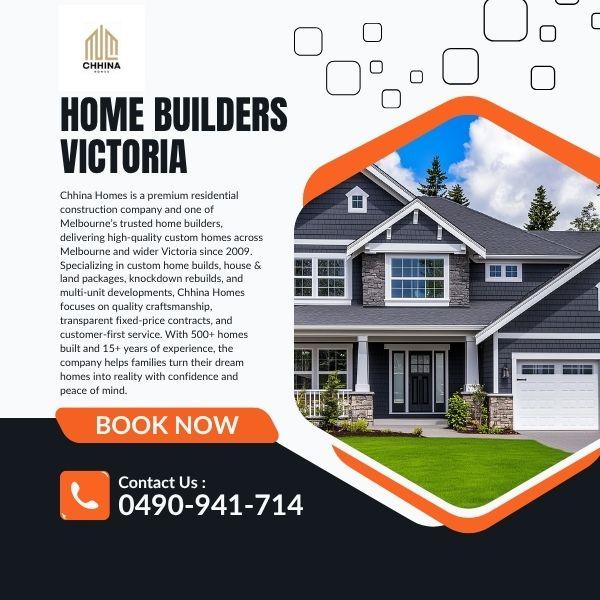
A new home should do more than look impressive from the street. It should make everyday life easier, provide enough room for your family, and remain practical as your needs change.
Yet many people begin the building process by choosing a façade or browsing display homes before considering their land, finances, and long-term plans. That approach can lead to difficult design compromises and unexpected expenses.
Finding the right Home Builders Victoria is an important step, but a successful project also depends on careful preparation, realistic expectations, and open communication with your construction team.
Whether you are buying your first block, upgrading to a larger property, replacing an outdated house, or planning a residential investment, understanding the building process can help you make better decisions.
This guide covers the essential stages of residential construction in Victoria, from choosing a builder and assessing your land to selecting a design, managing costs, and preparing for handover.
1. What Should You Look for When Choosing a Home Builder in Victoria?
The best starting point when selecting a builder is to understand whether their experience matches your project. Every home building company has its own approach to design, construction, communication, and pricing.
A builder who regularly constructs standardised homes may operate differently from a company that focuses on personalised floor plans. Likewise, a builder experienced in single dwellings may not offer the same services as one involved in multi-unit developments.
Your choice should reflect what you intend to build, where you plan to build it, and how much flexibility you need throughout the process.
Assess the builder before discussing the design
Before requesting a detailed quotation, take time to understand the services offered. Look for clear information about the following areas:
-
Building experience: Does the company work on projects similar to yours?
-
Service coverage: Does the builder operate in your intended Victorian suburb?
-
Design flexibility: Can you adjust floor plans, room sizes, and internal layouts?
-
Project communication: Will you have a clear point of contact?
-
Contract transparency: Are inclusions, exclusions, allowances, and variations explained?
-
Previous work: Can you review relevant completed projects or references?
-
Professional credentials: Can you verify the builder's registration, licence, and insurance arrangements where applicable?
For example, a growing family in Werribee may need a four-bedroom home with extra storage, a home office, and an outdoor entertaining area. A couple planning a compact townhouse development may have entirely different priorities.
Both projects require professional planning, but the relevant experience and design discussions will differ.
A practical way to compare builders
Instead of relying on advertising claims, prepare a comparison sheet. Give each builder the same project brief and ask the same questions.
Compare their responses on:
-
Design services.
-
Construction inclusions.
-
Estimated project costs.
-
Communication arrangements.
-
Relevant project experience.
-
Contract and variation procedures.
Chhina Homes provides residential construction services for clients across Melbourne and Victoria, including people planning custom homes and other residential projects.
Action to take today: Prepare a one-page project brief containing your location, block size, preferred home type, approximate budget, and must-have features.
2. How Can You Create a Realistic Budget for Your New Home?
A construction budget is only useful when it reflects the complete project rather than the advertised building price alone. Many first-home buyers underestimate the additional expenses involved in preparing land and completing a property.
Construction costs can vary according to design complexity, materials, site conditions, labour requirements, and project location. The same floor plan may cost different amounts on two separate blocks.
This is particularly relevant when comparing New Home Builders Melbourne, because different builders may include different items in their initial estimates.
Separate your costs into clear categories
A practical budget should account for more than the house itself.
|
Budget category |
What to consider |
|---|---|
|
Land |
Purchase price and associated acquisition expenses |
|
Site preparation |
Soil conditions, excavation, rock, and access |
|
Design and engineering |
Plans, engineering services, and necessary consultants |
|
Approvals |
Applicable permits, statutory fees, and related requirements |
|
Construction |
Structure, finishes, fixtures, and specified inclusions |
|
External works |
Driveways, fencing, landscaping, and drainage |
|
Temporary accommodation |
Housing and storage during construction, if required |
|
Contingency |
Funds reserved for unexpected or approved additional costs |
The exact requirements will depend on your property and building agreement. Ask your builder and relevant professionals to identify the items that apply to your project.
Fixed-price contracts: What does the price actually cover?
A fixed-price contract can make financial planning easier when the scope of work is clearly defined. However, a fixed price does not necessarily cover every possible expense.
For example, a homeowner may receive a quote for a new home that includes standard kitchen cabinetry but excludes premium stone finishes, upgraded appliances, or landscaping. If those items are added later, the total project cost may increase.
Pay particular attention to:
-
Prime cost items.
-
Provisional sums.
-
Site-cost allowances.
-
Contract exclusions.
-
Design variations.
-
Conditions that permit price adjustments.
Common mistake: Treating the lowest initial quote as the cheapest overall option.
What to do instead: Compare the full scope of work, not just the headline figure. Ask each builder to explain what is included and what remains your responsibility.
Pro Tip: Keep a separate allowance for items you have not yet selected. This helps you make design decisions without losing track of your financial limits.
Action to take today: Create a project budget with a separate line for every major expense and update it whenever you receive new information.
3. How Do You Design a Home That Fits Your Family and Your Land?
A successful floor plan responds to your daily routine, not simply the size of your block. A home may have plenty of square metres yet still feel cramped if its rooms are poorly arranged.
Custom Home Builders Melbourne can help homeowners develop personalised designs, but you should first identify how you want your home to function.
Think about your mornings, evenings, weekends, storage needs, and future plans. These details can influence the position of bedrooms, living areas, bathrooms, entrances, and outdoor spaces.
Start with how you use your home
Ask yourself a few practical questions:
-
Do you need a dedicated home office?
-
How many bedrooms will you need now and in the future?
-
Would an extra bathroom make family life easier?
-
Do you prefer an open kitchen and living area?
-
Where will you store bicycles, tools, school equipment, and seasonal items?
-
Do you need a guest room or a flexible multipurpose space?
-
Would a covered outdoor area suit your lifestyle?
-
Are there accessibility requirements to consider?
A couple upgrading from an apartment to a family home may initially focus on additional bedrooms. Once they discuss their daily habits, they may realise that a generous pantry, laundry storage, and a quiet workspace are equally important.
These decisions are easier to accommodate when considered early.
Design around your block's characteristics
Your land will influence the available design options. Important factors include:
-
Block width and depth.
-
Slope and soil conditions.
-
Orientation and sunlight.
-
Easements and site restrictions.
-
Building setbacks.
-
Neighbouring properties.
-
Vehicle access.
-
Planning and building requirements.
A narrow block may benefit from a carefully arranged double-storey layout. A wider block may allow a single-storey home with more spacious outdoor connections.
A design detail many beginners overlook
Window placement should be considered alongside furniture placement. A large window may improve daylight, but its position can also affect privacy, glare, heating, cooling, and where you can place beds or living-room furniture.
In Melbourne's climate, orientation, shading, insulation, glazing, and ventilation can all contribute to indoor comfort and energy performance. These decisions should be assessed during the design process rather than after construction begins.
Action to take today: Draw a rough plan of your ideal home and mark the rooms you use most frequently. Use this to guide your first design discussion.
4. House and Land Packages in Victoria: What Should Buyers Check First?
A house and land package can simplify the starting point for a new home, but the advertised price is not the only detail that matters. Buyers should understand how the land purchase and construction arrangements fit together.
These packages may appeal to first-home buyers, couples, and investors who have not yet secured a block. They can provide a starting combination of a proposed home design and a particular parcel of land.
However, buyers need to assess the suitability of both components.
What makes a package suitable?
A house and land package should be evaluated against your financial position, lifestyle, and intended use of the property.
Consider the following:
Location: Is the suburb convenient for work, schools, transport, shopping, and family commitments?
Block suitability: Does the proposed home fit the block's dimensions, orientation, and site conditions?
Design: Does the floor plan meet your needs, or will significant modifications be necessary?
Inclusions: Are flooring, appliances, heating, landscaping, fencing, and other features included?
Additional costs: Could soil conditions, site preparation, connections, or upgrades increase the total expense?
Contract arrangements: Are the land and building components subject to separate agreements, and what conditions apply?
House and land packages versus buying land separately
|
Factor |
House and land package |
Land purchased separately |
|---|---|---|
|
Starting point |
Land and a proposed home combination |
Buyer selects the block independently |
|
Design flexibility |
Depends on the builder and package |
May allow greater freedom in design selection |
|
Planning |
Land and home decisions can be coordinated |
Buyer must organise the building plan around the selected land |
|
Site suitability |
Still requires careful checking |
Buyer can assess the block before choosing the design |
|
Cost assessment |
Review the combined price and inclusions |
Assess land and construction budgets separately |
Neither option guarantees lower costs or a smoother project. A package may suit someone who values coordination, while buying land independently may suit a buyer with specific location or design requirements.
An example from Melbourne's growth areas
A first-home buyer may find a package in a developing suburb that appears to fit their budget. Before committing, they should check whether the land is titled, whether the construction price includes site costs, and whether the proposed home meets their needs.
The buyer should also consider future expenses such as fencing, window coverings, landscaping, and utility connections.
Action to take today: Request a written breakdown of the land price, building price, inclusions, exclusions, and additional costs for every package you are considering.
5. Is a Knockdown Rebuild the Right Choice for Your Existing Property?
A knockdown rebuild can help homeowners create a new property in a location they already know and love. It is particularly relevant to families who want a modern home but do not want to leave their established neighbourhood.
Instead of adapting an old structure through extensive renovations, homeowners can remove the existing dwelling and build a new one that better matches their lifestyle.
However, a knockdown rebuild requires more than a demolition decision. You need to understand the site's restrictions, project costs, approval requirements, and practical arrangements.
When might a knockdown rebuild make sense?
This approach may be worth considering when:
-
Your existing home no longer suits your family's needs.
-
The block is well located for your lifestyle.
-
Renovation would involve major structural changes.
-
You want a new floor plan and modern services.
-
You prefer to remain in the same suburb.
-
The land offers potential for a different style or size of home.
For example, a family in Point Cook may own an older house that lacks sufficient bedrooms and storage. They could compare the cost and practical implications of renovating against building a new home on the same land.
The decision should depend on a detailed assessment rather than assumptions about which option is cheaper.
Important checks before demolition
Planning and heritage considerations: Investigate relevant overlays, restrictions, and demolition requirements before committing to the project.
Site conditions: Soil, slope, drainage, and access can affect the proposed design and preparation work.
Existing services: Assess the property's utility connections and identify any work required for the new build.
Temporary accommodation: Plan for where your household will live during demolition and construction.
Budget: Include demolition, design, professional services, site costs, construction, and external works.
A mistake that can create unnecessary expense
Some homeowners approve a detailed design before confirming whether it suits their block and applicable planning requirements.
A better approach is to arrange an early feasibility discussion and site assessment. This can help identify limitations before you spend heavily on plans that may need substantial changes.
Action to take today: Collect your existing property documents and arrange an initial discussion with a suitably qualified building or design professional about your block.
6. How to Manage the Building Process from Design to Handover
Clear decisions and timely communication can make a complex building project easier to manage. Homeowners often focus on the finished property, but the decisions made during planning and construction have a major effect on the experience.
Your builder should explain the expected process, responsibilities, and milestones. You should also understand when your input is required.
Although the precise stages vary between projects, residential construction commonly involves planning, design, approvals, site preparation, construction, inspections, and handover.
Build a simple project management routine
You do not need complicated software to stay organised. A consistent record-keeping system can make a meaningful difference.
1. Keep all documents together
Store approved plans, specifications, selections, contracts, invoices, and correspondence in one accessible folder.
2. Record important decisions
After meetings, write down what was agreed, who is responsible, and when the next step is due.
3. Understand your selections schedule
Ask when you need to choose flooring, tiles, cabinetry, appliances, tapware, doors, and other fixtures.
4. Clarify variations
Before approving a change, request information about its cost, timing, and impact on the agreed scope.
5. Ask about progress updates
Confirm how the builder will communicate updates and who to contact when you have questions.
6. Prepare for handover
Ask about inspections, outstanding items, documentation, warranties, and the process for reporting defects.
Why early selections matter
Imagine a homeowner who changes the kitchen layout after plumbing and electrical work has already been planned. The change may require additional design work, revised services, or construction adjustments.
Making important decisions early can reduce the likelihood of avoidable changes. It cannot eliminate every unexpected issue, but it gives the project a more organised foundation.
Understand your contract
Your building agreement should set out the responsibilities of the parties, the scope of work, payment arrangements, variations, and other relevant terms. If you do not understand a clause, seek independent professional advice before signing.
Chhina Homes supports residential construction projects across Melbourne and Victoria, including personalised home builds and other residential development requirements.
Action to take today: Prepare a list of questions about project stages, communication, selections, variations, and handover before your next builder meeting.
Conclusion
Building a new home in Victoria requires thoughtful planning, clear financial expectations, and a design that suits both your land and your lifestyle. Choosing a suitable builder is important, but so are understanding the contract, assessing site conditions, and preparing for the decisions ahead.
Whether you are a first-home buyer, a growing family, a landowner planning a knockdown rebuild, or an investor considering a residential development, the right preparation can help you approach construction with greater confidence.
A home is a long-term investment in the way you live. The most useful design is not always the largest or most expensive one; it is the one that balances comfort, practicality, budget, and future needs.
If you are planning a residential building project in Melbourne or elsewhere in Victoria, explore the services offered by Chhina Homes and start a conversation about your requirements.
Frequently Asked Questions About Home Builders Victoria
Q: What should I ask a home builder before signing a contract?
A: Ask about the builder's experience, inclusions, exclusions, costs, construction timeline, communication process, and variation procedures. Request a clear written agreement and obtain independent advice about any terms you do not understand.
Q: How long does it take to build a new home in Victoria?
A: The timeframe depends on the design, site conditions, approvals, builder's schedule, and construction complexity. Ask for an estimated project schedule and confirm which factors could affect the completion date.
Q: Can I customise a home design with a Melbourne builder?
A: Many residential builders offer some level of design flexibility, while custom builders may tailor floor plans more extensively to your needs. Ask how much you can change and whether design modifications involve additional costs.
Q: What extra costs should I expect when building a house in Victoria?
A: Potential additional costs include site preparation, professional fees, permits, external works, service connections, upgrades, and approved design changes. Request a detailed inclusions schedule and identify exclusions before agreeing to a building price.
Q: Should I choose a single-storey or double-storey home?
A: The right choice depends on your block, budget, household requirements, accessibility needs, and preferred lifestyle. Compare how each option affects floor space, outdoor areas, privacy, stairs, and long-term practicality.

 English
 Arabic
 French
 Spanish
 Portuguese
 Deutsch
 Turkish
 Dutch
Dutch
 Russian
 Romaian
 Portuguese (Brazil)
 Greek
Greek
 Bengali