


IP-Rated Industrial Plug Design for Harsh Environments
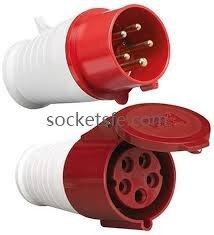
In industrial environments where dust and water exposure are practical concerns, an IP67 Industrial Plug is designed around a combination of electrical insulation, mechanical protection, and environmental sealing. The IP classification relates to protection against solid particles and temporary immersion under defined test conditions, so connector construction must address the interface between housing components, cable entries, and mating surfaces. Material selection and manufacturing accuracy are therefore central to the overall design.
The housing is the primary structural component of an industrial connector. Engineering plastics are commonly used because they can provide electrical insulation, mechanical strength, and resistance to various environmental conditions. The material should be selected according to the intended application, considering factors such as temperature, impact, moisture, cleaning conditions, and potential chemical exposure. A properly formed housing also provides the foundation for the sealing components and internal contact system.
Sealing technology is especially important for connectors intended for demanding environments. Seals or gaskets can be positioned around mating interfaces and cable-entry areas to reduce pathways for environmental intrusion. Their performance depends on material characteristics, compression, dimensional accuracy, and assembly. The sealing structure must work together with the housing rather than being treated as an isolated component.
Cable entry design deserves particular attention because the cable creates a potential opening in the connector housing. A suitable cable gland or strain-relief structure can help maintain the intended environmental protection while controlling mechanical stress. Cable diameter and installation method need to be compatible with the connector design. Incorrect cable preparation or assembly can compromise the effectiveness of otherwise well-designed sealing components.
Inside the connector, electrical insulation separates conductive components from one another and from the outer housing. Insulating materials need to maintain appropriate electrical properties under the expected environmental conditions. Molding accuracy is important because internal insulating supports must hold contacts in their intended positions while maintaining suitable separation between conductive paths.
Contact materials also influence long-term connection performance. Conductive components are typically selected for electrical conductivity, corrosion resistance, and mechanical durability. In environments with moisture or contaminants, the condition of contact surfaces becomes particularly relevant. Proper mating pressure and accurate contact alignment can help create a stable electrical interface when the connector is fully engaged.
Mechanical retention supports environmental protection as well as electrical continuity. The plug and socket need to remain properly mated under normal operating conditions. Vibration, movement, cable tension, and repeated handling can place stress on the connection. A secure locking structure helps maintain the intended interface and reduces the possibility of accidental separation.
Manufacturing technology determines whether these design elements work consistently together. Polymer housings and insulating parts often require controlled molding conditions to achieve accurate dimensions. Sealing grooves, mating surfaces, cable-entry sections, and locking structures must be manufactured with suitable consistency. Metal contacts also require controlled forming and assembly to ensure correct positioning.
Quality control can involve visual inspection, dimensional verification, electrical testing, mechanical checks, and environmental protection testing according to the relevant product design and applicable standards. Protection ratings should be understood as test-based classifications rather than a guarantee that a connector will withstand every possible environmental condition. Correct installation remains essential to achieving the intended level of protection.
Industrial applications vary widely. Outdoor equipment may encounter rainfall, dust, and changing temperatures, while agricultural machinery can operate around soil, moisture, and cleaning activities. Construction equipment may experience vibration and mechanical handling. Production environments can introduce dust, oils, or frequent equipment movement. Connector selection should therefore consider the actual environment rather than relying solely on an IP classification.
Installation and maintenance practices can significantly influence performance. Before mating, technicians should inspect sealing surfaces, housings, contacts, and cables for damage or contamination. The connector should be fully engaged according to its designed locking mechanism. Cable routing should avoid excessive tension, while seals should not be damaged or incorrectly positioned during assembly.
Periodic inspection can help identify deterioration before it affects the connection. Cracked housings, damaged seals, corrosion, loose cable entries, and worn locking components are all reasons for further evaluation. Cleaning procedures should also be compatible with the connector materials and application environment.
An IP67 Industrial Plug combines sealing technology, insulating materials, conductive contacts, mechanical retention, and precision manufacturing into a connector intended for defined environmental protection conditions. Understanding how these elements interact helps engineers and maintenance teams select and install connectors more appropriately for outdoor and demanding industrial applications. For more information about industrial plug and socket solutions, visit https://www.socketsfe.com and evaluate connector construction according to electrical requirements, environmental exposure, cable configuration, and installation conditions.

 Arabic
 French
 Spanish
 Portuguese
 Deutsch
 Turkish
 Dutch
Dutch
 Italiano
 Russian
 Romaian
 Portuguese (Brazil)
 Greek
Greek
 Bengali