


How Can ERG User-Side Energy Storage System Support Daily Needs
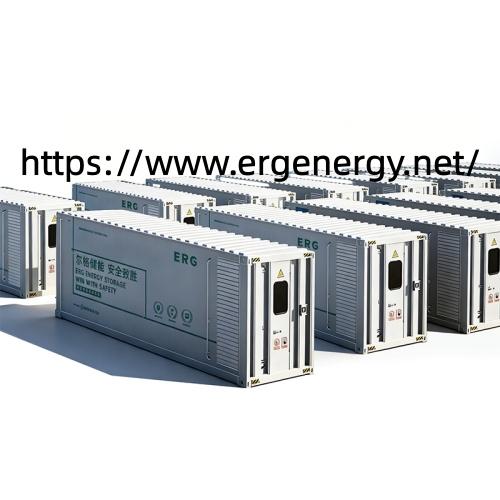
User-Side Energy Storage System can support daily electricity needs by coordinating stored power with changing loads, operating schedules, renewable generation, and grid conditions. For commercial and industrial facilities, this approach can help manage periods when electricity demand rises quickly, while providing greater flexibility in how power is consumed throughout the day. Recent industry discussions increasingly focus on peak demand management, time of use pricing, solar integration, backup planning, and intelligent control as important considerations when evaluating storage projects.
Electricity consumption is rarely constant from morning to evening. A factory may start several machines at the same time, a commercial building may experience higher cooling loads during the afternoon, and a charging facility can create short periods of significant power demand. These changes can affect operating costs when electricity tariffs include demand charges or different rates for different periods. Research from NREL has highlighted how demand charges can create a significant portion of commercial electricity costs, making peak load management an important consideration for some facilities.
One practical function is peak shaving. Instead of relying entirely on grid electricity during a short period of high demand, stored electricity can be discharged to reduce the amount of power drawn from the grid. The effectiveness of this approach depends on factors such as load profiles, tariff structures, equipment capacity, control settings, and the duration of peak periods. A recent 2026 study examining hundreds of commercial and industrial facilities also evaluated storage dispatch strategies involving peak clipping and demand response, showing the growing interest in coordinated control rather than simple charging and discharging.
Time of use pricing can create another application. When electricity prices vary during different hours, charging can potentially take place during lower price periods, while discharge can be scheduled for selected higher price periods. The actual financial result depends on local tariffs, operating patterns, round trip efficiency, battery degradation, installation costs, and other project conditions. For this reason, buyers should evaluate a project using real consumption data instead of relying on general savings assumptions.
Solar integration is also becoming relevant for facilities seeking greater control over onsite generation. Solar output can change with weather and daylight conditions, while electricity demand may follow a different pattern. A coordinated storage setup can capture part of the available solar production and make that electricity available later when the facility requires it. This can improve the alignment between renewable generation and consumption without requiring production and demand to occur at exactly the same time. Current commercial storage discussions increasingly combine solar, electric vehicle charging, backup requirements, tariffs, and automated controls within a single project design.
Control software plays an important role in making these functions practical. An energy management platform can monitor load conditions, battery state, solar production, electricity prices, and operating limits. Based on programmed strategies, it can determine when charging or discharging should occur. Proper control also needs to consider reserve capacity, battery operating limits, equipment protection, and the facilitys actual schedule. This means the value of a project is influenced not only by battery capacity but also by how the complete solution is configured and operated.
Daily requirements also vary between industries. Manufacturing facilities may need support around production schedules, warehouses can experience changing refrigeration or material handling loads, and office buildings may have predictable patterns linked to working hours. Commercial sites with electric vehicle charging can introduce additional short duration demand peaks. Each application therefore requires a different assessment of power rating, usable capacity, discharge duration, control logic, installation environment, and expected operating cycles.
For buyers, reviewing historical electricity data is a useful starting point. Monthly bills can show tariff structures, while interval load data can reveal when demand peaks actually occur. From there, project planners can evaluate the required power rating and capacity against real operating conditions. This approach can help prevent oversizing or selecting equipment that does not match the facilitys load profile. It also provides a clearer foundation for comparing different operating strategies.
As a manufacturer, ERG focuses on storage solutions designed around practical application requirements rather than a single operating scenario. Capacity, power conversion, monitoring, control functions, and integration requirements can be considered together when developing a project. For businesses looking at peak demand management, renewable integration, flexible electricity use, or backup planning, a carefully configured solution can provide a practical way to coordinate daily power requirements. To review available solutions and product information, visit https://www.ergenergy.net/product/ and consider the specifications alongside your actual operating conditions and project objectives.

 English
 Arabic
 French
 Spanish
 Portuguese
 Deutsch
 Turkish
 Dutch
Dutch
 Russian
 Romaian
 Portuguese (Brazil)
 Greek
Greek
 Bengali