


What Manufacturers Should Review Before Planning a Machinery Import
Buying machinery from overseas can be part of a larger expansion or modernization plan. However, an imported equipment purchase usually involves more planning than simply selecting a supplier and comparing prices.
Businesses should review the purpose of the investment, expected production benefit, import documentation, tax impact and implementation schedule before placing a final order.
Start With the Machinery Requirement
The first step is to understand why the equipment is being imported.
A manufacturer may need new machinery to:
- Increase production capacity
- Replace older equipment
- Introduce a new manufacturing process
- Improve product quality
- Reduce production time
- Support a new product line
Once the purpose is clear, management can compare technical specifications, supplier terms and the expected operating benefit of the equipment.
Review Import-Related Requirements Early
Imported capital goods can involve documentation and compliance requirements that should ideally be reviewed before shipment.
Manufacturers evaluating EPCG planning for imported manufacturing equipment should understand the applicable conditions and documentation requirements before the machinery is imported.
Keeping records such as supplier quotations, machinery specifications, purchase agreements and import documents organised from the beginning can make the process easier to manage later.
Consider the GST Position as Well
Machinery investment can also affect a business's GST and working-capital position.
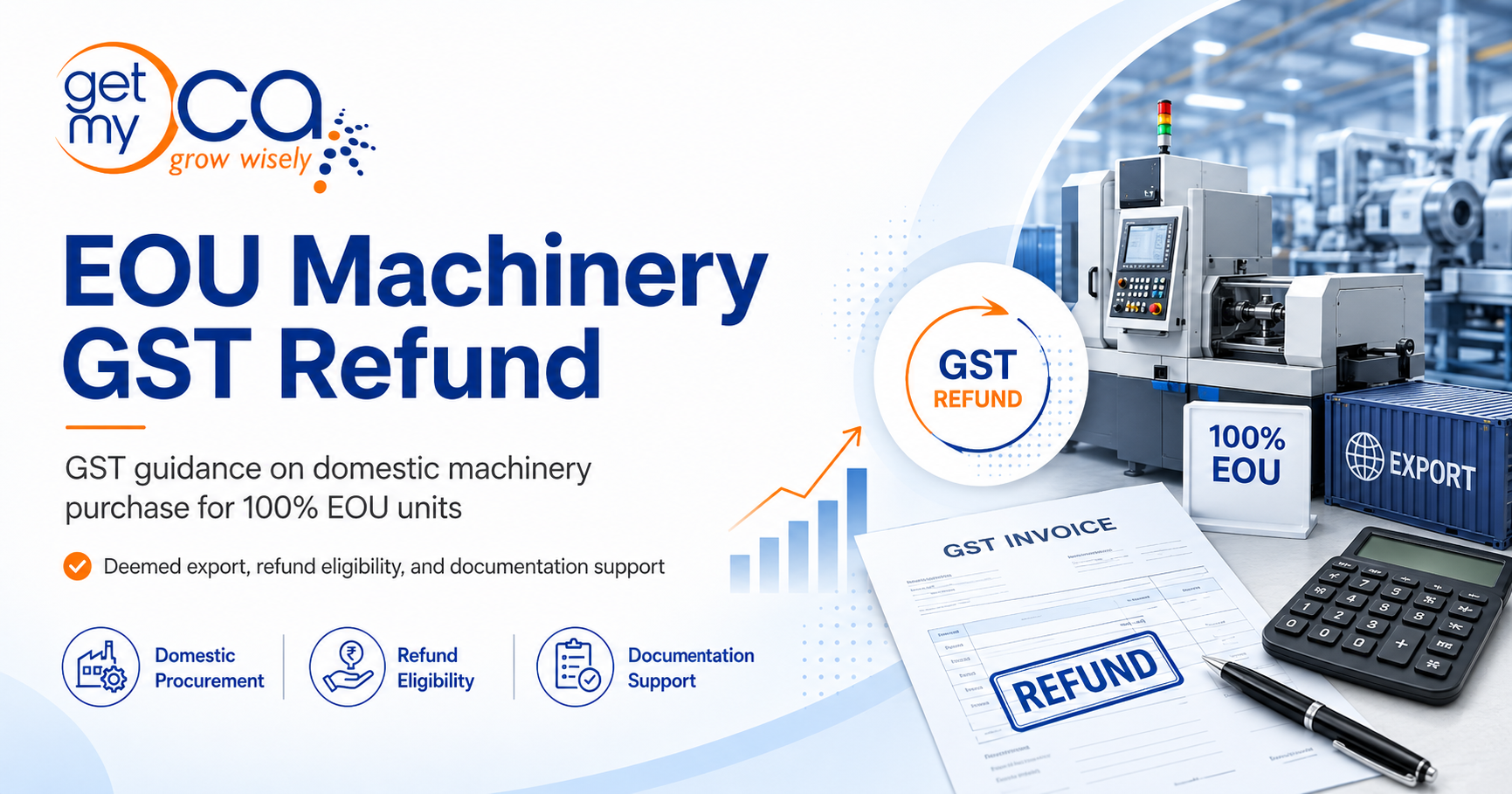
This can be particularly relevant for export-oriented units purchasing equipment for production or expansion. Understanding the GST position on machinery purchased by export-oriented units can help finance teams review the treatment of input tax credit and related tax records.
Businesses should avoid assuming that every GST amount connected with machinery automatically qualifies for a refund. The actual treatment depends on the nature of the transaction and the applicable GST provisions.
Keep a Complete Machinery File
A basic documentation file may include:
- Supplier quotation
- Purchase order
- Machinery specifications
- Commercial invoice
- Payment records
- Import documents
- GST records
- Installation documents
- Financing details
- Production estimates
Maintaining these records from the beginning can reduce reconciliation problems later.
Review the Total Cost
The invoice value is only one part of an imported machinery investment.
Management may also need to consider:
- Freight and logistics
- Installation cost
- Financing cost
- Customs-related expenses
- GST impact
- Maintenance requirements
- Energy consumption
- Expected production output
Looking at these factors together gives a better understanding of the actual cost and operational impact of the investment.
Final Thought
Imported machinery can support manufacturing expansion, but the financial, tax and documentation aspects should be reviewed before major commitments are made.
A structured approach helps businesses understand how the equipment fits into the wider project and what records may be required during and after the purchase.

 English
 French
 Spanish
 Portuguese
 Deutsch
 Turkish
 Dutch
Dutch
 Italiano
 Russian
 Romaian
 Portuguese (Brazil)
 Greek
Greek
 Bengali